Best Addiction Counseling Programs in New Jersey

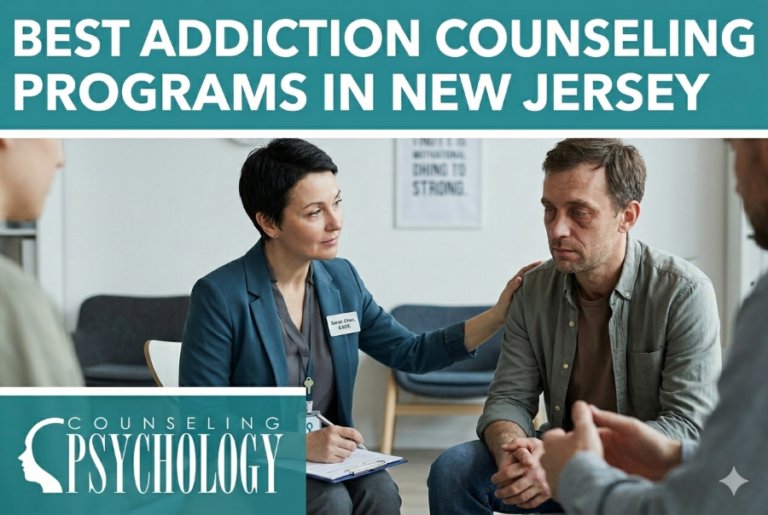
New Jersey continues to face significant challenges related to substance use disorders, including opioid addiction, alcohol misuse, and co-occurring mental health conditions. As a result, trained substance abuse and addiction counselors are in high demand across the state, from urban centers like Newark and Jersey City to suburban and coastal communities.
For prospective students, New Jersey offers a range of addiction counseling programs at the master's and graduate certificate levels, with flexible formats and strong ties to local clinical training sites.
In this article, you'll learn:
- How addiction counseling programs in New Jersey are structured
- The differences between master's degrees and graduate certificates
- What clinical training looks like across the state
- Where graduates commonly find employment
- Key factors to consider when choosing a program
2026 Best Addiction Counseling Programs in New Jersey
Montclair State University
Montclair, NJ - Public 4-Year - montclair.edu

Master's - Counseling, Addictions Counseling Concentration
Campus Based - Visit Website
Montclair State University's Addictions Counseling Concentration within the 60-credit MA in Counseling program prepares students for licensure as LCADC and LPC counselors. This campus-based program includes three semesters of fieldwork and emphasizes work with marginalized populations. With full-time, part-time, evening, and summer course options, it accommodates working professionals. Admission requires a minimum 2.9 GPA, and no entrance exam is specified as required for this master's level program.
- 60 credit hours.
- Full-time and part-time study.
- Evening and summer courses.
- Fieldwork included.
- Prepares for LCADC and LPC licensure.
- GPA requirement: 2.9.
- Focus on marginalized populations.
- Campus-based program.
- Three semesters of fieldwork.
- Accommodates working professionals.
Graduate Certificate - Certified Alcohol and Drug Counselor
Online & Campus Based - Visit Website
Montclair State University's Certified Alcohol and Drug Counselor (CADC) hybrid program combines online and campus learning to meet New Jersey's certification requirements. This program prepares graduates for substance abuse counseling careers in clinics, outpatient facilities, and other settings, with a 22% projected job growth. Students can concurrently pursue an MA in Counseling. Admission follows The Graduate School's requirements, offering a pathway to this high-demand profession without specific entrance exam requirements mentioned.
- Hybrid learning format
- Meets NJ certification requirements
- 22% job growth projection
- Concurrent MA in Counseling option
- Diverse work settings
Monmouth University
West Long Branch, NJ - Private 4-year - monmouth.edu
Master's - M.S. Clinical Mental Health Counseling (Alcohol and Drug Counseling)
Campus Based - Visit Website
Monmouth University's CACREP-accredited M.S. in Clinical Mental Health Counseling features an Alcohol and Drug Counseling concentration that prepares students for New Jersey's LCADC licensure. This campus-based program emphasizes practical skills through specialized courses like Treatment of Alcohol and Drug Counseling and Advanced Alcohol and Drug Counseling, combined with field placement opportunities. The curriculum meets state licensure requirements while developing competencies for treating substance abuse disorders in various clinical settings. While admission requires meeting graduate studies criteria, the program doesn't specify entrance exam requirements.
- CACREP accredited program.
- Focus on Alcohol and Drug Counseling.
- Prepares for LCADC licensure.
- Campus-based learning.
- Includes field placement opportunities.
- Offers student and alumni organizations.
- Continuing education available.
- Requires specific electives for specialization.
- Courses include treatment and advanced counseling.
- Community counseling component.
Master's - MSW (Alcohol and Drug Counseling (LCADC))
Campus Based - Visit Website
Monmouth University's campus-based MSW program offers an Alcohol and Drug Counseling concentration designed to prepare students for LCADC licensure while earning their social work degree. This 54-credit program includes specialized electives like Clinical Practice Addictions and Addictions Considerations, complemented by 1,000 hours of field placement in addiction treatment settings. With a projected 18% job growth in substance abuse counseling, graduates gain practical skills for clinical practice. The program doesn't specify entrance exam requirements but focuses on meeting licensure hours through hands-on experience.
- Campus-based program
- LCADC licensure preparation
- Specialized addiction coursework
- Field placement in addiction treatment
- Projected 18% job growth
- 54-credit program option
- Clinical Practice Addictions elective
- Addictions Considerations elective
- 1,000 hours field placement
- Focus on practical skills
Rutgers University-Newark
Newark, NJ - Public 4-Year - newark.rutgers.edu

Master's - Addiction Counselor Training (ACT) Certificate
Online & Campus Based - Visit Website
This graduate-level Addiction Counselor Training (ACT) Certificate at Rutgers University-Newark prepares clinicians for dual LCADC and LCSW licensure with CCGC certification included. The hybrid format blends online and in-person instruction, focusing on evidence-based interventions for addiction and co-occurring disorders. The 6-course curriculum meets New Jersey's LCADC educational requirements while emphasizing trauma-informed care, cultural competence, and recovery principles. Designed for MSW students and post-graduate professionals, this program prepares graduates for leadership roles in addiction treatment. No entrance exam is required for this certificate program.
- Hybrid learning format.
- 6-course LCADC curriculum.
- CCGC certification included.
- Focus on cultural competence.
- Trauma-informed care training.
- Recovery principles emphasized.
- Leadership role preparation.
- For MSW students and post-grads.
- Meets NJ LCADC requirements.
- Evidence-based interventions focus.
Graduate Certificate - Addiction Counselor Training (ACT) Certificate
Online & Campus Based - Visit Website
Rutgers University-Newark's Addiction Counselor Training (ACT) Certificate is a hybrid program that prepares students for dual licensure as LCADC and LCSW in New Jersey. Combining online and in-person learning, it focuses on integrated addiction and mental health care. The curriculum covers all five CADC/LCADC domains and includes a supervised practicum in DMHAS-approved agencies. This program meets educational requirements for CCGC certification and emphasizes evidence-based interventions, cultural competence, and recovery principles. Designed for MSW students and post-graduate clinicians, it requires no entrance exam for this certificate-level program.
- Hybrid learning format
- Prepares for LCADC and LCSW
- Includes CCGC certification training
- 6-course curriculum
- Supervised practicum required
- Focus on cultural competence
- Evidence-based interventions
- Online and in-person classes
- For MSW students and post-grads
- Meets NJ educational requirements
Rutgers University
New Brunswick, NJ - Public 4-Year - newbrunswick.rutgers.edu

Graduate Certificate - Addiction Counselor Training (ACT) Certificate
Online & Campus Based - Visit Website
Rutgers University-New Brunswick's Addiction Counselor Training (ACT) Certificate is a hybrid program preparing clinicians and graduate students for LCADC licensure. The comprehensive curriculum covers all required educational domains, including specialized addiction content, supervised practicum hours, and self-help meeting attendance. Designed for professionals seeking dual credentials in behavioral health, this program enhances career prospects with its competitive application process offering spring and fall admissions. As a master's level certificate, it does not require entrance exams like the GRE. Financial aid is available, and the program is military-friendly with campus hospital resources.
- Hybrid program format
- Covers LCADC education hours
- Competitive application process
- Financial aid eligible
- Spring and fall admissions
- Dual credential preparation
- Supervised practicum hours
- Comprehensive addictions curriculum
- Self-help meeting requirement
- Enhanced career prospects
Rutgers University-Camden
Camden, NJ - Public 4-Year - camden.rutgers.edu

Graduate Certificate - Addiction Counselor Training (ACT) Certificate
Online & Campus Based - Visit Website
Rutgers University-Camden's Addiction Counselor Training (ACT) Certificate is a hybrid program blending online coursework with in-person learning. Designed for MSW students and post-graduate clinicians, it prepares participants for dual licensure as Licensed Clinical Alcohol and Drug Counselors (LCADC) and Licensed Clinical Social Workers (LCSW). The curriculum emphasizes evidence-based interventions for addiction and co-occurring disorders while covering all five domains required for CADC/LCADC certification. A key component includes a practicum experience at DMHAS-approved agencies. This program meets New Jersey's educational requirements for LCADC licensure and does not require entrance exams. It provides a specialized pathway for professionals seeking leadership roles in addiction treatment.
- Hybrid program format.
- Prepares for LCADC and LCSW.
- Includes practicum learning.
- Covers all CADC/LCADC domains.
- Focus on evidence-based interventions.
- For MSW students and post-grads.
- Meets NJ educational requirements.
- Leadership in addiction treatment.
- Online and in-person learning.
- Specialized addiction counseling.
Understanding Addiction Counseling Education in New Jersey
In New Jersey, addiction counseling education is often aligned with licensure pathways such as the Licensed Clinical Alcohol and Drug Counselor (LCADC) or Certified Alcohol and Drug Counselor (CADC). Many programs are designed to meet the academic requirements for these credentials.
Because substance use disorders frequently overlap with mental health conditions, many programs incorporate dual-focus training in both addiction and clinical counseling.
Discover counseling schools in New Jersey.
Degree and Certificate Options
Students in New Jersey can pursue addiction counseling education through multiple pathways depending on their background and career goals.
Program Types Comparison
| Program Type | Best For | Typical Length | Key Focus | Career Outcome |
| Master's in Addiction Counseling (or related field) | Students seeking licensure (LCADC) and clinical roles | 2–3 years | Counseling theory, addiction treatment, supervised clinical experience | Licensed counselor roles in treatment centers, hospitals, private practice |
| Graduate Certificate in Addiction Counseling | Professionals adding specialization or pursuing CADC | 6–18 months | Focused addiction coursework, may include practicum | Entry-level or supplemental roles in addiction services |
| Doctoral Programs in Addiction Counseling (Limited in NJ) | Advanced research or leadership roles | 3–5+ years | Research, supervision, policy | Academic, leadership, or advanced clinical roles |
Note: Fully addiction-specific doctoral programs are limited in New Jersey, though related counseling or psychology doctorates may include substance use concentrations.
Program Formats: Online, Hybrid, and Campus
New Jersey offers a variety of program delivery formats to accommodate working professionals and full-time students.
Format Comparison
| Format | Ideal For | What to Expect |
| Online | Working professionals needing flexibility | Asynchronous coursework, local practicum placements |
| Hybrid | Students wanting a mix of flexibility and in-person interaction | Online classes + scheduled campus sessions |
| Campus | Those preferring structured, face-to-face learning | Regular on-site classes, direct faculty engagement |
Many online programs still require in-person clinical hours completed at approved sites within New Jersey.
What You'll Study in a New Jersey Addiction Counseling Program
Curriculum is designed to prepare students for real-world counseling roles and licensure requirements.
Core Coursework Includes:
- Theories of Addiction and Substance Use Disorders
- Counseling Techniques and Therapeutic Modalities
- Group Counseling and Family Systems
- Co-Occurring Disorders (Mental Health + Addiction)
- Ethics and Legal Issues in Counseling
- Assessment and Treatment Planning
Programs often emphasize evidence-based practices, such as cognitive-behavioral therapy (CBT), motivational interviewing, and trauma-informed care.
Clinical Training in New Jersey: What to Expect
Hands-on clinical experience is a critical part of addiction counseling education. Students complete supervised practicum and/or internship hours at approved sites.
Common Clinical Training Settings
- Inpatient and outpatient rehabilitation centers
- Community mental health clinics
- Hospital-based addiction programs
- Nonprofit recovery organizations
- Medication-assisted treatment (MAT) clinics
Examples of New Jersey Clinical Sites
| Setting Type | Example Locations |
| Hospital Systems | RWJBarnabas Health, Hackensack Meridian Health |
| Behavioral Health Providers | Carrier Clinic, Integrity House |
| Community Organizations | Prevention Links, Eva's Village |
| Government & Public Health | County mental health agencies across NJ |
These placements provide exposure to diverse patient populations, including individuals dealing with opioid use, alcohol dependence, and co-occurring mental health disorders.
Where Graduates Work in New Jersey
Addiction counseling graduates in New Jersey find opportunities across a wide range of settings.
Common Employers
| Employer Type | Examples |
| Hospital Systems | RWJBarnabas Health, Hackensack Meridian Health |
| Treatment Centers | Inpatient and outpatient rehab facilities |
| Nonprofits | Community recovery and outreach organizations |
| Government Agencies | New Jersey Department of Human Services |
| Private Practice | Independent counseling or group practices |
Demand is particularly strong in urban areas and regions heavily impacted by the opioid crisis.
Tips for Choosing an Addiction Counseling Program in New Jersey
As you compare programs, focus on these key factors:
- Licensure Alignment: Does the curriculum meet LCADC or CADC requirements?
- Clinical Placement Support: Will the school help you secure internships in New Jersey?
- Accreditation: Look for programs aligned with counseling accreditation standards
- Flexibility: Consider online or hybrid formats if you plan to work while studying
- Faculty Expertise: Are instructors experienced in addiction treatment and counseling?
Licensing Considerations in New Jersey
To become a licensed addiction counselor, students typically pursue credentials through the New Jersey Division of Consumer Affairs.
Common Licensure Pathways:
- CADC (Certified Alcohol and Drug Counselor)
- LCADC (Licensed Clinical Alcohol and Drug Counselor)
Requirements generally include:
- Specific coursework in addiction counseling
- Supervised clinical experience
- Passing a certification or licensing exam
Some master's programs are specifically designed to meet these requirements, making the transition to licensure more seamless.
What Makes New Jersey Training Distinct
New Jersey's proximity to major metropolitan areas and its diverse population shape the training experience.
Unique aspects include:
- Exposure to both urban and suburban populations
- Strong integration of mental health and addiction treatment
- Access to large healthcare systems and specialized treatment centers
- Opportunities to work with culturally diverse communities
FAQs
Q: Do I need a master's degree to become an addiction counselor in New Jersey?
A: Not always. You can pursue a CADC with less education, but an LCADC typically requires a master's degree and offers more advanced career opportunities.
Q: Can I complete an addiction counseling program fully online?
A: Many programs offer online coursework, but clinical hours must be completed in person at approved New Jersey sites.
Q: Are there programs that combine mental health counseling and addiction counseling?
A: Yes. Many New Jersey programs integrate both areas to prepare students for treating co-occurring disorders.
Q: Is there demand for addiction counselors in New Jersey?
A: Yes. Demand remains strong statewide, particularly in areas affected by substance use and mental health challenges.