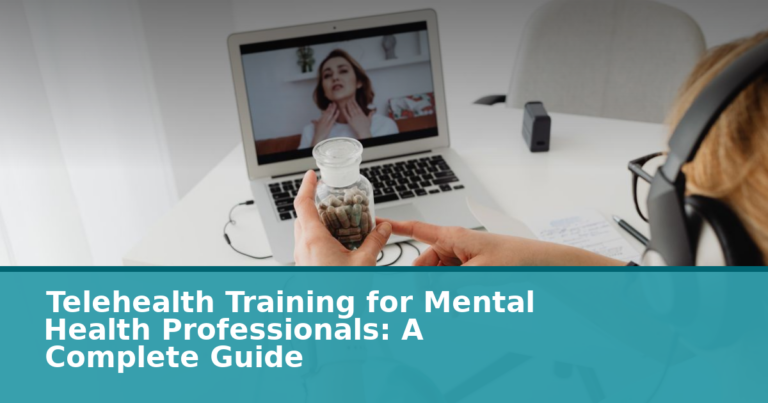
What you’ll learn in this article…
- CACREP-accredited programs streamline licensure and reduce barriers when you move between states.
- BLS projects mental health counselor employment will grow 17% from 2024 to 2034, well above average.
- Most top-ranked programs require 60 credits and offer online or hybrid formats for working adults.
- Rankings here prioritize measurable outcomes like graduate debt, earnings, and completion rates over reputation surveys.
The U.S. Bureau of Labor Statistics projects 17% employment growth for mental health counselors through 2034, and licensure in nearly every state now hinges on graduating from a CACREP-accredited counseling program. That accreditation requirement reshapes the entire search: a cheaper degree that complicates licensure can cost far more in the long run.
The programs ranked here show a wide financial spread. Net prices run from under $5,000 a year at public institutions to well above $14,000, while institutional median earnings a decade out range from roughly $38,000 to over $62,000. Graduate debt at completion clusters between $11,000 and $20,000.
That gap between tuition paid and salary earned is the real decision point. A 60-credit curriculum, supervised clinical hours, and counseling licensure requirements sit behind every program on this list.
Best Master's in Clinical Mental Health Counseling Programs
Counseling is a field where the right degree earns its keep: the programs below all combine rigorous clinical training with cost structures that make sense for a public-service career. Flexible scheduling broadens the pool of who can train, and most of these degrees are CACREP-accredited or otherwise aligned with state licensure requirements. Figures cited on the cards come from the Department of Education's 2024 federal release; program-level early-career earnings for these counseling degrees are not yet published, so the cards stick to costs, outcomes, and curriculum the data can actually support.
Factors considered
- Affordability and financial access
- Graduation and retention outcomes
- Program flexibility and accessibility
- Licensure and accreditation alignment
- National Center for Education Statistics (IPEDS) covering graduation rates, retention rates and student-faculty ratios — nces.ed.gov
- Federal College Scorecard outcomes data — collegescorecard.ed.gov
- CACREP accreditation directories — cacrep.org
- Original research on individual programs — cacrep.org

The University of Texas Rio Grande Valley
The University of Texas Rio Grande Valley is a Hispanic-Serving Institution whose counseling master's is built to serve the border communities of South Texas. Its M.Ed. route combines diagnosis, crisis intervention, treatment planning, and bilingual practice with placements in local schools and behavioral health agencies, all mapped to Texas LPC licensure. The institution-wide graduation rate is 51%.
- CACREP accredited
- 2 concentration options
- Up to $1,000 scholarship available
- Campus sites in Edinburg, Brownsville, and Laredo
- Curriculum aligned with Texas LPC licensure requirements
- Clinical training emphasizes bilingual and bicultural care
Master of Education in Counseling (Clinical Mental Health Counseling) — Hybrid

Eastern New Mexico University
Eastern New Mexico University anchors an accessible clinical mental health master's in a small-class format with a 17-to-1 student-to-faculty ratio. No application fee, graduate assistantships with tuition waivers, military benefits, and New Mexico licensure-aligned coursework make it a practical choice for students across the state. The institution-wide graduation rate is 45%.
- $0 application fee
- 17:1 student-to-faculty ratio
- Graduate assistantships with tuition waiver
- Military benefits accepted
- Out-of-state students pay in-state rate for six or fewer hours
- Curriculum aligned with New Mexico counseling licensure requirements
- Designed for students across rural New Mexico
Master of Arts in Counseling (Clinical Mental Health) — Online

New Mexico Highlands University
New Mexico Highlands University offers a CACREP-accredited clinical mental health counseling concentration aimed at Hispanic, Native American, and rural communities across the state. Its 60-credit structure blends distance coursework with two required on-campus residencies, and every student gets a faculty adviser. The institution-wide graduation rate is 26%.
- CACREP accredited
- 60 total credit hours
- 3 concentration options
- Two on-campus residencies required beginning Fall 2026
- Certificate options for additional licensure
- Faculty adviser assigned to each student
- Admission starts in spring, summer, or fall
Master of Arts in Counseling (Clinical Mental Health Counseling) — Hybrid

Indiana University-East
Indiana University East approaches mental health counseling from a liberal arts base, emphasizing critical thinking, problem solving, and research alongside clinical coursework. The master's serves the east-central Indiana and western Ohio region and suits students who want a broader intellectual foundation for counseling work. The institution-wide graduation rate is 40%.
- Offered through the College of Arts and Sciences
- Liberal arts approach emphasizing critical thinking and research
- Serves east-central Indiana and western Ohio
- Prepares graduates for mental health counseling roles
Master of Arts in Mental Health Counseling — Hybrid

University of Houston-Victoria
University of Houston-Victoria offers a CACREP-accredited clinical mental health counseling degree designed for community agency practice. Coursework spans ethics, assessment, addiction, crisis intervention, and psychopharmacology and ends in supervised practicum and internship, with a course plan built around Texas LPC licensure. The institution-wide graduation rate is 26%.
- CACREP accredited
- 42 core credit hours
- Practicum and internship field placements
- Meets Texas LPC academic requirements
- Coursework in addiction, crisis intervention, and psychopharmacology
- Electives include grief counseling, sexuality, and play therapy
Clinical Mental Health Counseling, Master's — Online

University of Nevada-Las Vegas
UNLV's 60-credit clinical mental health counseling master's is CACREP accredited and scheduled for working adults, with classes meeting once a week in late afternoon and evening. Curriculum and placements are shaped around Las Vegas and Clark County agencies, and the program funnels graduates toward Nevada LCPC licensure. The institution-wide graduation rate is 51%.
- CACREP accredited
- 60 total credit hours
- Classes meet once a week in late afternoon or evening
- Eligible for NCE and NCC certification
- Prepares for LCPC licensure in Nevada
- Practicum and internship placements in Clark County agencies
Master of Science in Clinical Mental Health Counseling — Hybrid

The University of Texas at San Antonio
UTSA trains clinical mental health counselors for San Antonio and South Texas through a 60-credit CACREP-accredited curriculum. Students complete a portfolio capstone, a practicum, and two internships, often in military and veterans' services, and demand for bilingual Spanish English counselors is written into the training. The institution-wide graduation rate is 53%.
- CACREP accredited
- 60 total credit hours
- Comprehensive portfolio capstone required
- Practicum plus two clinical internships
- Prepares for Texas LPC licensure
- Internship settings include military and veterans' services
Master of Science in Clinical Mental Health Counseling — Hybrid

Arizona State University
Arizona State University's flexible 60-credit Master of Counseling lets students choose a practitioner track with a comprehensive exam or a research track with a thesis. The MPCAC-accredited program sends students through a practicum and two internships in its Counselor Training Center before they head into community agencies, hospitals, or doctoral study. The institution-wide graduation rate is 68%.
- MPCAC accredited
- 60 total credit hours
- Practitioner track with comprehensive exam or research track with thesis
- Practicum and two internships in Counselor Training Center
- Prepares for professional counselor licensure in Arizona
- Faculty expertise in play therapy and couple and family counseling
- Starts fall and spring
Master of Counseling — Online

Indiana University-Southeast
Indiana University Southeast runs a CACREP-accredited, 60-credit clinical mental health counseling master's as a two-year full-time cohort. The curriculum builds from human development and psychopathology through group counseling and evidence-based interventions, capped by 700 supervised clinical hours aligned with Indiana and Kentucky licensure standards. The institution-wide graduation rate is 39%.
- CACREP accredited
- 60 total credit hours
- Two-year full-time cohort model
- 700 supervised clinical hours
- Meets Indiana and Kentucky licensure standards
- Cohort-based format designed for working adults
- Prepares for LMHC, behavioral health clinician, and substance abuse counselor roles
Master of Arts in Clinical Mental Health Counseling — Hybrid

University of the Cumberlands
University of the Cumberlands built a nationally accessible clinical mental health counseling master's around one flat per-credit tuition that applies to every student, regardless of state. The CACREP-accredited, 60-credit curriculum includes a practicum and two internships and supports licensure pursuit across multiple states. The institution-wide graduation rate is 50%.
- CACREP accredited
- One Price Promise locks tuition at $449 per credit
- 60 total credit hours
- No out-of-state tuition surcharge
- Practicum and two internships included
- Comprehensive exam (CPCE) required
- Coursework includes private practice and child and adolescent therapy
Master of Arts in Clinical Mental Health Counseling — Online
How We Ranked These Mental Health Counseling Programs
Proprietary reputation surveys and peer-assessment polls drive many graduate school rankings, but this list takes a different path: measurable financial and academic outcomes that directly affect your career prospects and debt burden.
The Metrics Behind Each Position
Every program in this ranking was evaluated using publicly available federal data, primarily from College Scorecard (both institution-level and program-level datasets) and IPEDS tuition figures. The core factors include:
- Net price: What students actually pay after grants and scholarships, weighted heavily in our affordable filter.
- Median debt at graduation: Lower debt loads signal programs that help students avoid excessive borrowing.
- Program-level earnings: Where available, post-graduation salary data specific to counseling graduates rather than institution-wide averages.
- Pell Grant share: A higher percentage of Pell recipients suggests the program serves students from varied economic backgrounds and provides meaningful financial aid.
- Completion rates: Programs that graduate students at higher rates demonstrate better support systems and realistic program structures.
These metrics combine to favor schools that deliver strong outcomes without saddling graduates with unmanageable debt, a critical consideration given that mental health counselors earn modest starting salaries compared to other master's-level professions.
What This Ranking Leaves Out
You will not find subjective reputation scores, editorial opinion, or self-reported student satisfaction surveys influencing these positions. Peer surveys, while common in magazine-style rankings, often reflect name recognition and institutional prestige rather than the experience of actual counseling students. This methodology prioritizes transparency: you can trace exactly why a program ranks where it does.
Online and Hybrid Programs Only
Because flexibility matters for working adults and career-changers, results are filtered to include only programs offering online or hybrid delivery. Campus-only programs, regardless of quality, are excluded from this particular list. If you are exploring other credential levels, our list of counseling doctoral programs covers advanced options for those considering further study.
Why Transparency Matters
Unlike rankings that obscure their formulas or rely on data that institutions self-report, this approach lets you verify the numbers yourself through federal databases. If net price is your top concern, you can see which programs excel there. If you care most about post-graduation earnings relative to debt, those figures are visible too. The goal is not to tell you which program is best in some abstract sense, but to show you which programs perform well on the financial and academic metrics that shape your return on investment.
Mental Health Counseling Program Comparison Table
The table below puts key financial and program details side by side for every ranked clinical mental health counseling master's program. If affordability is your top concern, sort mentally by the net price column; if long-term return on investment matters most, focus on the median earnings and ROI ratio columns. One important caveat: the net price shown is an institution-level average drawn from federal data. It reflects the typical aid package across all students at that school, not a guaranteed figure for every graduate counseling student. Your actual cost will depend on the aid you personally receive.
| School | State | Format | Tuition (In-State) | Tuition (Out-of-State) | Avg. Net Price | Median Graduate Debt | Median Earnings (10 Yr) | ROI Ratio |
|---|---|---|---|---|---|---|---|---|
| UT Rio Grande Valley | TX | Hybrid | $8,589 | $15,971 | $4,831 | $12,950 | $49,620 | 3.83 |
| Eastern New Mexico University | NM | Online | $5,706 | $7,480 | $4,904 | $16,500 | $38,550 | 2.34 |
| Utah Valley University | UT | Hybrid | $10,224 | $22,834 | $6,376 | $14,750 | $55,486 | 3.76 |
| New Mexico Highlands University | NM | Hybrid | $8,016 | $12,792 | $14,838 | $11,399 | $45,937 | 4.03 |
| University of Houston-Victoria | TX | Online | $8,315 | $15,535 | $8,109 | $18,973 | $54,467 | 2.87 |
| University of Nevada-Las Vegas | NV | Hybrid | $7,413 | $25,555 | $10,359 | $19,450 | $55,037 | 2.83 |
| UT San Antonio | TX | Hybrid | $10,116 | $28,720 | $10,836 | $20,500 | $57,131 | 2.79 |
| University of the Cumberlands | KY | Online | $3,195 | $3,195 | $14,107 | $14,911 | $45,036 | 3.02 |
| Fort Valley State University | GA | Hybrid | $5,790 | $18,268 | $10,338 | $31,000 | $36,666 | 1.18 |
| University of Alaska Fairbanks | AK | Hybrid | $13,040 | $25,060 | $10,892 | $20,291 | $48,866 | 2.41 |
| Texas A&M University-Kingsville | TX | Online | $6,157 | $14,560 | $12,090 | $22,934 | $51,450 | 2.24 |
| Valdosta State University | GA | Online | $6,316 | $18,934 | $10,945 | $24,779 | $49,361 | 1.99 |
| Lamar University | TX | Online | $8,642 | $16,022 | $9,366 | $21,250 | $49,652 | 2.34 |
| Western Kentucky University | KY | Online | $12,140 | $18,340 | $10,990 | $22,095 | $43,889 | 1.99 |
| Arizona State University | AZ | Online | $13,587 | $27,521 | $14,967 | $19,500 | $62,668 | 3.21 |
| Midwestern State University | TX | Online | $8,198 | $9,498 | $11,656 | $21,030 | $55,747 | 2.65 |
| Northwestern State University of Louisiana | LA | Hybrid | $9,758 | $20,546 | $13,606 | $25,000 | $47,021 | 1.88 |
| University of West Alabama | AL | Online | $6,868 | $13,546 | $12,684 | $24,944 | $44,232 | 1.77 |
| University of Oklahoma | OK | Hybrid | $9,353 | $26,142 | $15,300 | $20,654 | $63,126 | 3.06 |
| Emporia State University | KS | Hybrid | $8,843 | $19,154 | $16,261 | $19,500 | $47,601 | 2.44 |
| Texas Tech University HSC | TX | Online | $7,153 | $14,532 | N/A | $12,268 | $92,348 | 7.53 |
| North Carolina Central University | NC | Hybrid | $7,638 | $20,946 | $15,359 | $28,250 | $42,968 | 1.52 |
| SUNY Brockport | NY | Hybrid | $12,486 | $14,746 | $16,353 | $20,000 | $54,496 | 2.72 |
| Truman State University | MO | Online | $12,168 | $12,168 | $12,780 | $21,000 | $56,280 | 2.68 |
| East Carolina University | NC | Hybrid | $7,658 | $20,807 | $15,739 | $22,750 | $55,146 | 2.42 |
| Trinity Washington University | DC | Hybrid | $15,660 | $15,660 | $9,302 | $28,250 | $53,804 | 1.90 |
| University of Wisconsin-Superior | WI | Online | $9,658 | $18,789 | $12,220 | $22,500 | $49,606 | 2.20 |
| Stephen F. Austin State University | TX | Hybrid | $7,829 | $15,209 | $14,260 | $23,409 | $49,634 | 2.12 |
| Lindsey Wilson College | KY | Online | $10,163 | $10,163 | $15,070 | $16,784 | $41,129 | 2.45 |
Questions to Ask Yourself
Do you need a fully online program, or can you attend weekend residencies or on-campus intensives?
Does the program hold CACREP accreditation, and does your target state require it for licensure?
What is your total budget including living expenses, and how does the program's median debt compare to median earnings one year out?
Is a Master's in Mental Health Counseling Worth It?
Is a master's in mental health counseling a wise financial move for the long haul? The answer matters whether you're weighing tuition costs against future salary or considering the broader career doors this degree opens. With a required 60-credit graduate sequence and licensure hurdles, the commitment is real, but so is the payoff when you look at earnings, debt ratios, and job market growth.
Financial Return: How the Numbers Stack Up
A direct way to gauge return on investment is to compare median debt at graduation to the median earnings of former students. Among the ranked schools, that ratio (calculated as median earnings divided by median debt) runs from 2.8 to 7.5. A ratio above 1.0 means a graduate's annual earnings exceed their total loan balance, indicating a rapid debt payoff. Every program on this list clears that bar with room to spare.
- Earnings spread: Median earnings for former students at these institutions range from around $45,000 to over $92,000 per year. Texas Tech University Health Sciences Center leads with an earnings-to-debt ratio of 7.5, followed by New Mexico Highlands University (4.0) and UT Rio Grande Valley (3.8).
- Debt load: Median debt at completion sits between $11,399 and $20,654, meaning most students borrow less than the median starting salary of a licensed counselor.
These earnings figures draw on federal data for all former students who received aid, not solely counseling graduates. While program-specific earnings at one and four years post-completion are not yet available, the institutional medians offer a practical benchmark. They suggest graduates can earn a multiple of their debt early in their careers.
The Broader Job Market Picture
National data reinforces the long-term value. The Bureau of Labor Statistics reports a 2024 median annual wage of $59,190 for mental health counselors, with the highest 10% earning over $89,920.1 More importantly, the field is projected to grow 17% from 2024 to 2034, more than three times the average for all occupations, adding about 48,300 openings each year.1 The demand for qualified practitioners is not just stable; it's accelerating. That reduces unemployment risk and supports wage growth, especially for those who attain independent licensure.
Beyond the Numbers: Career and Personal ROI
Not every benefit shows up in a salary survey. A clinical mental health counseling degree is the gateway to licensure as a Licensed Professional Counselor (LPC) or Licensed Mental Health Counselor (LMHC). Those considering a licensed professional counselor online degree will find that this credential unlocks independent practice, eligibility for insurance panels, and access to roles in hospitals, schools, community agencies, and private clinics. The range of counseling careers available to licensed practitioners continues to expand as the profession grows. A master's in mental health counseling also offers the intangible but real rewards of a helping profession, work that many find deeply meaningful. When you factor in job security from licensure and the projected growth, the answer to "is it worth it?" leans heavily toward yes for those committed to the field.
Mental Health Counseling Earnings vs. Debt at a Glance
How far does your degree investment go? The chart below compares median graduate debt at completion against institutional median earnings ten years after enrollment for the five programs with the strongest return-on-investment ratios in our ranking. Program-level earnings shortly after graduation are not yet available for these schools, so we use the institution-wide ten-year earnings figure reported by the College Scorecard as the best available proxy. Lower debt paired with higher earnings signals a stronger long-term payoff.

CACREP Accreditation: Why It Matters for Licensure
Two graduates with identical transcripts can face very different paths to licensure: one from a CACREP-accredited program walks into a streamlined application, while the other from a non-accredited program may face extra coursework, more supervised hours, and roadblocks when moving across state lines. That single distinction is why accreditation deserves your attention before you enroll.
What CACREP Is and What Changed in 2024
The Council for Accreditation of Counseling and Related Educational Programs (CACREP) is the primary accrediting body for master's-level counseling programs in the United States. It is widely treated as the gold standard because state licensure boards, certification bodies, and employers recognize its curriculum, faculty, and clinical training standards.1
The 2024 CACREP Standards reaffirmed core program requirements that shape every accredited clinical mental health counseling degree:2
- Credit hours: 60 semester hours minimum for clinical mental health counseling.
- Practicum: 100 total hours, including 40 hours of direct client service.
- Internship: 600 total hours, including 240 hours of direct client service.
Programs accredited under earlier standards have transition windows to align curricula, faculty ratios, and clinical training documentation with the 2024 update. For applicants, this means a program currently listed as CACREP-accredited will continue to count toward licensure, but program structures may shift slightly during the transition.
The Accreditation-to-Licensure Pipeline
Most state licensing boards build their requirements around the CACREP framework. As of 2025, 27 states explicitly cite CACREP in statute or regulation, and roughly 15 additional states essentially mirror CACREP curricular requirements without naming the accreditor.2 Thirty states now require 60 semester hours for licensure, with three more transitioning to that threshold. Post-graduate supervised practice typically falls between 2,000 and 3,000 hours, with Virginia on the higher end at 3,400 hours.
When your degree is CACREP-accredited, boards generally accept your coursework at face value. Non-CACREP graduates often must submit course-by-course transcript reviews, complete missing content areas, or document additional supervised hours. Understanding how to become a licensed professional counselor starts with recognizing this distinction.
A Snapshot of State Policies
- Florida: Requires CACREP accreditation (or equivalent) for LMHC licensure.4
- Kentucky, North Carolina, Ohio: Also require CACREP-accredited degrees, bringing the strict-requirement total to four states.1
- Texas: Accepts non-CACREP degrees but requires 60 semester hours (in effect since 2017) and a curriculum that mirrors CACREP content areas.2
- Virginia: Accepts non-CACREP graduates but imposes one of the longest supervised practice requirements in the country at 3,400 hours.5
- Puerto Rico: Operates on a lower 45-hour minimum, which can complicate portability to the mainland.5
The Practical Cost of Skipping CACREP
For non-CACREP graduates, the real consequences show up later: delayed licensure while you complete remedial coursework, additional supervised hours in stricter states, and friction when applying for licensure by endorsement in another state. If you plan to practice in multiple states over your career, or you are not yet sure where you will settle, choosing a CACREP-accredited program is the simpler path.
The Path From Enrollment to Licensure
Becoming a licensed professional counselor follows a structured credentialing sequence. While the broad steps are consistent nationwide, exact hour requirements, accepted exams, and supervision rules differ by state. Graduates of CACREP-accredited programs often face fewer additional requirements and a smoother path to reciprocity across state lines.

What to Expect in a Clinical Mental Health Counseling Curriculum
A CACREP-accredited clinical mental health counseling master's program follows a structured 60-credit curriculum divided into eight core areas, hundreds of hours of supervised clinical practice, and optional specialization tracks that prepare you for licensure and advanced practice in settings from community mental health centers to integrated care teams.
The Eight CACREP Core Curriculum Areas
Every accredited program builds its coursework around the 2024 CACREP Standards, which mandate eight foundational domains.1 You will complete coursework in professional counseling orientation and ethical practice (exploring the role of the licensed professional clinical counselor and the ethical frameworks that govern practice), social and cultural diversity (developing competence with clients from varied cultural, ethnic, and socioeconomic backgrounds), and human growth and development (studying developmental theories across the lifespan). Additional core areas include career development (helping clients navigate vocational decisions), counseling and helping relationships (learning evidence-based techniques and therapeutic models), group counseling and group work (facilitating therapeutic groups), assessment and testing (administering and interpreting psychological assessments), and research and program evaluation (understanding research design and outcome measurement). These courses typically occupy your first year of study and form the theoretical foundation for clinical work.
Practicum and Internship Requirements
Beyond classroom instruction, you will complete at least 100 hours of practicum and 600 hours of internship under licensed supervision.1 Johnson & Wales University, for example, requires exactly 100 practicum hours and 600 internship hours, mirroring the 2024 CACREP minimums.2 Saybrook University structures its field experience as a combined 700-hour requirement.3 During practicum, you conduct initial sessions with real clients under close observation; internship hours allow you to work more independently in clinical settings, applying diagnosis, treatment planning, and intervention skills. These 700 total hours typically span your final year and are often the most formative part of the degree.
Common Specialization Tracks
Most programs offer elective concentrations that align with workforce demand. The three most widely offered tracks are addictions and substance use counseling, trauma and crisis intervention, and child and adolescent counseling. Some schools also provide specializations in military and veterans counseling or integrated behavioral health, which prepares you to work in primary-care settings alongside physicians. Students drawn to younger populations can explore a child counselor degree path that pairs well with the child and adolescent track. Addictions, trauma, and child tracks remain the fastest-growing due to persistent national shortages in those areas. Specializations typically require three to five elective courses and do not extend total credit hours.
Program Length and Pacing
The standard 60-credit CMHC master's takes two to three years full-time. Commonwealth University, Johnson & Wales, and Sacred Heart University each require 60 credits.425 Full-time students typically finish in two years if they take practicum and internship consecutively in the second year, or in two and a half years if they spread field hours across multiple terms. Part-time tracks, common in online and evening formats, extend the program to three to four years, allowing working professionals to balance employment and coursework. Few accredited programs fall below 60 credits, as CACREP's clinical-hour and curriculum mandates effectively require that total.
CMHC vs. MSW vs. MFT: Which Therapy Degree Is Right for You?
Three master's-level pathways lead to independent clinical licensure and therapy practice in the United States: Clinical Mental Health Counseling (CMHC), Social Work (MSW), and Marriage and Family Therapy (MFT). Each credential opens doors to private practice and clinical work, but they differ in curriculum emphasis, supervised hour requirements, scope of practice, and career flexibility. Understanding these distinctions is essential before you commit to a program.
Credential Snapshot: LPC/LMHC, LCSW, and LMFT
A CMHC degree typically leads to licensure as a Licensed Professional Counselor (LPC) or Licensed Mental Health Counselor (LMHC), depending on your state. To learn more about the trajectory, see our guide on how to become a mental health counselor. Programs average 60 credit hours and emphasize diagnostic assessment, evidence-based individual therapy, and psychopathology. Post-graduation, most states require 2,000 to 4,000 supervised clinical hours before independent licensure.
An MSW prepares graduates for licensure as a Licensed Clinical Social Worker (LCSW). Programs range from 48 to 60 credits and integrate micro (individual therapy), mezzo (group and family), and macro (policy, community organizing, administration) perspectives.1 Post-master's supervision requirements are similar to counseling (typically 2,000 to 3,000 hours), but social work degrees offer the broadest career flexibility. LCSW holders can pivot into hospital administration, case management, policy advocacy, or school social work without retraining.
MFT programs prepare students for licensure as a Licensed Marriage and Family Therapist (LMFT). Degree requirements are usually 48 to 60 credits, with a specialized focus on relational and systemic therapy models. MFTs accumulate 1,500 to 4,000 supervised hours (state-specific), with many states requiring that a substantial portion involve work with couples counselor roles or family therapy cases.
What Pays More: LPC or LMFT?
According to the Bureau of Labor Statistics, the 2024 national median annual wage for Marriage and Family Therapists was 63,780 dollars, compared to 59,190 dollars for Substance Abuse, Behavioral Disorder, and Mental Health Counselors (the category that includes LPCs and LMHCs).2 Licensed Clinical Social Workers earned a median of 61,330 dollars.4 While MFTs edge ahead in national salary data, income varies widely by state, setting, and specialization. Private practice earnings, insurance reimbursement rates, and state demand all influence take-home pay more than credential type alone.
Scope of Practice and Insurance Panel Acceptance
All three licenses allow independent diagnosis and psychotherapy, but scope nuances exist. MFTs are recognized experts in couples and family therapy, which can ease credentialing onto insurance panels that prioritize relational work. LPCs and LMHCs often have the deepest training in individual psychopathology and evidence-based treatments like CBT and DBT. LCSWs enjoy the widest scope, with legal authority in many states to perform case management, conduct home visits, and engage in non-clinical social services.
Insurance reimbursement parity has improved across all three credentials, but regional variation persists. In some markets, LCSW and LMFT panels are easier to join; in others, LPCs dominate. Before choosing a program, check your state's insurance landscape and Medicaid panels to understand which credential is most viable for the population you wish to serve.
Career Flexibility: Beyond the Therapy Room
If you value career mobility, an MSW offers the most options. Social workers transition seamlessly into hospital systems, schools, criminal justice settings, and nonprofit leadership. CMHC graduates typically remain in direct clinical roles but can specialize deeply in trauma, addiction, or severe mental illness. MFT training is highly focused; if you know you want to work with couples and families, it is the most direct path. If you are uncertain or want room to pivot, social work provides the broadest foundation.
The U.S. Bureau of Labor Statistics projects employment of substance abuse, behavioral disorder, and mental health counselors to grow 17% from 2024 to 2034, much faster than the average for all occupations. That rate reflects rising demand for community-based mental health and addiction services nationwide.
Admissions Requirements and How Competitive Are These Programs?
The admissions process for mental health counseling master's programs often presents a balancing act: you need to align your academic record and experience with each program's unique prerequisites while navigating a mix of GRE requirements, personal statement expectations, and interview formats. Being strategic now can help you target programs where you'll be competitive and avoid last-minute surprises.
Start With the Program's Official Admissions Page
Every CACREP-accredited program lists specific requirements on its website, typically under 'Admissions' or 'How to Apply.' Look for these details first:
- GPA minimums: Many programs set a floor between 2.75 and 3.0, though more competitive tracks may expect a 3.5 or higher. Some evaluate your last 60 credit hours separately.
- GRE policies: Test-optional has become common. Even when scores are not required, a program may list them as 'preferred' or consider them if submitted. Check whether deadlines are different for applicants who want scores reviewed.
- Prerequisite courses: Common prerequisites include abnormal psychology, developmental psychology, and statistics. If you lack a course, ask whether it can be completed after admission or through a post-baccalaureate option.
- Personal statement prompts: Note word limits and specific themes. Programs often want to hear about your motivation for counseling, relevant experiences, and understanding of the profession.
Verify GRE Policies and Academic Prerequisites
Don't assume all programs are test-optional. A few still require GRE scores, especially at research-intensive universities. If a program says 'optional,' submitting strong scores can sometimes offset a lower GPA. Conversely, a competitive GPA and relevant experience may make scores unnecessary. Also confirm whether any prerequisites can be waived or substituted with equivalent coursework from another institution. Students who hold a master's degree in psychology may find that several prerequisite courses transfer directly.
For broader context on the profession and the licensure steps that hinge on graduating from an accredited program, explore resources like the Bureau of Labor Statistics' Occupational Outlook Handbook or the American Counseling Association.
Clarify Experience and Interview Requirements
Some programs 'prefer' or 'require' counseling-related volunteer or paid experience, but the definition varies. One program may count a crisis hotline shift heavily, while another may prioritize research experience. Contact the admissions office directly to ask how they evaluate these components.
If an interview is part of the process, verify the format (individual or group, in-person or virtual) and whether it includes a writing sample or role-play. Programs often use interviews to assess interpersonal skills, cultural responsiveness, and fit with the program's philosophy. Prepare as you would for a job interview: research the faculty, reflect on your goals, and practice articulating your readiness for clinical training. Having a polished mental health counselor resume on hand can also help you organize your relevant experience before writing personal statements or preparing for interviews.
Build a Personal Application Tracker
A simple spreadsheet prevents you from missing details. Create columns for:
- Program name and application deadline
- GPA floor and GRE policy
- Required prerequisites and any missing courses
- Personal statement prompts and word limits
- Interview format and dates (if known)
- Recommendation letter requirements
Updating this as you research makes it easy to compare programs and spot gaps, such as a prerequisite you need to schedule at a local community college. Proactive tracking can mean the difference between a rushed application and a polished one.
Frequently Asked Questions About Mental Health Counseling Master's Programs
Choosing a graduate program in mental health counseling raises practical questions about degrees, costs, timelines, and career payoff. Below are answers to the questions prospective students ask most often, grounded in current wage data and licensure requirements.
- What is the best degree for mental health counseling?
- A Master of Science or Master of Arts in Clinical Mental Health Counseling (CMHC) is the most direct path to becoming a licensed professional counselor. Programs that hold CACREP accreditation align with licensure requirements in every U.S. state, which simplifies the credentialing process. Related degrees such as an MSW or an MFT master's can also lead to therapy careers, but they prepare you for different license types and scopes of practice.
- Is a master's in mental health counseling worth it?
- For most graduates, yes. The national median annual wage for licensed professional counselors is approximately $63,700, and the mean reaches about $68,900 according to recent BLS-period data. Counselors who eventually move into private practice can earn substantially more; survey data from 2025 places the median for private practice therapists around $96,500 per year. Strong job growth projections and increasing demand for mental health services add to the degree's long-term value.
- What is the difference between CACREP and non-CACREP accredited programs?
- CACREP (Council for Accreditation of Counseling and Related Educational Programs) sets standardized curricular and clinical training benchmarks. Graduates of CACREP programs often face fewer hurdles during licensure, and many states accept the CACREP credential in lieu of a course-by-course transcript review. Non-CACREP programs may still be regionally accredited and educationally sound, but graduates sometimes need additional coursework or supervised hours to satisfy a particular state's licensing board.
- How long does it take to complete a master's in mental health counseling?
- Most full-time CMHC programs require 60 semester credits and take two to three years to complete. Part-time tracks typically extend the timeline to three or four years. Programs that include a practicum and internship within the credit total generally fall on the shorter end, while those requiring clinical hours beyond coursework may add a semester. Accelerated and cohort-based formats can shave a few months off for students with flexible schedules.
- What pays more, LPC or LMFT?
- Licensed marriage and family therapists (LMFTs) hold a slight national pay edge. Recent data shows a median annual wage of about $66,900 for LMFTs compared to roughly $63,700 for LPCs, with mean wages of approximately $70,500 and $68,900 respectively. However, actual earnings vary widely by state, setting, and specialization. Both credentials can lead to private practice, where income potential climbs well above these medians regardless of license type.
- Can I get licensed in any state with an online CMHC degree?
- Not automatically. Each state's licensing board sets its own requirements for degree format, credit hours, and supervised clinical experience. A CACREP-accredited online program is broadly accepted, but some states mandate a minimum number of in-person clinical contact hours or specific courses that your online program may not include. Before enrolling, verify that your target state's board recognizes the program. If you plan to relocate, choose a CACREP program and confirm reciprocity or endorsement policies in both states.
- Do I need a psychology degree to apply for a mental health counseling master's?
- No. Most CMHC programs accept applicants from a range of undergraduate backgrounds, including education, sociology, social work, and the humanities. Programs typically require a few prerequisite courses, often introductory psychology, statistics, or human development, which can usually be completed before or during the first semester. Strong GPA, relevant volunteer or work experience, and compelling personal statements often carry as much weight as your specific undergraduate major.
More Accredited Mental Health Counseling Programs to Consider
If you're looking for additional options beyond our top 10, here are more CACREP-accredited programs worth exploring. These schools offer flexible formats, affordable tuition, and specialized concentrations to match your career goals.
- Master of Science in Clinical Mental Health Counseling (School Counseling)
- Master of Science in Clinical Mental Health Counseling (Rural Mental Health)
- Master of Science in Clinical Mental Health Counseling (Sandtray Therapy)
- Master of Education in Counselor Education (Clinical Mental Health Counseling)
- Master of Education in Clinical Mental Health Counseling
- Master of Arts in Education in Clinical Mental Health Counseling
- Master of Counseling
- Clinical Mental Health
- Clinical Mental Health (School Counseling)
- Master of Arts in Counseling (Clinical Mental Health Counseling)
- Master's in Clinical Mental Health Counseling
- Master of Clinical Mental Health Counseling
- MS, Clinical Counseling (Clinical Mental Health Counseling)
- Master of Science in Clinical Mental Health Counseling
- Clinical Mental Health Counseling, MA
- Clinical Mental Health Counseling, MA (Clinical Addiction Specialist)
- Mental Health Counseling
- Counseling: Mental Health Counseling (MA)
- Master of Science in Clinical Counseling (Addictions)
Are Online Mental Health Counseling Programs Respected?
Online mental health counseling master's programs carry the same professional standing as campus-based programs when they meet the same accreditation and licensure standards. Employers, licensing boards, and professional associations evaluate counselors on their credentials, not on whether they earned their degree in a classroom or through distance education. The primary concern is whether the program holds Council for Accreditation of Counseling and Related Educational Programs (CACREP) accreditation and whether graduates are eligible for state licensure.
CACREP Accreditation Transcends Delivery Mode
The Council for Accreditation of Counseling and Related Educational Programs evaluates programs based on curriculum rigor, faculty qualifications, clinical training requirements, and student outcomes. CACREP-accredited online counseling programs must meet the same standards whether they deliver coursework online, on campus, or in a hybrid format. Employers prioritize CACREP accreditation when hiring licensed counselors because it signals a consistent level of preparation. Check the CACREP directory directly to verify that any program you are considering holds current accreditation, and confirm that the specific degree track (clinical mental health counseling, for example) is included in that accreditation.
State Licensure Boards Set the Rules
State counseling licensure boards determine whether graduates of online programs are eligible to sit for licensure exams and practice independently. Policies vary by state, so contact your state board directly before enrolling. Most states accept CACREP-accredited online degrees, but a few impose additional requirements, such as a minimum number of in-person clinical hours or campus-based coursework. Before committing to a program, it helps to understand how to evaluate online counseling degree programs so you can compare accreditation status, licensure pass rates, and clinical placement support. The Bureau of Labor Statistics tracks employment and wage data for counselors but does not distinguish between online and in-person training, reinforcing that the credential itself matters more than the delivery format.
The Telehealth Shift Has Changed Perceptions
The rapid expansion of telehealth services has blurred the distinction between online and traditional training. Many residential programs now offer online or hybrid options, and employers increasingly recognize that counselors trained in digital environments are well prepared for remote practice. If you are interested in that direction, exploring how to become a telehealth therapist can clarify the specific competencies and steps involved. Professional associations, including the American Counseling Association and the National Board for Certified Counselors, have issued statements affirming the value of online training and telehealth competencies. As virtual care becomes a permanent feature of mental health service delivery, the stigma once associated with online degrees has largely disappeared.