Best Master’s in School Counseling Programs in Tennessee
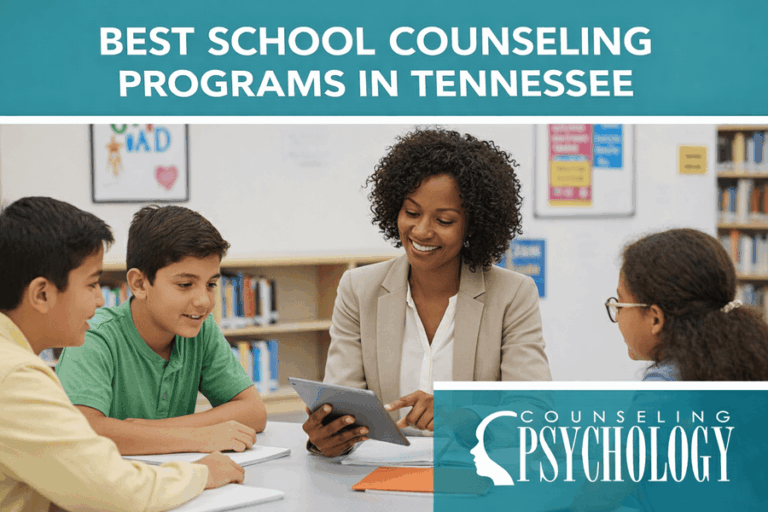
Tennessee offers a strong pathway for students pursuing careers in school counseling, with opportunities to train in urban, suburban, and rural school systems across the state. From large metropolitan districts to smaller community-based schools, Tennessee provides a diverse range of clinical environments that help future school counselors develop the skills needed to support K–12 students academically, socially, and emotionally.
A master's degree in school counseling is the required educational step for licensure in Tennessee. Choosing the right program is essential, not only for meeting state requirements, but also for gaining practical experience and preparing for the realities of school-based counseling roles.
In This Article, You'll Learn:
- Why Tennessee is a strong state for school counseling graduate education
- What master's in school counseling curricula typically include
- How practicum and internship experiences work in Tennessee
- Typical tuition ranges and cost considerations
- School counselor salary ranges and factors that affect pay
2026 Best Master's in School Counseling Programs in Tennessee
Freed-Hardeman University
Henderson, TN - Private 4-year - fhu.edu

Master's - Master of Science in School Counseling
Online & Campus Based - Visit Website
Freed-Hardeman University's Master of Science in School Counseling provides a streamlined 37-credit hybrid program that prepares graduates for Tennessee K-12 licensure in just two years. This program uniquely integrates Christian principles with counseling techniques through flexible online and web-conferenced formats designed for working professionals. Students benefit from experienced faculty and practical field experiences without requiring an entrance exam. The curriculum emphasizes efficient completion with full-time or part-time options at $665 per credit.
- 37 credit hours total
- Hybrid learning format
- Tennessee school counselor licensure
- Full-time or part-time options
- Christian faith integration
- Cost per credit: $665
- Flexible web-conference classes
- Professional experienced faculty
- Two-year completion time
The University of Tennessee-Martin
Martin, TN - Public 4-Year - utm.edu

Master's - Master of Science in Education with a major in Counseling (School Counseling)
Online Learning - Visit Website
The University of Tennessee-Martin's Master of Science in Education with a School Counseling concentration prepares socially ethical professionals through a 100% online format. This CACREP and CAEP-accredited program offers comprehensive training with both full 60-credit degree and 30-credit licensure options, leading to Tennessee school counselor certification. Students develop skills to address academic, career, and personal development needs in educational settings. The program features a favorable 12:1 student-to-faculty ratio and does not require entrance exams for admission.
- 100% Online Coursework
- Full Degree: 60 Credit Hours
- Licensure Option: 30 Credits
- 12:1 Student/Faculty Ratio
- Tennessee Licensure Eligible
- CAEP and CACREP Accredited
- Advanced Counseling Preparation
Johnson University
Knoxville, TN - Private 4-year - johnsonu.edu
Master's - Master of Arts in Counseling (School Counseling)
Online & Campus Based - Visit Website
Johnson University's CACREP-accredited Master of Arts in Counseling with a School Counseling concentration prepares graduates for licensure as Professional School Counselors through a 60-credit hybrid program. This program uniquely integrates a Christian worldview while emphasizing ethical practice, cultural responsiveness, and holistic approaches. Students complete over 600 hours of practicum and internship, gaining expertise in individual and group counseling, classroom guidance, and educational advocacy. The program requires no entrance exam and features a low 12:1 student-faculty ratio, balancing theoretical knowledge with practical clinical experience in a flexible hybrid learning format.
- CACREP-accredited school counseling program
- Hybrid learning format
- 600+ clinical experience hours
- Christian worldview integration
- Low 12:1 student-faculty ratio
- Licensure preparation
- Comprehensive curriculum
Lipscomb University
Nashville, TN - Private 4-year - lipscomb.edu
Master's - School Counseling
Online & Campus Based - Visit Website
Lipscomb University's School Counseling program offers a flexible hybrid format combining online and in-person learning. The program prepares professionals to support students' academic and career development across all educational levels, with particular emphasis on college access strategies. Students can pursue either a Master of Education or Education Specialist degree through this 44-38 credit hour program. Notably, the program does not generally require the GRE for admission. With tuition starting at $953 per credit hour, Lipscomb provides multiple scholarship opportunities including a 25% discount for in-service educators. The program features real-world practicum and internship experiences, expert faculty guidance, and comprehensive training in cultural mediation and collaborative techniques.
- Hybrid online and in-person format
- 44-38 credit hour program
- $953 per credit hour
- No GRE generally required
- 25% in-service educator discount
- Practicum and internship opportunities
- Focus on college access strategies
- Multiple scholarship opportunities
- Located in Nashville, Tennessee
Tennessee Tech
Cookeville, TN - Public 4-Year - tntech.edu

Master's - Counseling and Psychology - School Counseling
Campus Based - Visit Website
Tennessee Technological University's Master of Arts in School Counseling prepares professionals to address academic, social, and personal challenges for K-12 students. This CACREP-accredited on-campus program builds comprehensive counseling skills for diverse populations. Admission requires a minimum 2.75 undergraduate GPA, coursework in psychology, and three recommendation letters. The program does not require an entrance exam and focuses on licensure preparation and professional growth in school counseling.
- CACREP Nationally Accredited
- On-Campus Master's Degree
- 3 Recommendation Letters Required
- 2.75 Minimum Undergraduate GPA
- K-12 School Counseling Focus
Why Study School Counseling in Tennessee
Tennessee is an appealing state for school counseling students for several key reasons:
Diverse Training Environments
Graduate students may complete clinical experiences in a wide variety of settings, including large urban districts, fast-growing suburban systems, and rural schools. This range of exposure helps counselors develop flexibility and cultural competence.
Strong Demand for Student Support Services
School counselors in Tennessee often play central roles in academic planning, attendance interventions, college and career readiness, and social-emotional learning initiatives. Many districts emphasize collaboration with teachers, administrators, school psychologists, and social workers.
Clear Licensure Structure
Tennessee licenses school counselors as school services personnel, and approved graduate programs are designed to align with state endorsement requirements. Selecting a program built around Tennessee licensure expectations is critical for long-term career success.
Learn more about how to become a school counselor.
Tennessee School Counselor Licensure Overview
To work as a school counselor in Tennessee, graduates must earn a school counselor endorsement through the Tennessee Department of Education. This typically requires:
- Completion of a state-aligned master's degree in school counseling
- Supervised practicum and internship experiences in school settings
- Meeting background check and licensure application requirements
Prospective students should confirm that any program they consider explicitly states that it prepares graduates for Tennessee school counselor licensure.
Tip: Always verify licensure alignment with the program's admissions or advising office before enrolling.
What to Expect From a Master's in School Counseling Curriculum
Most Tennessee school counseling programs follow a similar academic structure, combining counseling theory with school-specific applications.
Common Core Courses
- Human Growth and Development (child and adolescent focus)
- Counseling Theories and Techniques
- Group Counseling in School Settings
- Career Development and Postsecondary Planning
- Assessment and Appraisal in Education
- Ethics and Professional Issues in School Counseling
- Multicultural Counseling and Social Justice
- Crisis Intervention and Trauma-Informed Practices
- School Counseling Program Design and Evaluation
Curriculum Overview
| Area of Study | Skills Developed | Application in Schools |
| Academic Counseling | Graduation planning, scheduling, goal-setting | Supports student academic success |
| Social-Emotional Support | Coping strategies, referrals, behavior supports | Improves student well-being |
| Career & College Readiness | Career assessments, FAFSA support, planning | Prepares students for life after graduation |
| Data & Accountability | Needs assessments, outcome tracking | Demonstrates program effectiveness |
Practicum and Internship Experiences in Tennessee
Clinical training is a core component of all school counseling master's programs. These experiences allow students to apply classroom learning in real school environments.
Practicum
Typically completed earlier in the program, practicum experiences focus on skill development, observation, and limited direct counseling activities under supervision.
Internship
Internships are more immersive and involve extended time working in a school setting. Interns may assist with individual and group counseling, academic planning, crisis response, and collaboration with school staff.
Common Placement Settings
- Elementary, middle, and high schools in public school districts
- Suburban and rural school systems
- Schools serving diverse populations and student needs
Tip: In high-demand districts, securing a placement early can make the process smoother—especially for students balancing full-time employment.
Tuition Ranges and Cost Considerations
Tuition for master's in school counseling programs in Tennessee varies based on institution type and residency status.
Estimated Tuition Ranges (Per Credit Hour)
| Institution Type | Typical Range |
| Public (In-State) | $400–$700 |
| Public (Out-of-State) | $700–$1,000+ |
| Private Universities | $700–$1,200+ |
Additional costs may include background checks, professional liability insurance, assessment fees, and commuting expenses for clinical placements.
School Counselor Salary Outlook in Tennessee
School counselor salaries in Tennessee depend on district pay scales, years of experience, degree level, and contract length.
Tennessee Salary Estimates
| Level | Approximate Annual Salary |
| Entry Range | ~$44,000 |
| Median | ~$53,000 |
| Upper Range | ~$78,000 |
Nationally, school and career counselors earn a higher median salary, which can increase with experience, advanced credentials, or employment in larger districts.
Tip: Salary schedules are typically public and posted by school districts, making it easier to compare earning potential across regions.
How to Choose the Right Master's Program in Tennessee
When comparing school counseling programs, consider the following factors:
- Licensure Alignment: Explicit preparation for Tennessee school counselor endorsement
- Clinical Placement Support: Clear practicum and internship processes
- Program Format: Online, hybrid, or campus-based coursework that fits your schedule
- Student Support Services: Advising, supervision quality, and academic resources
- Career Outcomes: Job placement rates, district partnerships, and alumni networks
FAQs
Q: Do Tennessee School Counseling Programs Lead Directly to Licensure?
A: Graduating from an approved program is a required step, but licensure is granted after completing all state requirements and submitting an application to the Tennessee Department of Education.
Q: Can I Complete a School Counseling Master's Degree Online?
A: Many programs offer online or hybrid coursework. However, practicum and internship experiences must be completed in person at approved school sites.
Q: How Long Does a Master's in School Counseling Take to Complete?
A: Most programs take two to three years, depending on enrollment status and internship scheduling.
Q: Can I Transition Into School Counseling With a Different Master's Degree?
A: Some universities offer post-master's or endorsement pathways for individuals with prior graduate counseling degrees, though availability varies by institution.