What you’ll learn in this article…
- IntERact cut risky firearm behaviors 57% in young ED patients.
- Three telehealth sessions plus a smartphone app delivered the intervention.
- Participants also reported less violence, substance use, and mental distress.
Emergency departments have long relied on a single bedside referral to interrupt firearm violence. IntERact, a University of Michigan model tested in a JAMA Pediatrics trial1 and covered in October 2026, replaces that one-time handoff with three post-discharge remote counseling sessions plus a smartphone app.
With firearm violence accounting for roughly 65,000 emergency department visits each year among U.S. teens and young adults, the contrast between a resource sheet and structured follow-up carries real clinical weight. The trial's 57.4% reduction in risky firearm behaviors gives counselors, social workers, and marriage and family therapists a concrete benchmark for lethal-means counseling and safety planning, core competencies for Careers in Suicide Prevention.
What the Interact Trial Found
The IntERact trial tested a preventive counseling model that pairs three brief telehealth sessions with a smartphone app for young emergency department patients who recently carried a firearm.
The headline result
The trial enrolled 373 patients ages 16 to 30 who reported carrying a firearm in the prior three months and owned a smartphone. Six months after the emergency department visit, risky firearm behaviors fell by 57.4% in the IntERact group, compared with a 25.4% reduction in the comparison group.1 The rate ratio was 0.51 (95% CI, 0.33 to 0.79), meaning the intervention group had about half the rate of risky behaviors.1
How risky behavior was measured
Risky firearm behaviors were scored from 0 to 6 using a composite questionnaire drawn from the Tulane University Youth Study and the Conflict Tactics Scale. It captured the frequency and severity of firearm carriage, threats, and use against another person.
Secondary outcomes and standard care
IntERact participants also had less overall involvement in violence, fewer violent injuries, and lower substance use, anxiety, and depression. At three months, physical violence victimization was lower: rate ratio 0.46 (95% CI, 0.26 to 0.81).1 The comparison group received standard injury prevention resources on local community violence and substance misuse prevention from a social worker.
Who delivered the counseling
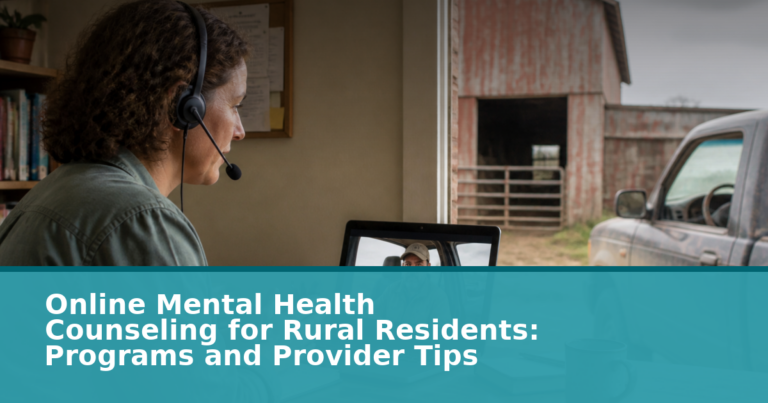
The counseling was delivered by a telehealth health coach. Published reports do not specify the coach's licensure or clinical discipline, and because the intervention combined counseling with a smartphone app, the results cannot show which component drove the change.
How the Er-Plus-Telehealth Workflow Runs
Emergency departments have historically relied on a single bedside referral, but the field is moving toward structured post-discharge contact that continues for weeks. In the IntERact model, an eligible patient leaves the ED and then receives three telehealth sessions within 30 days. Each session pairs behavioral counseling with care management support, moving from safety planning to concrete logistics such as scheduling, transportation, and follow-through on referrals.
The first week after discharge
Picture a 19-year-old patient discharged on a Tuesday. The first telehealth session happens within days, not weeks. Between sessions, the mobile health app keeps the plan alive. Automated daily assessments ask about mood, sleep, and firearm access. Tailored behavioral therapy content reinforces coping skills. GPS-enabled notifications alert the patient when they are nearing a high-risk location, and the app surfaces local resources in real time.
Why the workflow matters for counselors
For counselors and social workers, the appeal is that the intervention is manualized, technology-assisted, and closely aligned with telehealth training for mental health professionals. The phone extends contact beyond the ED bed, but the structured telehealth sessions keep a human clinician in the loop. That shifts the work from one crisis conversation to a connected course of care, with the app handling daily touchpoints and the counselor guiding clinical decisions.
The intervention's reach extends past the ED visit: brief telehealth counseling is reinforced by daily smartphone check-ins and location-based alerts during the highest-risk weeks after discharge. The trial cannot yet separate the counselor's effect from the app's effect on the 57% reduction in risky firearm behaviors.
Where the Counselor Fits: Lethal-Means Counseling and Safety Planning
In an emergency department, counselors, social workers, marriage and family therapists, and other clinicians do more than hand over a resource list. Structured behavioral counseling means a focused, collaborative conversation that names firearm access, reviews storage, and builds a plan the patient can actually follow.
Lethal-means counseling in practice
Lethal-means counseling is a collaborative conversation about making firearms and other dangerous items less available during a high-risk period. That may mean temporary off-site storage, a locked safe, or asking a trusted family member to hold the keys, all folded into a written safety plan rather than delivered as a warning.
CALM-ED, a program run in the emergency department, uses trained research coordinators around the clock. A counselor completes a bedside assessment, follows a scripted session that includes the patient and family, and creates an individualized safe-storage plan for any lethal means present. A follow-up phone call occurs 48 to 72 hours after discharge. The Johns Hopkins CALM training teaches health care and social services providers the same core skills: reduce access to firearms and dangerous medications through off-site or in-home secure storage.1
Matching the conversation to the risk
The counseling differs by pathway. For interpersonal violence, the conversation may focus on avoiding high-risk situations and storing firearms away from quick reach, drawing on advanced training for therapists working with ipv survivors. For suicide risk, a suicide prevention counselor usually makes temporary removal or off-site storage central. For unintentional injury, safe storage around children or inexperienced users is the priority. A counselor's job is to match the safety plan to the presenting risk.
Screening for Firearm Access and Risk in the ED
Northwell Health's firearm injury prevention program screens every emergency department patient age 12 and older, excluding only those in critical condition.1 That universal model captures firearm access unrelated to the reason for the visit and can reduce the stigma of selective questioning. The trade-off is added workflow time and clinician burden.
Universal vs. risk-based screening
Risk-based screening targets suicidality, intimate partner violence, dementia, or recurrent injury. It is more efficient but can miss patients whose firearm risk is not part of the presenting complaint. No general emergency department firearm-injury risk instrument has been widely validated2, though validated suicide-risk tools and violence-risk concepts are the strongest elements currently available.
Asking the question well
Use nonjudgmental, routine phrasing such as "We ask everyone about firearm access because safety matters." Ask about access separately from intent. A screen might include four questions on serious fighting, friend weapon carrying, community environment, and firearm threats. A positive answer should trigger lethal-means counseling, safe storage options such as gun locks, and community referrals before discharge.
IntERact modeled a risk-based entry point: enrollment included patients ages 16 to 30 who reported carrying a firearm in the previous three months. New York's Northwell-led implementation shows that universal screening can be built into Epic with two-tiered education, but a formal statewide outcomes evaluation is not yet publicly available.
Related Articles
Does ED Counseling Reduce Firearm Injury? Evidence and Limits
The evidence base for emergency department firearm counseling is still developing. The strongest current finding is process-level: ED conversations can improve safe storage planning. Outcome data on repeat injury and cost are more limited.
- In the CALM-ED pilot, 63 of 84 ED patients who reported lethal-means access (75 percent) described a specific storage plan after the counseling session.
- A 2008 counseling trial by Barkin and colleagues found a 9.7 percent increase in storing firearms with cable locks at six months in the intervention group.
- A systematic review of lethal-means safety counseling interventions concluded that counseling can improve firearm storage behavior.
- CALM-ED did not report reductions in firearm injuries, suicides, or repeat emergency department visits for firearm injury.
- Emergency department firearm counseling has not yet been established as a repeat injury reduction intervention in the available published evidence.
- The CALM-ED study was a pilot quality improvement project focused on storage planning, not a controlled outcomes trial for recurrent firearm injury.
- The Barkin et al. trial was not specific to the emergency department, so its storage findings may not directly transfer to ED practice.
- No cost-effectiveness analysis of emergency department firearm injury prevention counseling was available in the reviewed sources.
A preventive intervention delivered in a clinical setting can decrease the risk of these behaviors, as well as associated behaviors such as substance use.