What you’ll learn in this article…
- ASU's clinic charges $100 per semester, not per session.
- Trainees earn supervised hours for MFT, MSW, and CMHC licensure.
- Licensed faculty supervise every session, assuring quality care.
Over 150 million Americans live in areas with a shortage of mental health professionals, and private-pay therapy often exceeds $150 per session.
University counseling training clinics bridge this gap by pairing community clients with supervised graduate students training to become community mental health counselors, offering sessions for as little as $100 per semester. Arizona State’s Counseling Training Center, operating since 1956, exemplifies this model: it provides free counseling for in-state students and low-cost care for Arizona residents while meeting the clinical hour requirements that MFT, MSW, and CMHC licensure demands.
Why University Counseling Clinics Are a Viable Option for Affordable Care
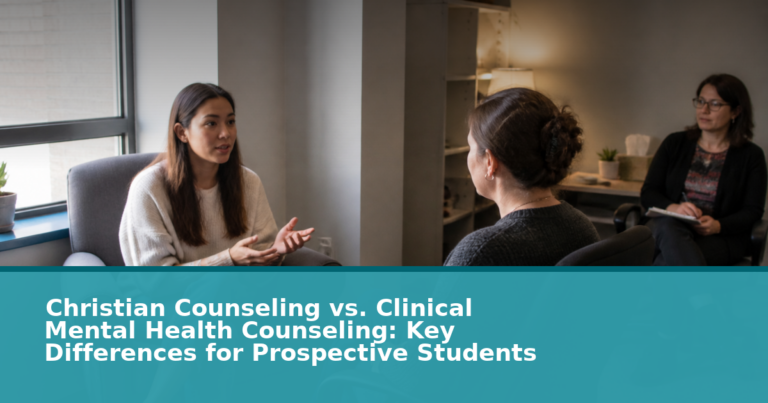
Licensed mental health counselors typically complete 2,000 to 3,000 hours of supervised clinical work post-degree, and university training clinics supply a significant portion of these hours while offering affordable care to the community. These clinics operate as teaching practicums where graduate students in counseling, clinical psychology, marriage and family therapy, and social work programs deliver therapy under the direct oversight of licensed doctoral-level faculty. The supervision is intensive: faculty often observe sessions through one-way mirrors or review video recordings, providing real-time feedback and ensuring that clients receive evidence-based care. This arrangement creates a dual benefit: students accumulate the clinical hours required for licensure, while clients gain access to therapy at steeply reduced fees, typically on a sliding scale tied to income. For example, ASU offers free and low-cost counseling through its Counseling Training Center, which charges as little as $100 per semester for community members, a fraction of typical private-practice rates. Despite the involvement of trainees, outcomes are comparable to those of licensed professionals because of the layered supervision model. Research consistently shows that supervised training clinics deliver effective interventions for common concerns like depression and anxiety.
How ASU's Counseling Training Center Works: A Blueprint for Low-Cost Care
For prospective clients weighing the difference between a $100-per-session marketplace rate and a $100-per-semester university clinic fee, the math seems almost too good to be true, which is why understanding the structure behind ASU's Counseling Training Center matters. Operating since 1956 on the Tempe campus, the CTC has refined a model that pairs affordability with rigorous quality controls, and starting August 2026 it expands to the Polytechnic campus in Mesa, bringing sessions closer to East Valley residents.
A Fee Structure Designed for Access
The pricing strips away common financial barriers without sacrificing session consistency. Arizona students enrolled at any state university, community college, or private institution attend for free each semester. ASU faculty and staff pay $80 per semester, while unaffiliated adults, including remote learners and community members, pay $100 per semester. These flat fees cover up to 15 weekly sessions with the same counselor, creating a predictable, long-term therapeutic relationship rare in sliding-scale models.
A Scheduled, Supervised Model
Appointments open on August 24, 2026, and are filled on a first-come, first-served basis, so early scheduling is key. Every session is delivered by a counselor-in-training, a student pursuing one of the types of counseling degrees, who is closely supervised by licensed clinical faculty, blending fresh academic knowledge with seasoned oversight. Jamie Bludworth, Ph.D., director of the CTC, captures the dual purpose: “Our goal is to remove that barrier by providing consistent, affordable care while preparing future counselors through supervised clinical training, which mirrors the lmft supervision hours required for licensure.” This model ensures each client receives evidence-based care guided by current best practices, a win for both the community and the next generation of clinicians.
Every therapy session at a university training clinic serves a dual purpose: it provides affordable mental health care to the community while fulfilling the supervised clinical hours that aspiring counselors need for licensure in programs like MFT, MSW, and CMHC. At ASU's Counseling Training Center alone, this model helps train future therapists while meeting a vital community need.
Who Pays? Funding Models That Make Low-Cost Therapy Possible
Student fees versus general university budgets: two funding streams that determine how training clinics keep therapy costs low. At large public universities, student services fees are often the primary revenue source. Arizona State University's Counseling Training Center, for instance, offers free sessions to any student enrolled at Arizona public universities or community colleges, a benefit directly tied to the fees those students pay. At the University of Illinois Urbana-Champaign, a dedicated $44 per-semester student fee generates approximately $3.9 million annually for its counseling center.1
But student fees alone rarely cover the full cost. Many clinics, including ASU's, draw on university general funds to subsidize operations, particularly for non-student clients. The UNC system, for example, funds 31% of its mental health services from general university allocations.2 External grants further bridge the gap: federal agencies like the Substance Abuse and Mental Health Services Administration (SAMHSA) and the Health Resources and Services Administration (HRSA) award millions to training clinics that serve communities in states with the highest need for counselors.3 These grants often support expanded telehealth or outreach programs.
This layered funding model allows clinics to charge far below private practice rates. At ASU, uninsured Arizona adults pay just $100 per semester, up to 15 sessions, because the clinic's training mission is underwritten by student fees, university budgets, and occasional grants. Without these subsidies, similar care could cost ten times as much.
Who Can Access University-Based Counseling? Students Vs. The Public
University-based counseling clinics serve two main groups: the students and employees of the host institution, and members of the outside community. Eligibility policies differ from program to program, and the assumption that these services are only for enrolled students is incorrect.
Access for campus students and staff
Many clinics prioritize currently enrolled students with the lowest rates, sometimes extending similar benefits to faculty and staff. At ASU's Counseling Training Center (CTC), for example, students from all Arizona public universities, community colleges, and private colleges receive free counseling each semester. ASU employees pay just $80 per semester.
Open to the public
Many training clinics welcome the general public, often charging a slightly higher fee to support clinic operations. ASU's CTC is open to any Arizona resident, regardless of university affiliation, for $100 per semester. This reflects a wider pattern: programs recognize the dual benefit of offering affordable therapy to the community while giving graduate trainees essential clinical experience. While some programs may limit public access by geography or residency, most maintain few barriers beyond a sliding-scale cost.
Busting the "students only" myth
Prospective clients often overlook university clinics, assuming they are for undergraduates alone. In fact, many centers are designed as community resources. Directory data often shows that publicly accessible clinics outnumber those restricted to campus populations, especially within graduate psychology, counseling, and social work departments. The best approach is to review individual clinic websites or call to confirm current eligibility and fee schedules.
What Therapy Services Are Offered at University Training Clinics?
What kinds of therapy can I get at a university training clinic, and do they cover my concerns? Most clinics provide a broad spectrum of modalities. You can typically find individual counseling, couples therapy, family sessions, and group therapy. Common issues treated include anxiety, depression, academic stress, career indecision, relationship problems, and personal concerns. At ASU’s Counseling Training Center, for instance, clients address everything from work-related stress to identity exploration.
Beyond the basics, some clinics offer specialty services. Depending on the program, you might encounter trauma-informed care, counseling children through play therapy, substance use counseling, or support for life transitions. However, the exact menu of services varies. Clinics reflect the expertise of their supervising faculty and the training needs of their students. That means one clinic might excel in cognitive-behavioral therapy, while another emphasizes multicultural counseling or creative arts therapies. It’s wise to ask upfront. Importantly, all care is delivered by counselors-in-training under close supervision by licensed professionals. This dual layer of support means you get fresh perspectives grounded in evidence-based practice, often at a fraction of the cost.
Snapshot: What You'll Pay at University Clinics Vs. Private Practice
University counseling clinics offer dramatically lower session fees compared to private practice. Here's a side-by-side look at the costs and structure.

How Are Costs Determined? Sliding Scales, Session Limits, and Wait Times
Private-pay therapy in the U.S. averages $143 to $174 per session1 according to national cost data, with some urban areas charging over $250.4 University training clinics flip that model by tying fees to income, often making sessions accessible for as little as $5.4 This sliding scale is the cornerstone of how these clinics determine costs.
The Sliding Scale: Paying What You Can Afford
Most university training clinics use a sliding scale based on household income and sometimes student or community affiliation status. Rates typically range from $5 to $60 per session1, with the most common bracket falling between $20 and $40. Some clinics may charge up to $90 at the upper end for higher-income clients1, but this remains far below private practice rates. For enrolled college students, campus counseling centers often cover the full cost, making sessions free, though these may be limited to shorter-term care.
Session Caps and What They Mean for Ongoing Care
To manage demand and ensure that therapists' clinical experience requirements are met, clinics impose session limits. The Counseling Training Center at Arizona State University, for example, offers up to 15 sessions per semester. Other programs cap annual sessions between 6 and 12. While this structure works well for focused, short-term goals, clients needing long-term support may need to combine services or plan for transitions. Some clinics exclude group therapy from these caps, offering an additional low-cost option.
Wait Times and the Importance of Early Registration
High demand often means wait times can stretch from a few days to several weeks. In Australia, university clinics may require clients to wait until the next semester intake.3 Because services operate on a first-come, first-served basis, registering as early as possible is key. Prospective clients should check with their local university clinic about intake periods and expected delays.
Questions to Ask Yourself
Are you comfortable working with a counselor in training under licensed supervision?
Do you need ongoing therapy beyond a set number of sessions per term?
Is cost the main barrier preventing you from accessing care?
Do you prefer in-person sessions or the flexibility of telehealth?
What to Expect as a Client: Supervision, Quality, and the Session Experience
An affordable therapy session often raises a fair question: does a lower price tag mean lower quality? In university training clinics, the answer lies in a rigorous supervision structure that safeguards your care.
Supervision That Protects Your Therapy
As a client, you work directly with a graduate-level trainee who is closely monitored by a licensed clinical faculty member.3 Supervision is not a passive oversight; it involves scheduled weekly meetings where the trainee reviews your sessions, receives feedback, and plans interventions.4 Supervisors may also observe sessions live through one-way mirrors or review video or audio recordings.5 This layered model ensures that every therapeutic decision is vetted by an experienced professional who bears ultimate responsibility for your care.
The People Behind Your Sessions
Trainees are typically in the second year or later of a master's (e.g., counseling, social work, marriage and family therapy) or doctoral (e.g., clinical psychology) program. They have completed foundational coursework and are now accumulating supervision hours under structured supervision. All programs are accredited by bodies like CACREP or APA, which mandate competencies in diagnosis, ethics, and evidence-based practice. Before you begin, the trainee will disclose their training status and explain the supervision arrangement as part of informed consent.4
Quality Checks and Ethical Safeguards
Quality assurance in these clinics is multi-layered. Beyond weekly supervision, many clinics use outcome questionnaires to track your progress session by session.4 Ethics and confidentiality are paramount: sessions are handled with the same privacy standards as any professional setting, and licensed staff are available for crisis coverage. Supervisors perform direct observation, review case notes, and step in immediately if concerns arise. Should supervision challenges arise, remediation plans step in to ensure your treatment stays on track.
Client Satisfaction Tells a Consistent Story
Research and clinic feedback reveal that clients often form strong therapeutic alliances with their trainee counselors. The freshness of a student's perspective, combined with the careful oversight of a seasoned clinician, can translate into attentive, thoughtful care. Satisfaction ratings are high, and many clients appreciate the time and effort trainees pour into their cases. If, for any reason, you feel the fit isn't right, you have the option to request a different counselor, a flexibility that underscores the client-centered mission of these clinics.
A single CACREP-accredited clinical mental health counseling program in California graduates 32 new therapists each year, feeding the pipeline of clinicians who often train in university counseling clinics.
The Future of University Counseling: Telehealth, Expansion, and Growing Demand
The rise of telehealth has reshaped university counseling clinics. Before the pandemic, only 21 percent of psychologists used telehealth for patient care1. By the pandemic's peak, that figure spiked to 86 percent1, and it has since stabilized with 88 percent of practitioners offering hybrid or remote services in 20231. University counseling centers now report that 30 to 40 percent of all sessions are virtual1, and 90 percent of campus leaders say virtual care effectively supplements in-person services2. This shift has extended the reach of training clinics, connecting student therapists with clients who might otherwise face geographic or scheduling barriers.
ASU's Counseling Training Center exemplifies the push to expand both in-person and virtual capacity. Its upcoming Polytechnic campus location in Mesa, opening in August 2026, will serve Arizona residents with free or low-cost in-person and telehealth sessions, mirroring the long-running Tempe clinic. This physical growth runs parallel to broader trends in counseling and psychotherapy: 59 percent of colleges now partner with virtual mental health providers3 like UWill and TimelyCare, creating hybrid care ecosystems.
Interdisciplinary training clinics are another emerging model, uniting social work, psychology, and nursing students under shared supervision. These collaborative settings prepare providers for team-based care while offering more comprehensive services to communities. Looking ahead, fully online-only university clinics hold promise for serving rural regions, including states with highest need for psychologists, where mental health professionals are scarce. By leveraging telehealth infrastructure developed in recent years, graduate training programs can deliver supervised, affordable care to populations that have historically lacked access, a natural evolution of the dual-purpose mission that has defined these clinics for decades.