

What you’ll learn in this article…
- Only 38 randomized controlled trials exist after 34 years, averaging fewer than 2 per year.
- Most interventions require over 25 hours, lacking options for lower-risk youth with behavioral health needs.
- Trauma and suicide outcomes go largely unmeasured despite prevalence rates above 90%.
- Community-based services can reduce later justice involvement, especially for youth with undiagnosed mental health conditions.
How strong is the evidence base for behavioral health interventions with justice-involved youth? A 2025 systematic review found only 38 randomized controlled trials over 34 years, an average of fewer than two studies annually.1 This thin pipeline forces clinicians to make high-stakes treatment decisions for adolescents with high rates of trauma, substance use, and suicidality, yet those outcomes are rarely measured. The available interventions often require 25 hours or more of contact, leaving few low-intensity options for lower-risk youth who still carry significant mental health needs. For practitioners considering counseling specialties most in demand, juvenile justice represents one of the field's most underserved frontiers. This gap between clinical demand and research production means practitioners must navigate a field where the most pressing questions remain unanswered.
The State of Evidence: What a 34-Year Review Reveals
The juvenile justice system has long called for evidence-based interventions, yet the research pipeline has not kept pace with clinical demand. A sweeping systematic review by Sheerin and colleagues (2025), published in *Clinical Psychology: Science and Practice* and highlighted by the American Psychological Association, lays bare just how thin the evidence base remains.1 The review combed through decades of work and found only 38 unique randomized controlled trials, a total of 51 studies, testing psychosocial interventions for justice-involved youth in community settings between 1990 and 2024. For a population that numbers in the hundreds of thousands annually in the United States alone, that amounts to an average of just 1.52 studies per year.
A Narrow Evidence Base, Even at Peak Interest
Even during the most active period in the mid-2010s, when the number of published trials hit its zenith, the yearly output never exceeded a handful of studies. This sluggish rate stands in stark contrast to the steady growth of diversion programs and the widespread policy push for community-based alternatives to detention. The takeaway for clinicians is sobering: the treatments you are most likely to be asked to deliver, or to advocate for, have been subjected to strikingly little rigorous testing. Decision-makers in forensic and community mental health counselor settings are often forced to extrapolate from a small pool of trials, many of which were conducted under tightly controlled conditions that may not mirror real-world caseloads.
Intervention Intensity and the Missing Middle
Beyond the scarcity of studies, the review reveals a mismatch between what has been tested and what many youth actually need. The average intervention in these trials demanded roughly 25 hours of contact time, a level of intensity suited for youth at high risk of reoffending. But the juvenile justice system encounters countless adolescents who fall into a moderate-risk category: they have significant behavioral health needs but may not require the resource-heavy, long-duration models that dominate the literature. This leaves clinicians with few validated, low-intensity options for that middle group, forcing a false choice between over-treating or underserving vulnerable youth.
Overshadowed Outcomes: Trauma and Suicidality
Perhaps most troubling is what the studies chose to measure. The predominant outcomes were delinquency and behavior problems, followed by substance use. While these are undoubtedly important, the review found that few trials examined trauma-related concerns or suicidal thoughts and behaviors, despite the well-documented prevalence of both in justice-involved populations.1 For a practitioner, this signals a critical blind spot: the interventions you may be trained in likely have little to no evidence for addressing the very experiences that brought many youth into the system in the first place.
The Research-to-Practice Gap Persists
The review's overarching message is unmistakable: the push for evidence-based diversion did not translate into a proportional increase in intervention development.1 As a result, the field is left with a handful of well-studied, intensive programs and a vast, under-researched middle ground. For those entering forensic psychology or counseling, this reality underscores the need to approach the existing evidence with both respect and skepticism, and to become part of the next generation of practitioners who demand and contribute to a more responsive evidence base. The mental health workforce shortage compounds this challenge, making it all the more urgent to develop scalable, lower-intensity options that real-world clinicians can actually deploy.
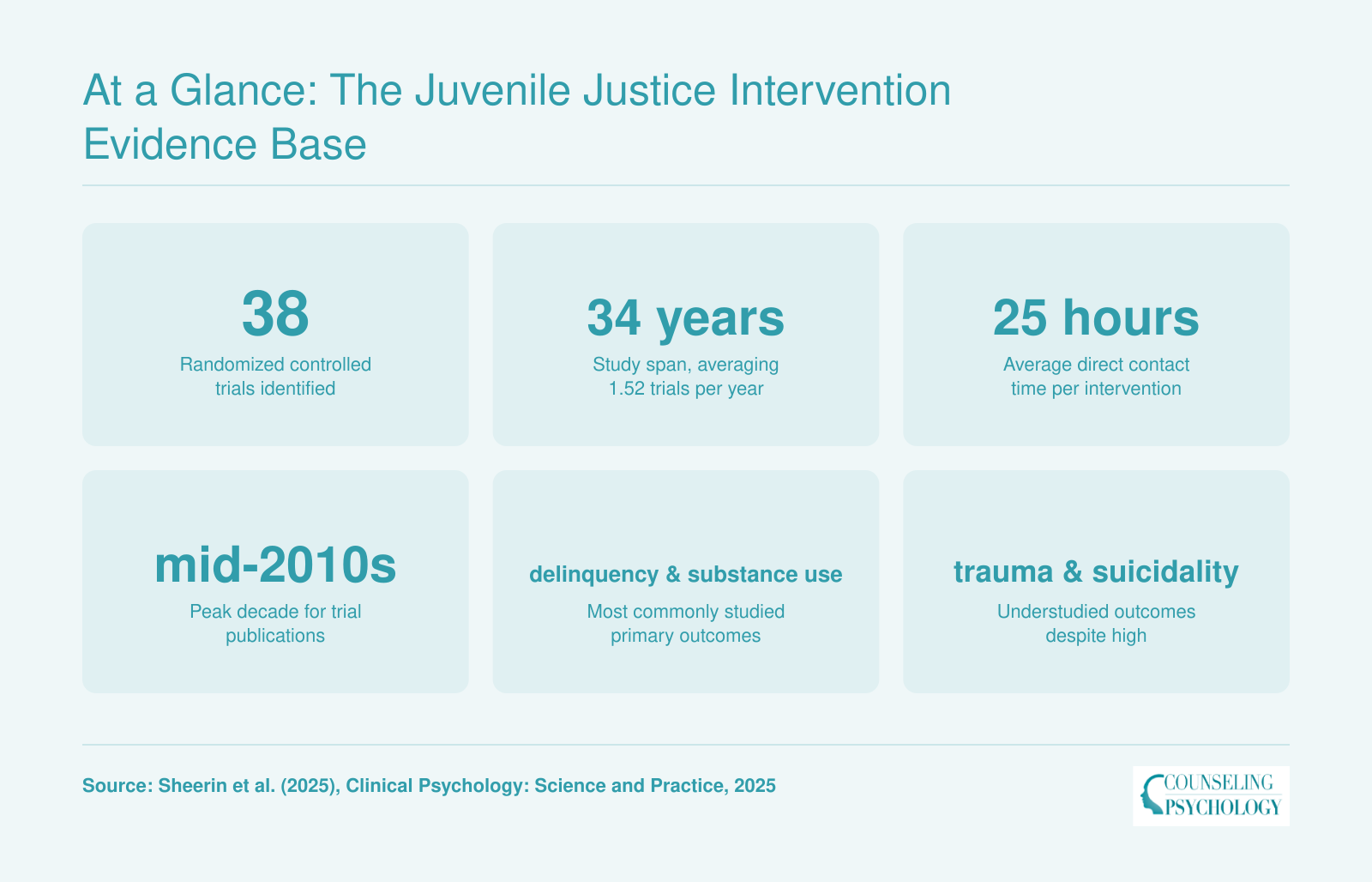
At a Glance: The Juvenile Justice Intervention Evidence Base
A 2025 systematic review of community-based psychosocial interventions for justice-involved youth exposes a thin evidence base. Despite decades of calls for evidence-based diversion, only 38 randomized controlled trials have been conducted in 34 years. The numbers below reveal key gaps that practitioners should understand when selecting programs.
Comparing Major Interventions: MST, FFT, TF-CBT, MDFT, and ART
Head-to-Head Comparison
Below is a structured overview of five widely implemented psychosocial interventions used with justice-involved youth. Each intervention varies in intensity, target population, cost, and the outcomes it was designed to address.
- Multisystemic Therapy (MST): Targets chronic, violent juvenile offenders. Aims to reduce arrests, incarceration, and out-of-home placement. Delivered over 3, 5 months with an average of 60+ clinical hours. Cost per youth ranges from $9,800 to $12,000.1 Training requires a 5-day orientation, weekly consultation, quarterly boosters, and annual fidelity monitoring through the Therapist Adherence Measure.2 Evidence strength: small-to-moderate effect sizes, with 26, 70% recidivism reduction in high-risk youth.3
- Functional Family Therapy (FFT): Designed for moderate-risk justice-involved youth. Primary outcomes include reduced re-arrest and violation rates. Typically involves 20, 30 clinical hours over 3, 5 months. Cost per youth is $3,000, $5,000. Training includes a 3-day basic, 2, 3-day advanced, 12, 18 months of consultation, and ongoing fidelity reviews via the FFT system. Evidence strength: small-to-moderate effect sizes, with a 20, 40% relative reduction in reoffending for moderate-risk youth.4
- Trauma-Focused Cognitive Behavioral Therapy (TF-CBT): Originally developed for trauma-exposed children and adolescents, it is increasingly used in juvenile justice settings. Targets PTSD, depression, and anxiety symptoms. Delivers 15, 30 clinical hours over 3, 6 months. Cost is mainly billable sessions (hundreds to low thousands). Training includes online modules (~10 hours), a 2-day workshop, at least 9 consultation calls, and 3+ cases for certification.5 Evidence strength: moderate-to-large effect sizes for PTSD (d≈0.5, 0.8), but effects on recidivism remain uncertain.
- Multidimensional Family Therapy (MDFT): Serves substance-using and delinquent adolescents. Aims to reduce substance use and delinquency. Provides 40, 60 clinical hours over 4, 6 months. Cost varies by intensity, typically in the low-to-mid thousands. Training involves 3, 5-day basic training, ongoing supervision, advanced trainings, and video-based fidelity review. Evidence strength: small-to-moderate effect sizes; some studies show outcomes comparable to MST.4
- Aggression Replacement Training (ART): Group-based intervention for aggressive youth in juvenile justice and school settings. Reduces aggression and improves social skills. Delivers 30 group hours over 10 weeks. Cost is low hundreds per youth. Training requires a 2, 3-day facilitator training, with optional facilitator certification. Evidence strength: small-to-moderate effect sizes for aggression reduction, but limited data on recidivism.4
Which Intervention Is Most Effective?
No single intervention consistently outperforms all others for every youth. The most effective approach depends on the young person's risk level, specific presenting concerns, and the setting in which services are delivered. For high-risk, chronic offenders, MST's intensive family- and community-based model shows the largest recidivism reductions.3 For moderate-risk youth, FFT achieves meaningful outcomes at roughly half the cost and with a briefer training footprint. When trauma symptoms are the primary driver of behavioral health needs, TF-CBT's robust effects on PTSD may be the best clinical fit, though its recidivism impact is still under study. MDFT is a strong choice when substance use co-occurs with delinquency, and ART offers a cost-effective, group-based skill-building approach for aggressive behaviors. Practitioners weighing these options should also consider counseling specialty areas when determining which training pathway aligns with their clinical focus.
MST vs. FFT: Two Family-Based Alternatives
Both MST and FFT are family-based, but they differ markedly in intensity, cost, and target population. MST wraps services around the youth and family around the clock, with small therapist caseloads (3, 6 families) and frequent home visits, leading to higher per-youth costs ($9,800, $12,000).1 FFT is a clinical therapy model with manageable caseloads (10, 12 families), shorter treatment duration, and lower costs ($3,000, $5,000). Evidence suggests MST's effect sizes may be larger for the most serious offenders, while FFT is more scalable for moderate-risk youth who make up the majority of justice-involved populations.4 For programs with limited budgets, FFT often offers a better ratio of impact to cost, but for youth at imminent risk of out-of-home placement, the upfront investment in MST may pay off in reduced long-term system costs.
Questions to Ask Yourself
The Missing Piece: Trauma, Suicidality, and Understudied Outcomes
Despite decades of advocacy, the behavioral health intervention field for justice-involved youth has largely overlooked two of the most pressing clinical concerns: trauma exposure and suicidal behavior. Up to 90% of youth in the juvenile justice system have experienced at least one traumatic event, and research consistently finds that suicidal ideation affects roughly one in three, with attempts far exceeding community rates. These are not secondary problems; they are core drivers of emotional dysregulation, aggression, and repeated system involvement.
Yet the systematic review by Sheerin et al. (2025) reveals a stark mismatch: of the 38 RCTs published over 34 years, very few designated trauma or suicidality as primary outcomes.1 Instead, most studies focused on delinquency or substance use, and when trauma or suicide measures were included at all, they were typically secondary or incidental. Many trials excluded youth with active suicidal ideation outright, inadvertently filtering out those most in need.
The Reach and Limits of TF-CBT
Trauma-Focused Cognitive Behavioral Therapy (TF-CBT) is the best-researched trauma-specific intervention for youth, with a robust evidence base in child welfare populations. However, rigorous RCTs of TF-CBT within juvenile justice settings remain scarce. Community-based practitioners working with court-involved adolescents often find that TF-CBT protocols assume a level of family stability and caregiver involvement that is not always present. Adaptations exist, but until they are tested head-to-head in justice populations, clinicians must use clinical judgment and trauma-informed practices to extend the model's principles.
Suicide Screening Cannot Wait for More Trials
Practitioners cannot postpone life-saving screening while waiting for specialized intervention trials. Validated tools like the Ask Suicide-Screening Questions (ASQ) and the Columbia-Suicide Severity Rating Scale (C-SSRS) are brief, free, and feasible for juvenile justice intake, probation, and counseling sessions. Integrating these into routine workflow ensures that suicidal ideation is detected early, even when the primary referral concern is aggression or substance use. When risk is identified, standard safety planning and connection to crisis services become immediate next steps, regardless of whether a formal intervention is being studied.
Embedding Trauma-Informed Care Now
Trauma-informed care (TIC) provides a framework that can be operationalized without waiting for RCTs. Core principles, including safety, trustworthiness, collaboration, empowerment, and cultural responsiveness, align with existing counseling specializations and competencies. Training front-line staff, adjusting physical environments, and modifying behavior management policies to reduce re-traumatization are actionable steps that every facility can take. TIC does not replace evidence-based interventions but enhances their delivery and can mitigate the impact of unaddressed trauma.
Finally, the field must advocate for dedicated funding to develop and test brief, trauma-focused protocols specifically designed for justice-involved youth. Low-intensity options that can be delivered by bachelor's-level staff or within short detention stays are urgently needed. Clinicians in forensic and counseling settings are ideally positioned to partner with researchers and drive this agenda forward.
Low-Intensity Options for Lower-Risk Youth With High Behavioral Health Needs
The Gap: When Youth Fall Through the Cracks
A recent 34-year review found that the average behavioral health intervention for justice-involved youth delivers over 25 hours of contact.1 While these intensive, multisession models, like Multisystemic Therapy or Functional Family Therapy, have strong evidence for higher-risk youth, they leave a significant gap for young people at low-to-medium risk of future offenses but with pressing mental health or substance use needs. These youth often face long waitlists, scheduling conflicts, and mistrust of court-affiliated services, yet they are routinely matched to programs designed for higher-risk populations.2 The result is a mismatch that fails to address their behavioral health concerns and can even worsen outcomes.
Why More Isn't Always Better: The Risk Principle
The risk-need-responsivity (RNR) model warns that delivering intensive services to low-risk youth can actually increase recidivism. High-contact interventions may disrupt protective factors like school attendance, family routines, and positive peer networks, while exposing the youth to higher-risk peers. Clinicians working in juvenile justice settings need calibrated options that respect this principle, yet the evidence base remains dominated by heavier interventions.3 For youth who do not require a 20-hour family-based model, the toolbox has been thin, leaving practitioners with few validated, time-limited alternatives. Technology in counseling is one area where brief, scalable delivery formats are beginning to address this shortage.
Emerging Low-Intensity Tools
In response to this gap, several brief and digitally delivered approaches have begun to emerge in juvenile justice settings since 2020.
- Brief motivational interviewing (MI) protocols: Sessions as short as 15-30 minutes, using MI-based conversations, screening tool feedback (e.g., ASSIST, CRAFFT), and a warm handoff to services when needed. These can be delivered at court hearings, during diversion intake, or in probation offices.
- Single-session interventions (SSIs): Lasting 30-60 minutes, SSIs teach a focused skill or coping strategy and have shown promise for general adolescent mental health, with adaptations now being piloted for justice-involved youth.3
- Digital CBT tools: Interactive platforms with video psychoeducation, branching scenarios, quizzes, and guided journaling are being tested for engagement and short-term knowledge gains, though rigorous randomized trials are not yet available.5
- Telehealth services: Overcome transportation and scheduling barriers and help maintain continuity of care during reentry after release from a facility.2
One hybrid approach, JJ-TRIALS, pairs brief MI with modular CBT and has increased referral rates to substance use treatment in pilot studies. Trauma-informed initiatives are also incorporating brief psychoeducation, coping skills, and digital materials within staff training and environmental changes.6
Bridging the Gap Right Now: A Stepped-Care Approach
Even without a full suite of proven low-intensity protocols, practitioners can use existing tools to triage youth more effectively.
- Combine a validated screening instrument, like the MAYSI-2, with a stepped-care framework that matches service intensity to assessed risk and need.3
- For low-risk youth with high behavioral health needs, start with the lightest touch: brief MI, a single-session intervention, or a psychoeducational group, and re-assess before escalating.
- Leverage diversion points, where youth are often most receptive and the mandate for intensive programming is lower. Offer brief conversations that build trust and motivate voluntary engagement rather than defaulting to a mandated longer program.
- Whenever possible, rely on providers who are culturally matched and community-based; youth are more likely to engage with services that feel familiar and confidential, reducing the mistrust that often undermines court-linked referrals.2
These steps do not replace the need for more rigorous research on low-intensity, digitally delivered, and stepped-care models. But they offer a realistic path for clinicians working in systems where every hour of a youth's time, and every therapeutic contact, must be targeted to the right risk level. By matching intervention intensity to the young person's profile, practitioners avoid the iatrogenic effects of over-serving and increase the odds that a first contact with behavioral health leads to a lasting, positive connection.
Matching intervention intensity to risk level is essential to avoid doing more harm than good. Placing low-risk youth in intensive programs wastes resources and exposes them to higher-risk peers, potentially worsening outcomes. Meanwhile, high-risk youth given only brief interventions lack the structure they need. A stepped-care model helps clinicians tailor treatment intensity, but the field desperately needs more moderate-intensity options to serve the broad middle of the risk spectrum.
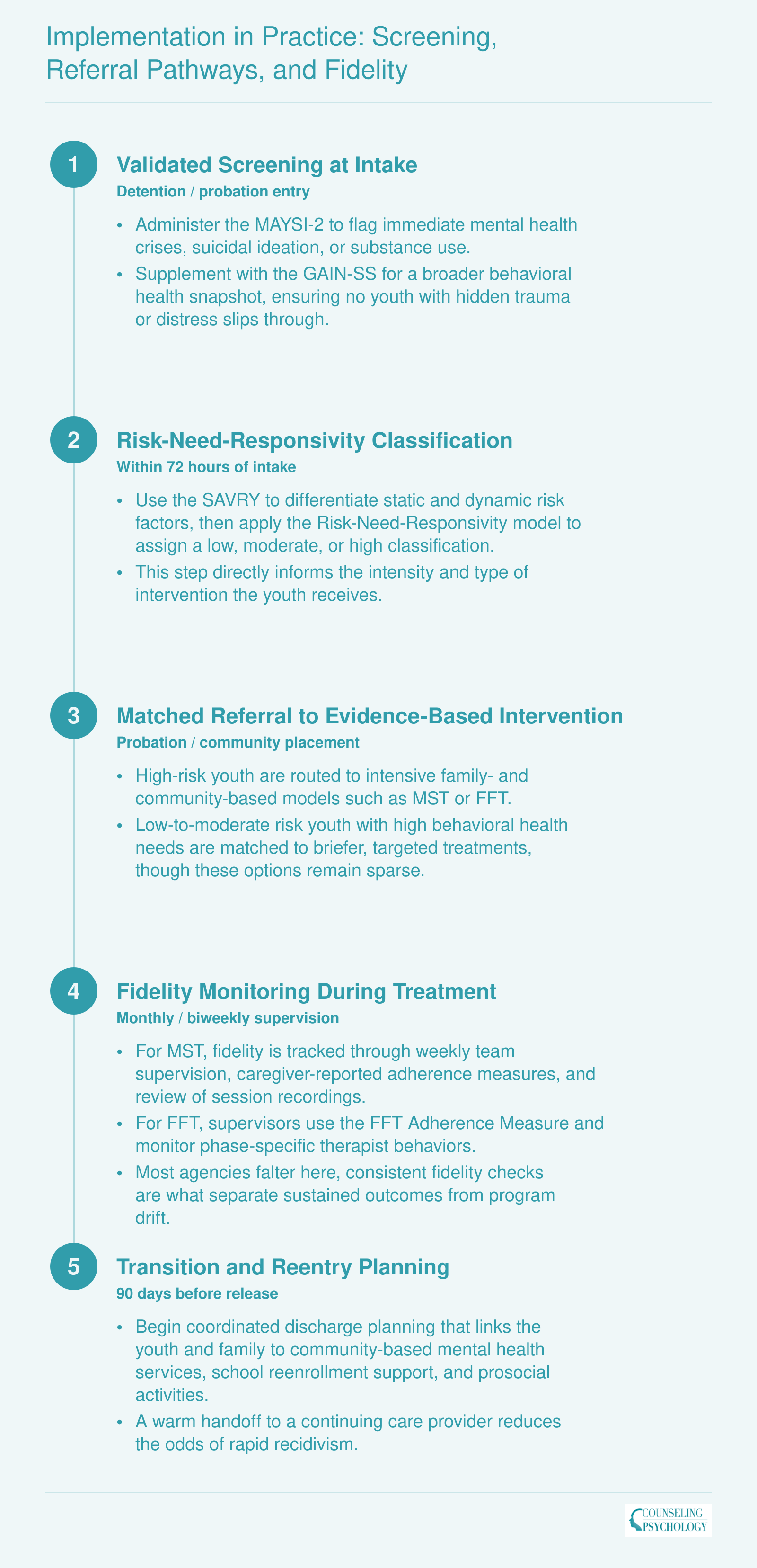
Implementation in Practice: Screening, Referral Pathways, and Fidelity
Translating evidence-based interventions into routine practice requires a structured workflow that aligns screening, risk classification, and ongoing fidelity checks. The steps below reflect the standard of care across detention, probation, and community reentry settings.
Addressing Equity: Adapting Interventions for Underserved Populations
Disparities in Justice Involvement and Intervention Access
Youth of color, Native American and tribal youth, girls, LGBTQ+ youth, and youth with intellectual disabilities are all overrepresented in or uniquely harmed by the justice system, yet they remain starkly underrepresented in the intervention research. National data from 2023 lay bare the racialized landscape: Black youth were incarcerated at a rate of 293 per 100,000, compared to 52 per 100,000 for white youth, a ratio of 5.6 to 1.1 Native American youth were detained at 199 per 100,000, nearly four times the white rate.1 Latino youth face a rate of 65 per 100,000.1 These disparities extend beyond confinement; in Iowa, African American youth were 6.5 times more likely than white youth to enter the system for a misdemeanor offense in 2019.3 Despite this heavier system contact, Black youth are less likely to be referred to community-based behavioral health programs than white youth with comparable offenses, a pattern that undercuts the promise of evidence-based diversion. Part of this gap traces back to a persistent shortage of BIPOC therapists available to serve these communities.
The overlooked needs of girls and LGBTQ+ youth
Standard delinquency-focused intervention models were largely developed with boys in mind. Girls in the juvenile justice system often follow different pathways into legal involvement, with relational trauma, sexual victimization, and mental health struggles playing central roles. Few empirically supported interventions explicitly address these gendered trajectories, leaving practitioners to improvise gender-responsive programming. Similarly, LGBTQ+ youth, who experience elevated rates of victimization, family rejection, and mental health crises in detention, remain largely invisible in the intervention research. Youth with intellectual and developmental disabilities, though frequently overrepresented, are also absent from study samples, despite needing only modest accommodations such as visual supports and caregiver-involved treatment to benefit from EBPs.
Cultural adaptation in practice
Meaningful equity work requires more than surface-level awareness. Practitioners can ground their efforts in established cultural adaptation frameworks such as Bernal's ecological validity model, which emphasizes language, persons, metaphors, content, concepts, goals, methods, and context. Concrete strategies include hiring staff who reflect the cultural and linguistic backgrounds of the youth served, forming community advisory boards to shape treatment goals, and routinely collecting disaggregated outcome data to monitor whether interventions perform equitably across groups. Special populations counseling programs can help prepare practitioners with the targeted competencies this work demands. When selecting an evidence-based practice, ask whether the developer offers guidance on cultural adaptation and whether any published outcome studies have examined differential effects by race, ethnicity, gender identity, or sexual orientation. Track treatment completion and recidivism by demographic group, and pair quantitative data with qualitative feedback from youth and families to catch subtle barriers that numbers alone miss. Without these intentional steps, the field risks perpetuating the very inequities interventions are meant to heal.
How Community-Based Mental Health Services Reduce Justice Involvement
Up to 70% of justice-involved youth have a diagnosable mental health condition, but the majority do not receive services until after they enter the system. Community-based mental health interventions disrupt this pattern by addressing behavioral health needs before offending escalates or while youth are diverted from formal court processing.
Pre-Arrest Diversion: Intervening Before Justice Involvement Escalates
Civil citation programs, school-based mental health clinics, and co-responder models pair law enforcement with clinicians to steer youth toward services instead of arrest. Evaluations of Florida's civil citation initiative, for example, found re-arrest rates as low as 4% among participants compared to 13% for youth who were formally processed. School-based mental health centers in some districts have reduced disciplinary referrals and school-based arrests by providing on-site therapy, crisis intervention, and linkage to community supports. These approaches catch early signs of distress before behaviors result in deeper system penetration.
Bridging Systems: The Crossover Youth Practice Model
Many youth cycle between child welfare and juvenile justice. The Crossover Youth Practice Model (CYPM) creates a coordinated response, embedding behavioral health screenings and wraparound services at the point of first system contact. By assigning a single case coordinator, CYPM reduces duplicated assessments and delays in care. In jurisdictions using CYPM, fewer crossover youth are detained, and placements in congregate care decrease as community-based therapeutic foster care and in-home supports expand.
Funding the Shift: Medicaid and EPSDT as Payment Vehicles
Since 2020, federal policy changes have allowed states to leverage Medicaid and the Early and Periodic Screening, Diagnostic, and Treatment (EPSDT) benefit more flexibly for justice-involved populations. Medicaid cuts impact on counseling practices is an ongoing concern, yet many states now cover intensive home-based services, mobile crisis response, and care coordination through Medicaid waivers or state plan amendments. This shift creates sustainable funding for interventions that previously relied on short-term grants, enabling long-term investment in community-based diversion.
Jurisdictional Success Stories
- Wraparound Milwaukee reduced average daily detention populations by over 50% and cut recidivism by a third after transitioning to a care management model financed through blended Medicaid and child welfare funds.
- Ohio's Behavioral Health/Juvenile Justice initiative linked 11 counties to standardized screening and community-based treatment, resulting in a 37% reduction in out-of-home placements and declines in new charges.
- Texas's diversion programs saved an estimated $57 million in detention costs over five years while improving school attendance and lowering subsequent arrests.
These examples demonstrate that when systems invest in community-based behavioral health, youth spend fewer days in custody and achieve better clinical outcomes, without compromising public safety. The mental health workforce shortage remains a practical barrier, however, making recruitment and retention of qualified clinicians in diversion programs an urgent priority.
Common Questions About Behavioral Health Interventions for Justice-Involved Youth
Clinicians working with justice-involved youth often have practical questions about choosing and implementing effective interventions. Below are answers to common queries about behavioral health approaches, drawn from recent evidence and professional practice standards.
What This Means for Your Career in Forensic and Counseling Psychology
What career opportunities actually exist for behavioral health practitioners working with justice-involved youth, and how do you position yourself to enter this field? The evidence gaps identified in the 34-year review of psychosocial interventions point directly to a growing need for practitioners who are trained in both forensic and clinical skills, and who can bridge the disconnect between research and real-world settings.
Training Pathways: Coursework and Specialization
- Core graduate coursework: Look for programs that offer courses in forensic psychology, juvenile justice systems, trauma-informed care, and evidence-based interventions for adolescents. Many counseling and social work programs now include concentrations in forensic practice or child and adolescent behavioral health.
- Electives and certificates: Supplement your degree with courses in criminogenic risk assessment, family systems therapy, and substance use counseling. Some universities offer graduate certificates in juvenile justice or correctional psychology that can be completed alongside a master's or doctoral program.
Practicum and Internship Settings
- Juvenile detention and probation: Seek practicum placements in youth detention centers, probation offices, or juvenile drug courts. These settings expose you to court-ordered treatment, risk-needs-responsivity models, and the daily intersection of mental health and legal mandates.
- Community-based programs: Internships with MST or FFT provider agencies give direct experience delivering evidence-based family interventions. Many of these organizations also offer structured onboarding and ongoing fidelity monitoring, which doubles as on-the-job training.
- Diversion and reentry programs: Look for community mental health centers that partner with juvenile courts to provide diversion services or reentry support. These placements often involve care coordination, trauma screening, and skill-building groups.
Certifications and Credentialing
- Forensic psychology certification: The American Board of Professional Psychology (ABPP) offers board certification in forensic psychology. Early career psychologists can pursue the ABPP early entry option to begin the credentialing process during postdoctoral supervision.
- Juvenile sexual offender counselor (JSOCC): If your work involves youth with sexual behavior problems, the JSOCC credential demonstrates specialized competence.
- EBP purveyor training: Both Multisystemic Therapy (MST) and Functional Family Therapy (FFT) purveyors offer intensive training and certification in their models. Holding these certifications can make you a stronger candidate for implementation-focused roles.
Growing Demand and Emerging Roles
- Diversion coordinators: As jurisdictions expand pre-arrest and pre-court diversion programs, they need professionals who can screen youth, triage referrals, and oversee behavioral health programming within diversion frameworks.
- Reentry specialists: Helping youth transition from secure facilities back to family and community requires clinical and case management skills, along with knowledge of evidence-based aftercare models.
- Implementation and fidelity consultants: Agencies adopting EBP models increasingly hire consultants to train staff, monitor fidelity, and use data to improve outcomes. This role blends clinical expertise with quality improvement methods.
Professional Development and Networking
- OJJDP resources: The Office of Juvenile Justice and Delinquency Prevention offers free webinars, model program guides, and funding announcements that can shape your career path.
- NCTSN learning collaboratives: The National Child Traumatic Stress Network provides online training, resource libraries, and collaborative learning opportunities focused on trauma-informed care for youth in the legal system.
- APA Division 18: Joining Psychologists in Public Service connects you with peers working in correctional and juvenile justice settings and offers continuing education for psychologists.
Next Steps: Gaining Supervised Experience
- Locate a qualified supervisor: Identify a licensed clinician with forensic experience who can provide the post-degree supervision hours required for licensure and credentialing. Supervised hours spent assessing risk, delivering EBPs, or consulting with courts are particularly valuable.
- Advocate for forensic training within your program: If your degree program lacks a juvenile justice track, propose an independent study, organize a panel of practitioners, or work with faculty to develop a practicum partnership with a local juvenile justice agency. Taking initiative signals your commitment and can open doors to a forensic psychology career in this underserved area.