

What you’ll learn in this article…
- CACREP accreditation is available at the University of Arizona, Arizona State University, and several other in-state programs.
- Arizona LPC licensure requires a master's degree plus roughly 3,200 hours of supervised clinical experience after graduation.
- Net price after grants and scholarships can differ by thousands of dollars from published tuition at the same institution.
- Tucson offers practicum placements at community health centers, VA facilities, and tribal behavioral health organizations.
Arizona's behavioral health workforce is stretched thin, and the state's Board of Behavioral Health Examiners continues to license new Licensed Professional Counselors at a steady clip to meet demand across Tucson, Phoenix, and rural communities. For applicants weighing a 60-credit CACREP-accredited master's, the cost spread among Arizona programs is real: effective net prices across the four ranked options run from roughly $14,000 per year at Northern Arizona University to about $22,500 at Prescott College, with Arizona State's online tuition sitting near $10,800.
That range matters because counselor starting salaries in Arizona tend to cluster well below six figures, and median graduate debt at these institutions hovers between $16,000 and $20,000. Affordability and licensure-eligible coursework are not always packaged together, so understanding both sides of the equation is essential before you commit.
Best Affordable Clinical Mental Health Counseling Programs Near Tucson, Arizona
Tucson students pursuing a master's in clinical mental health counseling have several Arizona options worth weighing, from a hometown campus program to online pathways offered by universities across the state. Every program listed below holds CACREP accreditation or is designed to meet Arizona licensure requirements, and each one serves a student body with a high proportion of Pell Grant recipients. All graduation rates cited are institution-wide figures rather than program-specific, since program-level completion data is not published for these schools. Program-level median earnings and debt figures are not yet available for these specific counseling programs; the institution-wide figures noted below give a broader sense of graduate outcomes.
- Net price and tuition affordability
- CACREP accreditation status
- Institutional graduation and retention rates
- Graduate debt and earnings outcomes
- Proximity and access for Tucson students
- Independent program research
- NCES-IPEDS federal institutional data — nces.ed.gov
- College Scorecard graduate earnings — collegescorecard.ed.gov
- Internal program database

University of Arizona
Located in the heart of Tucson, the University of Arizona gives local students the most direct path to a campus-based clinical mental health counseling degree without relocating. The CACREP-accredited Master of Arts in Counseling emphasizes multicultural competence and social justice, preparing graduates for licensure across diverse practice settings. As a federally designated Hispanic-Serving Institution, UArizona reflects the community it serves, and its competitive in-state tuition keeps costs manageable for Arizona residents.
- CACREP-accredited program housed in the College of Education
- In-state tuition of $14,856; net price around $16,674
- Campus-based format with supervised clinical fieldwork
- Multicultural competence and social justice woven into curriculum
- Institution-wide median graduate debt of $19,620
- Institution-wide median earnings 10 years after entry: $59,979
- HSI-designated university serving a diverse student body
Master of Arts in Counseling, Clinical Mental Health Counseling — On-Campus

Northern Arizona University
Northern Arizona University delivers its 60-credit Clinical Mental Health Counseling master's across multiple locations, including a Tucson-area cohort site, in addition to its Flagstaff flagship. The program has held CACREP accreditation since 1998, and NAU reports a 95% job placement rate for its counseling graduates. With a net price of roughly $14,158 and no GRE requirement for applicants with a 3.0 or higher GPA, NAU offers one of the lowest cost-of-entry options in the state. The university is also classified as a Hispanic-Serving Institution.
- CACREP-accredited since 1998 with a reported 95% job placement rate
- 60-credit hour program; no GRE required with 3.0+ GPA
- In-state tuition of $13,023; net price approximately $14,158
- Multiple campus locations including Flagstaff, Phoenix, and Tucson
- Institution-wide median graduate debt of $19,000
- Institution-wide median earnings 10 years after entry: $54,384
- HSI-designated university with 63% Pell Grant recipients
Clinical Mental Health Counseling, Master of Arts — On-Campus

Arizona State University
Arizona State University's fully online Master of Counseling with a Clinical Mental Health Counseling concentration lets Tucson-area students earn their degree without commuting to the Phoenix metro. The 60-credit program includes three semesters of supervised, in-person clinical practice arranged near the student's location. Curriculum updates introduced in Fall 2024 refined the sequence, and expected completion runs 2.5 to 3 years. ASU is another HSI institution, and its institution-wide median earnings 10 years after enrollment reach $62,668.
- 60-credit online program with three in-person field experience semesters
- Curriculum updated in Fall 2024; completion in roughly 2.5 to 3 years
- Prepares graduates for Arizona LPC licensure eligibility
- Weekly virtual group supervision supplements field placements
- Institution-wide median graduate debt of $19,500
- Institution-wide median earnings 10 years after entry: $62,668
- HSI-designated university; minimum 3.0 GPA required for admission
Master of Counseling, Clinical Mental Health Counseling — Online

Prescott College
Prescott College is a small, private institution offering a Master of Science in Counseling with a Clinical Mental Health Counseling concentration entirely online. Its 8-to-1 student-to-faculty ratio stands out for learners who value close mentorship, and its institution-wide median graduate debt of $16,300 is the lowest on this list. While its net price of $22,583 is higher than the public options, students who qualify for Pell funding (about 71% of undergraduates do) may close the gap considerably.
- Fully online format designed for working professionals
- 8:1 student-to-faculty ratio for personalized mentorship
- Net price of $22,583 (private institution; single tuition rate of $18,630)
- Lowest median graduate debt on this list at $16,300
- Institution-wide median earnings 10 years after entry: $42,359
- Covers assessment, treatment planning, and ethical practice
- Bachelor's degree required; financial aid options available
Master of Science in Counseling, Clinical Mental Health Counseling — Online
How We Ranked These Programs
Affordability rarely exists in a vacuum: a low sticker price means little if graduation rates lag or earnings after graduation cannot service the debt you took on to enroll. Because this page is built for budget-conscious applicants in and around Tucson, the ranking leans hardest on cost-side metrics, then layers on outcomes so the cheapest option is not automatically the top option.
Factors That Carried the Most Weight
- Net price after aid: The average annual cost students actually pay once grants and scholarships are applied, not the published tuition.
- Graduation rate: A signal of whether students who enroll actually finish, which protects you from sinking tuition into a program you do not complete.
- Program-level earnings outcomes: What graduates of the specific counseling program go on to earn, where that information is reported.
- Median debt at graduation: How much the typical completer borrows, which is the real affordability question once aid is accounted for.
- Delivery format availability: Whether the program offers online, hybrid, or evening options that let working students keep earning while enrolled.
A Note on Net Price
Net price is an institution-wide average. Your personal cost depends on residency, household income, scholarships you qualify for, and whether you attend full or part time. Treat the figures on this page as a comparison baseline, then request a personalized estimate from each program's financial aid office before committing.
CACREP accreditation was verified separately as a baseline quality filter (the next section walks through which Arizona programs hold it and why that matters for licensure). Programs without CACREP recognition were not excluded outright, but accreditation status is flagged on each listing so you can weigh it against cost. If you are also exploring nationally ranked options, our list of the best clinical mental health counseling programs provides a broader frame of reference for comparing value.
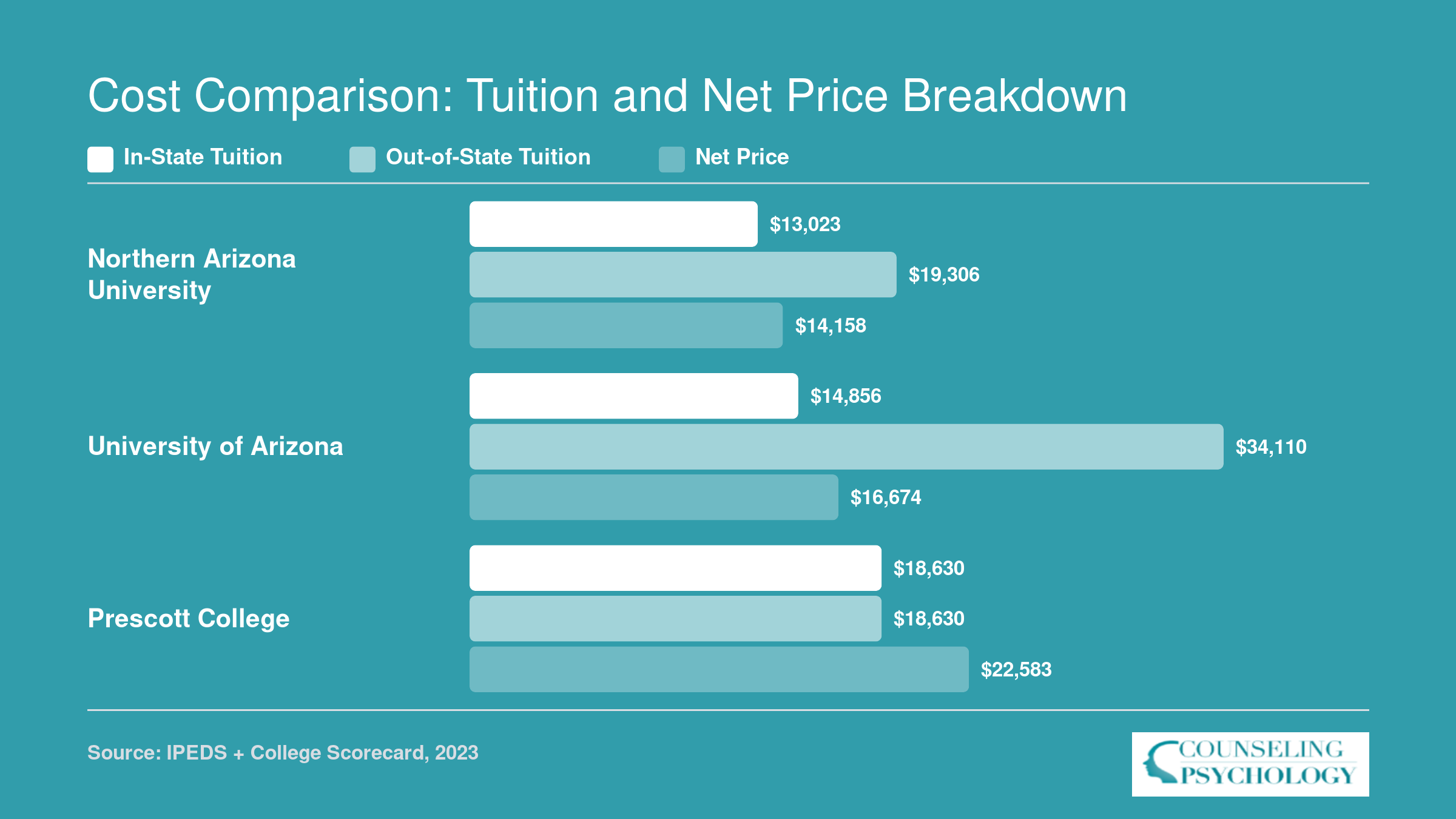
Cost Comparison: Tuition and Net Price Breakdown
When budgeting for a clinical mental health counseling master's degree in Arizona, the sticker price rarely tells the full story. Net price, which reflects tuition after grants and scholarships, gives a more realistic picture of what you will actually pay each year. Among the three programs compared here, Northern Arizona University comes in as the cheapest option by net price at $14,158, making it the most budget-friendly CMHC program in the state for students who qualify for financial aid.
CACREP Accreditation: Which Arizona Programs Have It and Why It Matters
CACREP-accredited or regionally approved: the distinction matters more than most applicants realize. Arizona licenses counselors through the Board of Behavioral Health Examiners, which accepts coursework from programs holding CACREP accreditation as well as certain other approved options. However, graduating from a CACREP program streamlines licensure portability if you ever leave the state, qualifies you for the National Counselor Examination on a faster track, and signals curriculum quality to employers and supervisors.
Start With the Official CACREP Directory
The authoritative source is the CACREP directory at cacrep.org. Search by state (Arizona) and filter for Clinical Mental Health Counseling. The directory lists each accredited program by institution, specialty area, accreditation start date, and next review date. Programs near Tucson and elsewhere in the state appear here with their current status. Treat this as the first and most reliable check, because accreditation can lapse, be renewed, or shift specialty designations between catalog years. If you are also exploring types of counseling degrees beyond CMHC, the same directory covers related specializations.
Cross-Check the Program Website
The CACREP directory occasionally trails real-time changes. A program may have submitted self-study materials, be in candidacy, or have just received renewal that hasn't propagated to the public listing. Visit the department or college page directly and look for an accreditation statement with dates. If the language is vague, email the program coordinator and ask for the specific CACREP cycle dates in writing. Save that email.
Use Professional Associations as a Secondary Lens
The American Counseling Association (counseling.org) and the Arizona Counseling Association maintain resources that often link to accredited programs and flag policy changes affecting licensure. These groups won't replace the CACREP directory, but they add context, especially around state-level legislation that can shift which credentials Arizona recognizes.
Verify Licensure Eligibility Directly
Finally, cross-reference your shortlist against the Arizona Board of Behavioral Health Examiners (azbbhe.us) requirements for the LAC and LPC credentials. The Bureau of Labor Statistics occupational pages summarize national licensure norms, but the state board is the binding authority on what coursework, supervised hours, and exams Arizona will accept. A program that looks affordable but doesn't satisfy state requirements is not actually affordable.
Questions to Ask Yourself
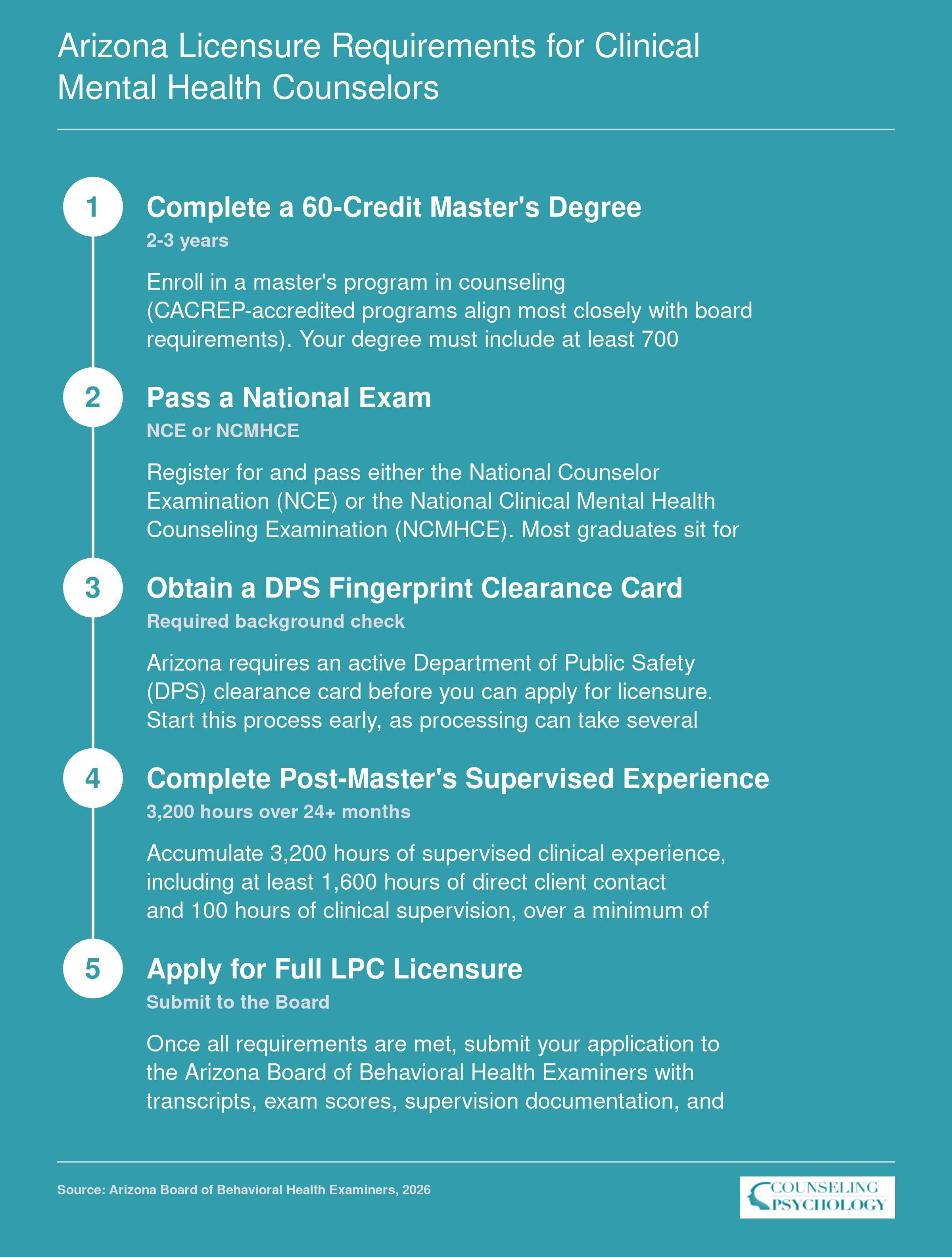
Arizona Licensure Requirements for Clinical Mental Health Counselors
Earning your Licensed Professional Counselor (LPC) credential in Arizona is a multi-stage process overseen by the Arizona Board of Behavioral Health Examiners. From enrollment in your master's program to full licensure, expect roughly five to six years of combined education and supervised practice.
Online, Hybrid, and Campus Options Compared
One of the most common questions prospective students ask: Can you complete a clinical mental health counseling program entirely online in Arizona? The short answer is mostly yes, but not completely. Arizona State University and Prescott College both deliver their coursework online, while the University of Arizona and Northern Arizona University use a traditional campus format. Regardless of format, every program requires in-person practicum and fieldwork hours to satisfy Arizona licensure requirements, so plan on arranging supervised clinical placements near where you live.
| Dimension | Online (ASU, Prescott College) | Campus (University of Arizona, NAU) |
|---|---|---|
| Flexibility | Coursework completed on your own schedule or via weekly virtual sessions. ASU classes run 7.5 to 15 weeks each. Ideal for working professionals or students outside the Tucson area. | Fixed class schedules require regular attendance at a physical location. University of Arizona is based in Tucson; NAU holds classes in Flagstaff and at satellite sites across the state. |
| Practicum and Fieldwork Logistics | You must secure approved clinical placements in your own community. Tucson area sites are available, but coordination is your responsibility. ASU includes three supervised field experiences with weekly virtual group supervision. | Programs typically maintain established practicum site networks near campus. University of Arizona students benefit from Tucson's concentration of behavioral health agencies, hospitals, and community clinics. |
| Peer Networking | Cohort interaction happens through virtual meetings, discussion boards, and group projects. Prescott College's smaller size (8:1 student to faculty ratio) supports closer mentorship, even at a distance. | Daily face to face contact with classmates and faculty builds strong professional relationships. NAU reports a 95% job placement rate, partly attributed to its in person experiential learning model. |
| Approximate Annual Tuition (In State) | ASU: roughly $10,843. Prescott College (private, flat rate): roughly $18,630. ASU charges the same tuition regardless of residency. | University of Arizona: roughly $14,856. NAU: roughly $13,023. Out of state rates are significantly higher at both schools. |
| Best Fit For | Students balancing work, family, or geographic distance from a campus. Those who are self directed and comfortable coordinating their own fieldwork placements. | Students who prefer structured schedules, direct faculty interaction, and built in access to practicum sites, especially in the Tucson metro area. |
Practicum Placements and Fieldwork Sites Near Tucson
Where can clinical mental health counseling students near Tucson find quality practicum and fieldwork placements that meet program requirements?
Securing a strong clinical placement is one of the most important steps in your graduate training. Tucson and the surrounding region offer diverse options ranging from community mental health centers to major hospital systems, and knowing where to look saves time and stress during your program.
Start With Your Program's Approved Site List
The most efficient first step is contacting your program's clinical placement coordinator directly. The University of Arizona and Northern Arizona University's Tucson campus both maintain pre-approved practicum site databases and established relationships with local agencies. These coordinators can match your clinical interests with sites already vetted for supervision quality and hour requirements. Many programs post downloadable site lists on their counseling department websites, along with coordinator contact information and placement timelines.
Explore Professional Association Resources
The American Counseling Association and the Arizona Counseling Association both maintain directories of clinical training sites. The Arizona Board of Behavioral Health Examiners also provides information on licensed facilities that may accept practicum students. These resources help you identify sites that meet supervision standards and understand which agencies have a history of training graduate students.
Contact Regional Healthcare Providers Directly
Several major providers in the Tucson area regularly host practicum students:
- Banner University Medical Center Tucson: Check their graduate medical education and training pages for behavioral health placement opportunities.
- VA Southern Arizona Healthcare System: The VA offers structured training experiences, often listed under their psychology training or mental health internship programs.
- CODAC Health: As one of the largest community behavioral health organizations in Southern Arizona, CODAC frequently partners with graduate programs for practicum placements.
Many of these organizations list internship or training coordinator contact information on their human resources pages. Reaching out directly, even before your program requires it, shows initiative and can help you secure competitive placements.
Cross-Reference With CACREP for Site Partnerships
The CACREP directory identifies accredited programs in Arizona that maintain formal site partnerships. If you are still selecting a program, reviewing which schools have established relationships with strong clinical sites gives you insight into fieldwork quality. Students exploring clinical mental health counseling online programs can use the CACREP directory to compare site partnership networks across schools, while the Bureau of Labor Statistics helps you understand the broader job market for counselors in Arizona.
Earnings and Career Outcomes After Graduation
The figures below reflect institution-wide median outcomes for graduates, drawn from College Scorecard data. Program-level earnings at the one-year, two-year, four-year, and five-year marks after completion are not yet published for these clinical mental health counseling programs, nor are program-specific employment shares or poverty-threshold comparisons. Because granular program data is unavailable, the table uses each institution's median earnings at 10 years and median graduate debt to calculate a return-on-investment (ROI) ratio, giving you a quick value snapshot. These are completer outcomes, meaning they reflect what actual graduates of each school earned, not occupational wage estimates.
| Institution | Median Graduate Debt | Median Earnings (10 Yr) | ROI Ratio (10-Yr Earnings / Debt) | 1-Yr Median Earnings | 2-Yr Median Earnings | 4-Yr Median Earnings | Employment Share (1 Yr) | Share Earning Above Poverty |
|---|---|---|---|---|---|---|---|---|
| Arizona State University | $19,500 | $62,668 | 3.21 | Not yet reported | Not yet reported | Not yet reported | Not yet reported | Not yet reported |
| University of Arizona | $19,620 | $59,979 | 3.06 | Not yet reported | Not yet reported | Not yet reported | Not yet reported | Not yet reported |
| Northern Arizona University | $19,000 | $54,384 | 2.86 | Not yet reported | Not yet reported | Not yet reported | Not yet reported | Not yet reported |
| Prescott College | $16,300 | $42,359 | 2.60 | Not yet reported | Not yet reported | Not yet reported | Not yet reported | Not yet reported |
Tips for Choosing the Right Affordable CMHC Program
Choosing an affordable clinical mental health counseling program means looking beyond sticker price to consider the full financial picture: scholarships, loan-repayment options, and institution-specific aid that can cut your out-of-pocket costs significantly. Arizona students have access to a mix of national, state, and university-level funding sources, but many require early planning and careful attention to deadlines.
National Scholarship Programs for CMHC Students
The NBCC Foundation offers three targeted scholarships that open at different times of year.1 The Minority Fellowship Program application opens each April and supports students enrolled in CACREP-accredited programs who are committed to serving underserved populations through multicultural counseling. The Military Scholarship and Rural Scholarship both open in November, with eligibility tied to military connection or commitment to rural and underserved areas, respectively. All three require enrollment in a CACREP-accredited program, so confirm your target school's status before applying. Check the NBCC website directly for current application forms and updated criteria.
The American Counseling Association Foundation maintains a scholarship page listing national awards open to counseling students across the country, including some that accept Arizona applicants. The Melanie Foundation Scholarship, for example, awards $2,500 to mental health counseling students and typically opens in late spring. Bold.org listed 105 mental health scholarships as of May 2026, many with rolling or quarterly deadlines, so checking monthly can uncover new opportunities.
Federal and State Workforce Programs
The Health Resources and Services Administration (HRSA) administers behavioral health workforce grants and the National Health Service Corps Loan Repayment Program, which targets licensed behavioral health providers who commit to working in underserved areas. These programs do not reduce tuition upfront but can eliminate tens of thousands in loan balances after graduation if you meet the service obligation. Visit the HRSA website to review current funding cycles and service requirements.
University-Specific Aid and State Resources
Search the financial aid websites of Arizona State University, the University of Arizona, and Northern Arizona University for CMHC-specific scholarships and graduate assistantships. Many departments reserve a portion of tuition waivers or stipends for counseling students, and some offer priority funding to in-state applicants. Joining the Arizona Counseling Association can unlock state-specific scholarships, conference discounts, and networking connections that lead to assistantship referrals or clinical training sites willing to subsidize coursework in exchange for fieldwork hours.
Frequently Asked Questions About CMHC Programs in Arizona
Prospective students exploring clinical mental health counseling programs near Tucson tend to ask similar questions about cost, accreditation, and logistics. Below are straightforward answers drawn from current program data and Arizona licensure requirements.