What you’ll learn in this article…
- The U.S. needs roughly 6,800 more mental health practitioners today.
- Licensure as a neuropsychologist typically requires 10 to 12 years of training.
- Work setting can shift neuropsychologist salaries by tens of thousands of dollars.
Most aspiring neuropsychologists picture a hospital neuro floor or a VA testing suite, not an undergraduate lab administering assessments to a six-year-old with a reading delay. Yet that's where a large share of the pipeline actually begins. At Penn State Beaver, students in Amy Camodeca's neuropsychology lab evaluate youth ages 6 to 16 for neurodivergence and learning disabilities years before they'd touch a real client in a doctoral practicum elsewhere.1
The U.S. Bureau of Labor Statistics projects continued growth in employment of psychologists from 2025 to 2035, against a backdrop of 6,807 federally designated mental health shortage areas as of December 2025.1 That gap between demand and licensed supply is the practical tension shaping this career: getting in early, through applied training rather than lecture halls, increasingly determines who's prepared to fill it.
What a University Neuropsychology Clinic Actually Does
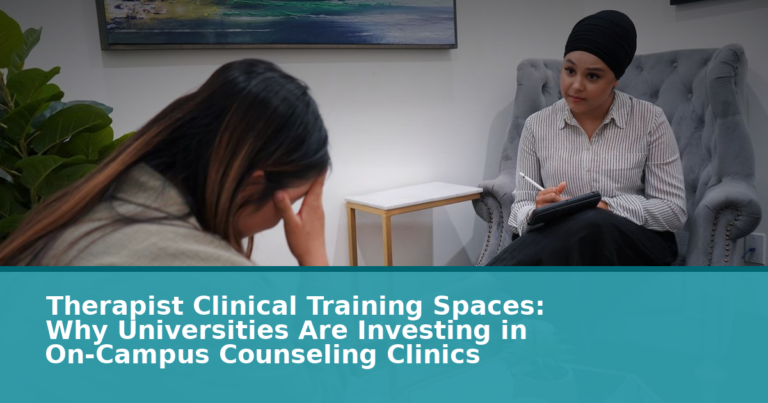
A university neuropsychology clinic is a training and assessment center where licensed clinical neuropsychologists supervise students who evaluate cognitive, learning, and developmental concerns. It sits inside a university department, not a private office, so teaching, research, and direct client care operate as one integrated mission.
A community assessment resource
Penn State Beaver's neuropsychology lab, run by associate professor and clinical neuropsychologist Amy Camodeca, assesses youth ages 6 to 16 for neurodivergence and learning disabilities.1 The lab functions as a lower-cost community resource for families who might otherwise wait months or pay thousands of dollars for private testing.1 After the evaluation, clinicians help families understand the diagnosis and connect them to school accommodations, therapy, or medical follow-up.1 That referral step turns a report into a plan.
Teaching, research, and care under one roof
Undergraduate psychology students administer and score standardized assessments, participate in research, and help prepare clinical reports under close supervision.1 At many larger universities, those tasks are reserved for graduate students, but Penn State Beaver's model gives undergraduates early applied experience.1 Faculty and students also analyze de-identified data to improve assessment methods and understand learning differences. Clients receive the same evidence-based tests used in hospitals, often with more time for questions and explanation.
Why this model matters for careers
The Penn State Beaver news story on the lab illustrates how early clinical exposure can shift a student's direction, as one student changed from a pre-med focus to assessment and report work.1 For the surrounding community, it means diagnostic access and referral support that might otherwise be out of reach. University clinics are not just training sites; they are a working bridge between graduate-level preparation and real community need.
A Day in the Life: Assessments, Data, and Client Interaction
No two days in a university neuropsychology clinic look identical, but the underlying rhythm rarely changes even as caseloads grow with demand. A typical shift starts with intake review: reading referral notes, checking a child's school records, and flagging which tests fit the presenting concerns, whether that's a suspected learning disability or broader developmental questions.
From Testing Room to Report Draft
After intake comes administration, often the most visible part of the job. A student worker sits across from a six-year-old or a sixteen-year-old, running through timed subtests, observation checklists, and behavioral rating scales. At Penn State Beaver, undergraduate supervisor Phoenix McCafferty now handles this work directly, administering and scoring assessments and helping draft clinical reports, tasks usually reserved for graduate trainees elsewhere.1 Scoring follows immediately: raw numbers get converted into standardized scores, then interpreted against normative data before they mean anything clinically useful.
Client Interaction Is the Job, Not a Side Task
The career may look like pure data crunching, but the technical side only works if the interpersonal side does too. Kids get anxious during timed tasks. Parents want plain-language explanations of scores that look intimidating on paper. Building rapport, managing a child's frustration mid-test, and translating findings into next steps for a family are as central to the role as any statistical output.
Solo Work Balanced by Supervision
The week alternates between independent scoring and report writing and structured check-ins with supervising faculty, who review cases line by line. That mix, solo focus paired with close oversight, is what lets undergraduates take on responsibilities typically limited to graduate programs at larger institutions.1
Educational Pathways: From Undergraduate Lab to Licensed Neuropsychologist
The road from your first undergraduate research assistant position to independent neuropsychological practice spans roughly 10 to 12 years. Programs like the neuropsychology lab at Penn State Beaver, where undergraduates administer assessments and write clinical reports under close faculty supervision, give students a head start on experience that most trainees do not encounter until graduate school. Below is the standard credentialing ladder and where each stage fits.

Related Articles
As of December 2025, the U.S. had 6,807 mental health professional shortage area designations, requiring roughly 6,800 additional practitioners to eliminate the gap. University clinics like Penn State Beaver's neuropsychology lab help fill this void by training future clinicians while providing assessments to underserved families who might otherwise wait months or years for care.
Neuropsychology Salaries and Job Outlook by Setting
Neuropsychologist compensation varies significantly by work setting and years of experience. The figures below reflect published national ranges from multiple salary aggregators and career guides. Private practice tends to offer the highest earning potential for established practitioners, while university and VA settings typically provide more structured pay scales along with benefits such as loan repayment programs and protected research time. Keep in mind that these ranges are approximate, definitions of "entry level" differ across sources, and actual compensation depends on geography, caseload, and subspecialty.
| Work Setting or Experience Level | Salary Range | Notes |
|---|---|---|
| Academic Medical Center (all experience levels) | $120,000 to $160,000 | Early career positions in this setting typically fall between $85,000 and $105,000 |
| Hospital System (all experience levels) | $110,000 to $145,000 | Comparable to academic centers but may offer fewer research opportunities |
| VA Medical Center (all experience levels) | $100,000 to $135,000 | Federal pay scales apply; loan repayment and retirement benefits may offset lower base pay |
| National, 0 to 2 Years Experience | $76,550 to $95,000 | Median around $85,775 across settings |
| National, 3 to 5 Years Experience | $95,000 to $117,750 | Median around $106,375 across settings |
| National, 4 to 10 Years Experience | $105,000 to $140,000 | Mid career range; setting and subspecialty increasingly affect pay |
| Clinical and Counseling Psychologists (BLS, 2025) | Median $100,580 | National median across 75,990 employed; 25th percentile $73,210, 75th percentile $135,200 |
University clinics, hospitals, VA centers, and private practices can diverge by tens of thousands of dollars, even when the clinician's training is identical.
Pediatric vs. Adult vs. Forensic vs. Rehab Neuropsychology: Comparing Subspecialty Paths
Choosing a neuropsychology subspecialty shapes where you work, whom you serve, and how competitive the job market will be. The table below compares four common tracks side by side so you can weigh each path against your clinical interests and career goals. Data are drawn from federal labor projections, workforce surveys, and employer posting analyses current through 2024 and 2025.
| Pediatric Neuropsychology | Adult Clinical Neuropsychology | Forensic Neuropsychology | Rehabilitation Neuropsychology |
|---|---|---|---|
| Children and adolescents evaluated for neurodivergence, learning disabilities, and developmental conditions | Adults with neurological, medical, or psychiatric conditions requiring cognitive and behavioral assessment | Defendants, inmates, and civil litigants needing competency assessments, risk evaluations, or neuropsychological testimony | Individuals with physical disabilities, chronic health conditions, or injuries undergoing medical rehabilitation |
| Federal government agencies (about 58% of roles), offices of health practitioners, state education systems, and hospitals | Hospitals, medical centers, outpatient clinics, and private practice | Courts and legal systems, corrections facilities, law enforcement agencies, and civil litigation settings | Hospitals and medical centers (about 64% of practitioners), primarily in urban or suburban locations |
| High: analysis of over 23,000 related job postings shows 80% require psychology skills and 33% specify mental health expertise | Stable: approximately 55,300 jobs reported in 2024 with about 3,900 projected annual openings and 4.3% growth through 2034 | Growing faster than average: demand is climbing steadily, with forensic psychology employment growth projected to outpace the overall psychologist rate of roughly 6% through 2032 | Sustained: most practitioners hold hospital based salaried positions, though specific growth rates are not separately reported |
| Psychoeducational assessment, developmental psychology, psychotherapy, and clinical report writing for school and family contexts | Cognitive and neurological assessment batteries, diagnostic formulation, and interdisciplinary consultation | Competency and risk evaluation, expert witness testimony, knowledge of criminal justice and civil law procedures | Functional assessment, interdisciplinary medical team collaboration, and treatment planning for physical and cognitive recovery |
| Canadian federal projections flag a strong risk of shortage for neuropsychologists through 2033, signaling global demand that extends to pediatric roles | BLS projects overall psychologist employment to grow 6% from 2025 to 2035, with about 11,300 openings per year across specialties | Growth driven by expanding use of mental health expertise in cybercrime analysis, recidivism prevention, and criminal justice reform | Integrated into broader mental health employment trends that BLS projects will remain strong through at least 2032 |
Is a University Clinic Career Path Right for You?
Choosing where to practice neuropsychology is as consequential as choosing the specialty itself. University community clinics offer a distinct professional experience compared to hospitals, VA systems, or private practice. Use the considerations below as a decision aid when mapping out your career trajectory.
- Mentorship from experienced faculty neuropsychologists is built into the role, accelerating clinical skill development in ways that private practice rarely provides.
- Teaching and research blend naturally with clinical duties, keeping your work intellectually varied and reducing the monotony that can surface in high volume hospital caseloads.
- Community impact is tangible: you help underserved families access assessments they might otherwise never afford, which many clinicians find deeply motivating.
- Pace tends to be more sustainable than fast turnaround hospital or insurance driven settings, which can lower long term burnout risk.
- Access to student trainees means you contribute to workforce development, helping address the shortage of more than 6,800 mental health practitioners identified nationwide.
- Pay ceilings are generally lower than private practice or hospital systems, particularly once you factor in the earning potential of a self run neuropsychology practice.
- Promotion timelines often follow rigid academic structures, meaning career advancement may depend on tenure clocks or faculty line availability rather than clinical performance alone.
- Funding can be unpredictable: clinic operations may rely on university budgets, grants, or training allocations that shift with institutional priorities.
- Administrative expectations, including committee service, accreditation documentation, and curriculum oversight, can compete with time you would rather spend on clinical work.
- Geographic flexibility is limited because university clinic positions open infrequently and are tied to specific campuses, unlike hospital or private practice roles found in most metro areas.