Telehealth Clinical Hours for Psychology Students: What You Need to Know
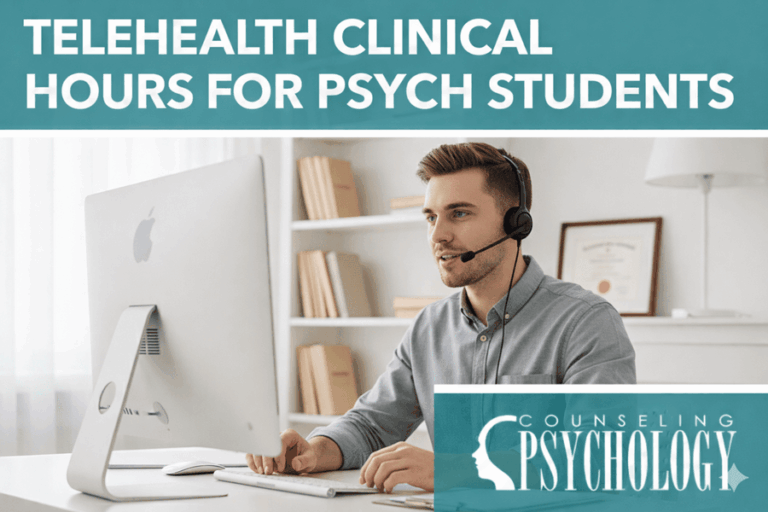
The explosion of telepsychology during and after the COVID-19 pandemic has transformed mental health service delivery, with telehealth sessions now comprising 30-40% of psychotherapy appointments nationwide. This shift raises an important question for prospective psychology students: Can you complete your required clinical training hours via telehealth? The answer is nuanced and depends on your degree level, program type, accreditation standards, and state licensing requirements. Understanding telehealth clinical training policies is essential as you choose psychology programs and plan your path toward licensure.
In this article, you’ll learn:
- Whether psychology programs allow telehealth clinical hours and under what conditions
- How accreditation bodies like APA regulate telehealth training requirements
- What percentage of clinical hours can typically be completed remotely
- How in-person clinical training differs from telehealth experiences
- Whether telehealth clinical training adequately prepares you for telepsychology careers
Understanding Psychology Clinical Training Requirements
Before addressing telehealth specifically, it’s important to understand clinical hour requirements across different psychology programs.
Doctoral Programs (PhD and PsyD)
Clinical Psychology Doctoral Programs accredited by the American Psychological Association (APA) require:
- Practicum: Minimum 400 hours (typically 1,500-2,000 hours across multiple placements)
- Internship: 2,000 hours (typically one year full-time or two years half-time)
- Total supervised experience: Approximately 4,000+ hours before licensure eligibility
Learn more about psychology degree programs.
Master’s Programs
Master’s in Clinical Mental Health Counseling, Marriage and Family Therapy, and Related Programs accredited by CACREP or COAMFTE require:
- Practicum: 100 hours (40 direct client contact)
- Internship: 600 hours (240 direct client contact)
- Total: 700 clinical hours minimum for graduation
Master’s-level graduates typically need additional post-degree supervised hours (1,500-4,000 depending on state) for licensure as Licensed Professional Counselors (LPC) or Licensed Marriage and Family Therapists (LMFT).
Are Telehealth Clinical Hours Allowed?
The short answer: Yes, but with significant restrictions and variations across programs, accreditation bodies, and training sites.
Current Accreditation Standards
APA-accredited doctoral programs: The APA does not prohibit telehealth clinical hours but requires that training be “consistent with current standards of care.” Programs must ensure students develop competencies in both in-person and telehealth modalities. Most APA programs allow some telehealth hours but require substantial in-person training.
CACREP-accredited master’s programs: CACREP standards do not explicitly address telehealth versus in-person requirements, leaving decisions to individual programs and their clinical training directors. Programs must ensure students develop appropriate counseling competencies regardless of modality.
How Much Telehealth Training Is Typical?
Current practices across psychology training programs:
| Program Element | Telehealth Allowance | In-Person Requirement |
| Doctoral Practicum | 25-50% typically allowed | Minimum 50-75% in-person |
| Doctoral Internship | Varies by site; 30-60% common | Most sites require regular in-person presence |
| Master’s Practicum | Often 50-75% in-person required | Initial sessions and assessments typically in-person |
| Master’s Internship | 25-40% telehealth increasingly common | Majority still in-person |
These percentages vary significantly by training site. Community mental health centers, university counseling centers, and private practices determine their own telehealth policies for trainees.
TIP: When researching psychology programs, ask admissions departments and training directors about telehealth policies. Inquire whether COVID-era telehealth allowances remain in place or if programs have reverted to primarily in-person requirements. Policies continue evolving as the field adapts to post-pandemic realities.
Why Aren’t All Clinical Hours Allowed Via Telehealth?
Several important reasons explain why psychology training emphasizes in-person clinical experience:
Developing Foundational Clinical Skills
In-person training allows students to observe and develop crucial non-verbal communication skills—reading body language, noticing subtle affect changes, managing physical presence in the therapy room, and conducting crisis interventions. These skills form the foundation of clinical competence and are more difficult to assess and develop through screens.
Assessment and Testing Requirements
Psychological assessment, a core competency distinguishing psychologists from other mental health providers, typically requires in-person administration. Students must learn to administer cognitive tests, personality assessments, and neuropsychological batteries in controlled environments where they can observe test-taking behavior, ensure standardized conditions, and build rapport necessary for valid results.
Crisis Management and Safety
Training programs prioritize student preparation for managing psychiatric emergencies, suicidal crises, and situations requiring immediate intervention. In-person training ensures students develop confidence handling these high-stakes situations with supervisor backup immediately available.
Supervision Quality
Direct observation of clinical work, whether through one-way mirrors, live supervision, or video review, is considered the gold standard in psychology training. While telehealth sessions can be recorded and reviewed, in-person supervision allows for real-time intervention and nuanced feedback that enhances learning.
Licensing Board Requirements
State psychology licensing boards require verification of supervised clinical hours meeting specific standards. Many boards have not updated regulations to explicitly address telehealth training, creating uncertainty. Programs err on the side of requiring substantial in-person hours to ensure graduates meet all state licensing requirements.
What In-Person Clinical Training Looks Like
Understanding traditional in-person clinical training helps contextualize why it remains central to psychology education.
Typical Practicum and Internship Settings
University counseling centers: Students see college-age clients presenting with anxiety, depression, relationship issues, and academic stress. Training emphasizes brief therapy models and crisis intervention.
Community mental health centers: Students work with diverse populations including severe mental illness, substance use disorders, and trauma. Exposure to multidisciplinary teams and wraparound services.
Hospitals and medical settings: Opportunities for health psychology, consultation-liaison work, and integrated behavioral health alongside medical providers.
Private practices: Supervised experience with outpatient therapy, building independent clinical judgment, and practice management exposure.
Specialized settings: Forensic psychology, neuropsychology clinics, children’s hospitals, Veterans Affairs facilities, and correctional institutions.
A Week in Clinical Training
Students typically spend 16-24 hours weekly at practicum sites during doctoral training, including:
- 8-15 hours of direct client contact (therapy sessions, assessments)
- 2-4 hours of individual supervision with licensed psychologist
- 2-3 hours of group supervision with fellow trainees
- 2-4 hours of documentation, treatment planning, case consultation
- Time for didactic training, case conferences, and professional development
This intensive, immersive experience builds clinical confidence and professional identity in ways that purely remote training cannot replicate.
Does Telehealth Training Prepare You for Telepsychology Careers?
Yes, when combined with strong foundational in-person training. The ideal preparation includes:
Foundational in-person experience: Developing core clinical competencies through traditional face-to-face training builds skills that translate across modalities.
Dedicated telehealth training: Specific instruction in telepsychology competencies including technology management, online therapeutic presence, crisis protocols for remote clients, legal and ethical considerations, and cultural competence in digital contexts.
Supervised telehealth practice: Opportunities to conduct telehealth sessions under supervision, receiving feedback on camera presence, managing technology disruptions, and adapting interventions for virtual delivery.
Diverse modality exposure: Experience with both in-person and telehealth allows you to recommend appropriate modality for different clients and presentations.
Many psychology training programs now incorporate dedicated telehealth competency training, ensuring graduates are prepared for the hybrid practice environments most clinicians now navigate.
Choosing Programs Based on Clinical Training Models
When selecting psychology programs, consider these clinical training factors:
Program partnerships: Strong relationships with diverse training sites increase placement options and quality supervision.
Flexibility in modality: Programs offering both in-person and telehealth experiences prepare you for modern practice realities.
Geographic location: Urban programs typically provide access to more diverse clinical settings than rural programs.
Training philosophy: Some programs emphasize medical model training in hospital settings, while others focus on community mental health or private practice preparation.
Post-graduation support: Programs with strong alumni networks and career services help graduates secure quality post-doctoral positions or licensed positions.
Frequently Asked Questions
Q: Can I complete my entire psychology degree online, including clinical hours?
A: No. While some programs offer online didactic coursework, all legitimate psychology programs require substantial in-person clinical training under direct supervision. Be wary of programs claiming you can complete all clinical requirements remotely; they likely don’t meet the accreditation standards necessary for licensure.
Q: If I complete some clinical hours via telehealth, will state licensing boards accept them?
A: Generally yes, particularly for hours completed during and after 2020 when telehealth became standard practice. However, boards want to see substantial in-person training as well. Most states have not created separate hour requirements for telehealth versus in-person, counting both toward total supervised experience. Verify requirements with your intended licensure state.
Q: Are there any advantages to telehealth clinical training?
A: Yes. Telehealth training provides exposure to clients who might not otherwise access services due to transportation, disability, or geographic barriers. You learn technology competencies increasingly essential in modern practice. Some students find telehealth reduces anxiety about initial clinical encounters, allowing focus on therapeutic skills without in-person performance pressure.