
What you’ll learn in this article…
- Federal law raised Medicare reimbursement for mental health counselors in 2026.
- Maryland law grants enforcement power for mental health parity.
- The counseling compact covers 40 states for license portability.
How are 2026 state and federal legislative changes impacting mental health counselor reimbursement, licensure, and scope of practice?
In just the past six months, Medicare reimbursement rates for mental health services saw the largest single-year increase in a decade, and the Interstate Counseling Compact expanded to 40 states. Maryland codified mental health parity into state law, while Hawaii introduced an associate license creating a new pathway to independent practice. These shifts are not isolated; they represent a coordinated push to integrate counselors more fully into the healthcare system.
For counselors in private practice or agency settings, tracking these legal developments directly affects billing revenue, multi-state practice opportunities, and the clinical services they can lawfully provide.
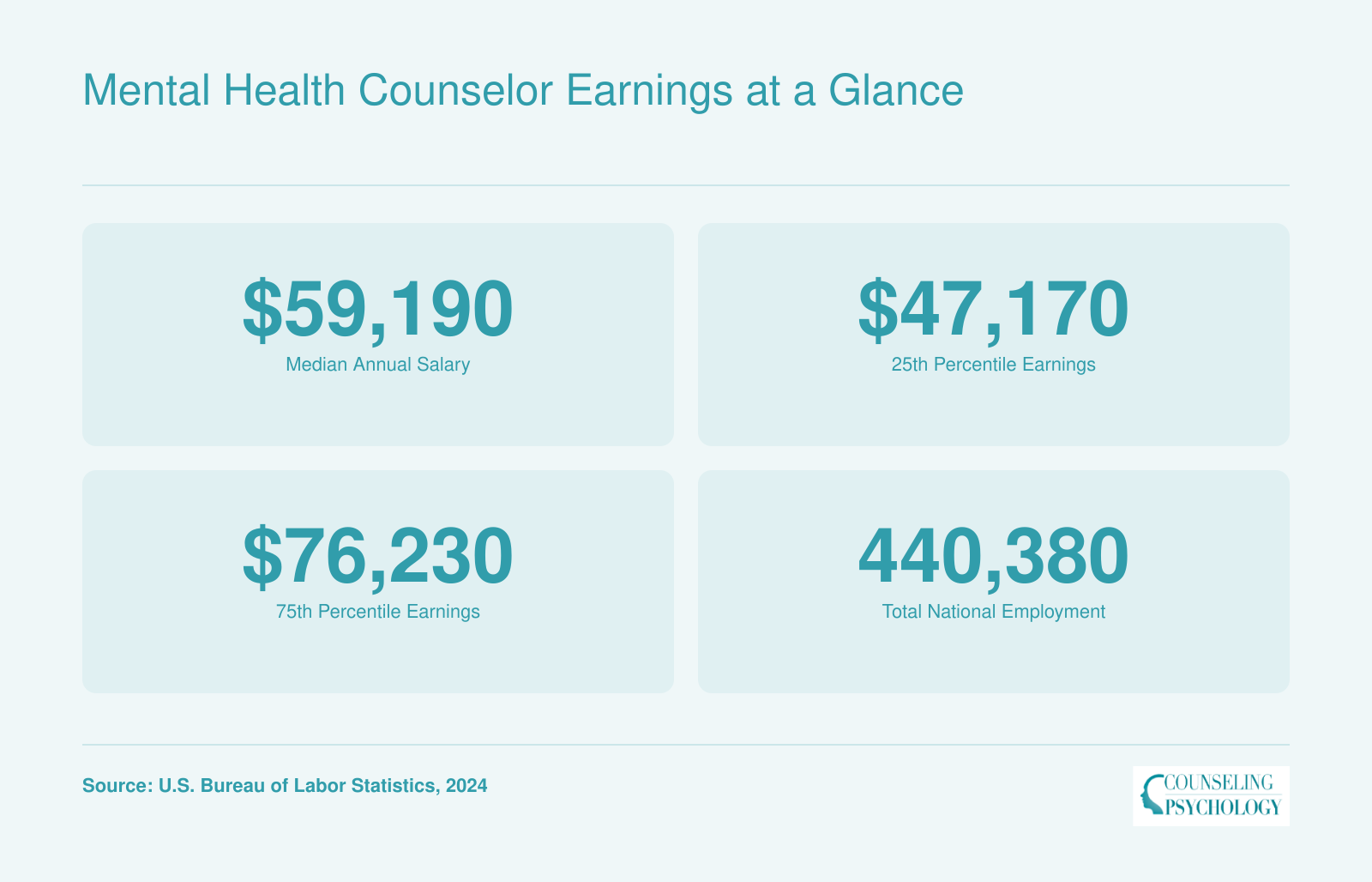
Mental Health Counselor Earnings at a Glance
Before exploring 2026 legislative changes, it helps to understand the current financial landscape for mental health counselors. The following figures from the U.S. Bureau of Labor Statistics represent the occupation "Substance Abuse, Behavioral Disorder, and Mental Health Counselors" in 2024, providing a baseline that new laws aim to improve.
Federal Legislation Reshaping Reimbursement and Workforce Incentives
Federal action in 2026 has opened new funding streams for mental health counselors, though specific reimbursement rate increases remain subject to ongoing budget negotiations on Capitol Hill. The profession is watching several bills that would integrate counselors more fully into Medicare and federal incentive programs, but none had passed as of mid-July 2026.
Medicare Reimbursement and the Mental Health Access Improvement Act
The Mental Health Access Improvement Act, if passed, would add licensed mental health counselors and marriage and family therapists as recognized Medicare providers, allowing them to bill directly for services. While the bill has bipartisan support, advocates note that final passage often hinges on end-of-year omnibus packages. Counselors can track its status on Congress.gov and sign up for alerts through the American Mental Health Counselors Association (AMHCA), which posts regular legislative updates.
Health Professional Shortage Area (HPSA) Bonuses
Counselors working in designated mental health workforce shortage areas (Health Professional Shortage Areas) may be eligible for federal loan repayment and bonus programs through the Health Resources and Services Administration (HRSA). Exact bonus amounts are adjusted annually based on cost-of-living indices and appropriations, so practitioners should check the Bureau of Labor Statistics (BLS.gov) for the most current data on counselor salary by state and qualifying criteria. Even without finalized 2026 figures, planners at the National Board for Certified Counselors (NBCC), the organization behind many certifications for therapists, suggest that HPSA incentives can substantially reduce educational debt burden for those committing to underserved regions.
Student Loan Caps and Financial Aid Considerations
Federal student loan caps for graduate counseling programs are tied to the annual Cost of Attendance calculations published by the Department of Education. Since these caps can change year to year, counselors approaching graduation should contact their school’s financial aid office directly to understand how any 2026 adjustments might affect borrowing limits. Additionally, the Public Service Loan Forgiveness program remains a key workforce incentive, though its administrative rules continue to evolve; NBCC and AMHCA both offer guidance on navigating certification requirements.
Federal legislation in 2026 significantly raises Medicare reimbursement for mental health services, directly boosting per-session income for counselors in eligible settings. This is a tangible pay increase you'll see each billing cycle, not just a policy headline.
State-By-State Licensure Reforms: Provisional Licenses, Diagnostic Privileges, and Compact Adoption
State legislatures turned decisively toward licensure modernization in 2026, expanding pathways into mental health counseling practice and redefining scope of practice. The most notable reforms create new provisional license tiers, introduce diagnostic authority for counselors, and press forward with interstate compact adoption. These changes carry immediate implications for graduates entering the field, established clinicians seeking portability, and employers scrambling to fill behavioral health roles in states with highest need for counselors.
Hawaii Launches an Associate Mental Health Counselor License
Hawaii’s Act 93 (SB 343), effective July 1, 2026, establishes the associate mental health counselor license, creating a supervised practice tier that did not previously exist in the state.1 The law responds to severe workforce shortages by allowing graduates to begin accruing clinical hours under supervision immediately after obtaining their master’s or doctoral degree. Key steps to qualify:
- Education: Complete a master’s or doctoral degree in mental health counseling from an accredited program.
- Examination: Pass the National Counselor Examination (NCE).
- Supervised Experience: Accumulate 3,000 hours of post-degree supervised clinical practice, including at least 100 hours of direct supervision, over a period of two to four years.
- Duration and Renewal: The initial license is valid for 12 months and may be renewed once, providing a maximum supervised pathway of 24 months before full licensure must be obtained.
The associate license is protected by title law, meaning only those holding the credential may use the title “associate mental health counselor.”3 Medicaid reimbursement has been enabled through State Plan Amendment 26-0010, allowing associate licensees to bill under supervision, a move that dramatically increases their employability in community mental health settings.2 For graduates, this cuts the idle period between degree completion and paid clinical experience, accelerating the timeline to independent practice.
Diagnostic Privilege Bills Signal a Shift in Scope
New York’s legislative session saw active debate on granting licensed mental health counselors formal diagnostic authority, though no bill had been signed into law by mid-2026. Currently, New York counselors must rely on other licensed professionals to render a diagnosis, which restricts their ability to treat clients independently and bill insurance under their own clinical judgment. Similar proposals in Illinois and Massachusetts gained traction, reflecting a national push to align counselor scope with their training. Diagnostic privilege transforms practice in tangible ways: it enables counselors to become primary mental health providers, directly bill Medicare and private insurers for diagnosis-related services (an area affected by insurance changes mental health counselors 2026) and reduces administrative bottlenecks in integrated care settings. States that enact diagnostic authority gain a recruitment edge, attracting clinicians who want to practice at the top of their license.
Compact Adoption Continues, but Provisional License Holders Face a Barrier
The interstate Counseling Compact, which allows fully licensed counselors to practice across member states without obtaining additional licenses, gained new adopters in 2026. However, compact language explicitly excludes individuals holding provisional or associate licenses.4 This means Hawaii’s new associate licensees, for instance, cannot use the compact to work in another state until they upgrade to full licensure. The exclusion underscores the two-tier nature of 2026 reforms: while states are creating faster on-ramps into the profession, portability remains reserved for independently licensed clinicians. Counselors in provisional status who anticipate relocation should carefully map their supervised hours to the requirements of their intended destination state, because multi-state counseling licensure requires an independent license, and pursue full licensure as quickly as possible.
For clinicians, the message of 2026 is clear: practicing in a reform-friendly state offers a faster pathway to independence and broader scope, but cross-state mobility still demands a full license.
State-By-State Earnings for Mental Health Counselors
In 2026, several states have enacted significant legislation affecting mental health counselors, from licensure reforms to insurance parity mandates. The table below displays approximate 2024 Bureau of Labor Statistics median annual wages and employment for substance abuse, behavioral disorder, and mental health counselors in select states, including those with active legislative changes like Washington and New Jersey. Earnings can vary widely, so counselors should weigh pay alongside practice environment and professional growth opportunities as they navigate new laws.
| State | Employment | Median Annual Wage |
|---|---|---|
| Alaska | 1,060 | $79,220 |
| New Mexico | 2,070 | $70,770 |
| Oregon | 6,410 | $69,660 |
| North Dakota | 1,180 | $66,450 |
| District of Columbia | 980 | $66,140 |
| Utah | 4,720 | $65,920 |
| Idaho | 2,130 | $65,240 |
| New Jersey | 14,640 | $64,710 |
| Nebraska | 1,980 | $64,410 |
| Washington | 13,150 | $64,220 |
| Arizona | 8,970 | $63,830 |
| Connecticut | 6,470 | $62,960 |
| Wisconsin | 9,450 | $62,470 |
| New York | 22,450 | $62,070 |
| Wyoming | 840 | $61,640 |
Insurance and Parity: Maryland Codification, BCBSM Billing Change, and Nationwide Shifts
Maryland Encodes Parity into State Law
In July 2026, Maryland enacted HB 280, embedding the core requirements of the federal Mental Health Parity and Addiction Equity Act (MHPAEA) directly into state statute. This law ensures that insurers cover mental health and substance use disorder treatments at parity with medical benefits, using consistent standards for network adequacy, medical necessity criteria, and treatment limitations. The legislation explicitly prohibits carriers from applying discriminatory factors or evidentiary standards when designing non-quantitative treatment limitations (NQTLs), such as prior authorization requirements. It leverages ICD and DSM diagnostic standards to define conditions, preventing narrow insurer-specific definitions that restrict access.
New Enforcement Authority for Maryland Insurance Administration
The Maryland Insurance Administration (MIA) receives clarified authority to oversee compliance. Insurers must submit detailed parity analyses, and failure to do so now constitutes a violation.1 The MIA can bar NQTLs found to be noncompliant,2 and carriers must annually collect and report outcomes data to demonstrate equitable access.3 This data-driven approach allows the state to identify disparities in reimbursement rates, denial patterns, or network breadth for behavioral health compared to medical/surgical care. For practicing counselors and psychologists, this means a stronger regulatory backstop against unfair denials.
BCBSM Billing Changes Affect Provisional Licensees
Beyond parity, billing policies from major insurers are evolving. In 2026, Blue Cross Blue Shield of Michigan (BCBSM) updated its billing guidelines, a BCBSM billing change that impacts associate and provisional licensed clinicians. While specific terms vary by state and plan, these changes often limit reimbursement for services provided by therapists who have not yet attained independent licensure. Practices that employ pre-licensed counselors may see reduced revenue, prompting a shift toward supervised bill-by models or accelerated licensure pathways. Other carriers are watching closely, and similar restrictions could emerge in other markets, making it critical for providers to verify payer policies for each clinician's license type.
Practical Steps for Counselors Navigating Reimbursement
With new parity protections and insurer policy shifts, documentation is key. Counselors should maintain thorough records of medical necessity, treatment plans, and progress notes that align with the parity standards outlined in state law. If a claim is denied, request the specific clinical criteria used, compare them to medical/surgical criteria, and cite Maryland's parity law (or corresponding state protections). File complaints with the state insurance administration when denials appear discriminatory. Many states now require insurers to explain differences in access to care, making it easier to build a case.
Why State Protections Matter Now More Than Ever
Federal parity enforcement faces ongoing uncertainty, with potential rollbacks of the 2024 federal parity rule. State-level codification, like Maryland's, creates a durable safety net. It ensures that even if federal oversight weakens, in-state clinicians and clients retain enforceable rights. As more states consider similar legislation (Washington and Colorado have already strengthened parity using the federal framework1), counselors can look to these laws as models for advocacy. The 2026 landscape underscores that robust insurance parity is not just a federal ideal but a state-level imperative that directly shapes reimbursement and client access.
Questions to Ask Yourself
Specialized Mandates: Perinatal Mental Health, Gun Violence Trauma Grants, and Geriatric Care
State legislatures are increasingly targeting specific populations with specialized mental health mandates, creating avenues for counselors to expand their practice into high-need areas. By building expertise in these mandated services, practitioners can access new funding streams and referral networks. Here are three key areas gaining traction in 2026.
California’s Gun Violence Trauma Grants
California is directing significant resources toward trauma recovery for community violence survivors. The Trauma Recovery Center Grant program offers $2 million for a 24-month period starting July 1, 2026.1 Eligible applicants include nonprofits, public agencies, and tribal governments. While the grant requires staff positions of social worker, psychologist, and psychiatrist, licensed mental health counselors may be contracted or employed as part of the care team.2 Applicants must include letters from law enforcement and a community-based organization. Additionally, the CalVIP Cohort 5 program sets aside $2 million specifically for mental health services.3 Trauma counselors can also engage with the AB 2247 Youth Gun Violence Trauma Pilot, which provides $7,800 per person per year for youth survivors in Alameda, Los Angeles, San Bernardino, and Solano counties.4 Finally, Medi-Cal now covers violence prevention services delivered by trained professionals, opening billing opportunities for certified counselors.5
Maryland’s Perinatal Behavioral Health Mandate
Maryland law now requires the Medical Assistance Program and certain insurers to provide comprehensive coverage for perinatal behavioral health screening and treatment.6 This means counselors can bill for services targeting mood and anxiety disorders during pregnancy and the postpartum period without patient cost-sharing. The mandate reduces financial barriers for new and expecting mothers, who are a historically underserved population for mental health care. Practitioners should verify that their licenses and practice settings align with payer requirements, as this mandate may expand the scope of reimbursable perinatal services.
The Longevity Ready Maryland Act and Geriatric Mental Health
This legislation tasks the Secretary of Aging with developing a comprehensive plan for services and systems supporting older adults. While the act does not directly fund mental health positions, it signals a commitment to integrating behavioral health into aging services.6 Geriatric counselors, specializing in issues such as depression, grief, cognitive decline, and caregiver stress, may find growing opportunities through grant-funded programs, Medicare-reimbursed collaborative care models, and partnerships with Area Agencies on Aging. The act’s emphasis on coordinated care creates a framework for interdisciplinary teams that could include licensed professional counselors.
Additional Niche Mandates
Beyond these three areas, Maryland’s 2026 legislative session yielded other mandates that touch mental health practice. The “So Every Body Can Move Act” requires coverage for orthotics and prosthetics, potentially impacting clients with physical disabilities who also need psychological support. The Safe Staffing Act may improve hospital working conditions, indirectly strengthening integrated care environments where counselors work alongside medical staff. While these laws are not exclusive to mental health, counselors who understand their implications can position themselves as crucial team members in holistic care settings.6
Interstate Counseling Compact: Membership Status and How to Apply
The Interstate Counseling Compact now encompasses 40 states1, representing a major shift toward license portability for mental health counselors. For professionals looking to practice across state lines without obtaining a separate license in each jurisdiction, the compact provides a streamlined privilege-to-practice pathway. This means that a licensed professional counselor in one member state can apply for an authorization to practice in another member state, subject to the laws and rules of the receiving state.
How the Compact Works
The compact functions like a multistate agreement that preserves states' authority over licensure while removing bureaucratic hurdles. Instead of a full endorsement or new license, qualified counselors apply for a "privilege to practice" in another compact state. This is not a license itself, but a time-limited authorization that can be renewed. The compact is overseen by the Counseling Compact Commission, which sets uniform standards and maintains a data system for verifying credentials and tracking privileges.
Compact Membership Status as of July 2026
The table below lists every state that has enacted the compact legislation, along with their implementation status and, where applicable, the date the compact became operational. States marked as "Live" are actively issuing and recognizing privileges. States listed as "Enacted" have passed the necessary laws but have not yet completed the administrative steps to go live.2
| State | Compact Status | Implementation Date | Key Notes |
|---|---|---|---|
| Alabama | Enacted (awaiting implementation) | ||
| Arizona | Live | September 30, 2025 | |
| Arkansas | Enacted (awaiting implementation) | ||
| Colorado | Enacted (awaiting implementation) | ||
| Connecticut | Enacted (awaiting implementation) | ||
| Delaware | Enacted (awaiting implementation) | ||
| District of Columbia | Enacted (awaiting implementation) | ||
| Florida | Enacted (awaiting implementation) | ||
| Georgia | Live | June 2026 | |
| Indiana | Live | June 8, 2026 | |
| Iowa | Enacted (awaiting implementation) | ||
| Kansas | Enacted (awaiting implementation) | ||
| Kentucky | Enacted (awaiting implementation) | ||
| Louisiana | Live | June 2026 | |
| Maine | Enacted (awaiting implementation) | ||
| Maryland | Enacted (awaiting implementation) | ||
| Minnesota | Live | September 30, 2025 | |
| Mississippi | Enacted (awaiting implementation) | ||
| Missouri | Enacted (awaiting implementation) | ||
| Montana | Enacted (awaiting implementation) | ||
| Nebraska | Enacted (awaiting implementation) | ||
| Nevada | Enacted (awaiting implementation) | ||
| New Hampshire | Enacted (awaiting implementation) | ||
| New Jersey | Enacted (awaiting implementation) | ||
| North Carolina | Enacted (awaiting implementation) | ||
| North Dakota | Enacted (awaiting implementation) | ||
| Ohio | Live | Operational | |
| Oklahoma | Enacted (awaiting implementation) | ||
| Pennsylvania | Enacted (awaiting implementation) | July 12, 2026 (legislation enacted, implementation pending) | |
| Rhode Island | Enacted (awaiting implementation) | ||
| South Carolina | Enacted (awaiting implementation) | ||
| South Dakota | Enacted (awaiting implementation) | ||
| Tennessee | Enacted (awaiting implementation) | ||
| Utah | Enacted (awaiting implementation) | ||
| Vermont | Enacted (awaiting implementation) | ||
| Virginia | Enacted (awaiting implementation) | ||
| Washington | Enacted (awaiting implementation) | ||
| West Virginia | Enacted (awaiting implementation) | ||
| Wisconsin | Enacted (awaiting implementation) | ||
| Wyoming | Enacted (awaiting implementation) |
One important limitation: compact privileges are currently designed for independent-level licensees. Provisional, associate, or intern licenses are not covered under the compact. Counselors should confirm eligibility with their home state board before applying.
Obtaining Compact Privileges and Telehealth Practice
The application process is standardized across member states. First, confirm that your home state is a compact member and that your license is active and in good standing. Then, submit a privilege application through the Counseling Compact Commission's online portal1. You will need to verify your identity, pay a fee (set by each receiving state), and grant permission for the compact data system to share your licensure and disciplinary history. Once approved, the privilege is usually valid for the same period as your home license and must be renewed periodically.
Telehealth is one of the most immediate benefits. For counselors looking to provide these services, understanding how to become a telehealth therapist is essential, as a compact privilege generally extends to telehealth, meaning you can see clients remotely without a full license in the receiving state. However, some states may have additional telehealth-specific requirements, so verify directly with the state board. The compact does not override a state's scope-of-practice laws; counselors must still adhere to the professional standards and limits of the state where the client is located.
With over 30 states now active in the Counseling Compact, applying for privilege today means you could see clients across state lines by early 2027. This is a strategic window to expand your practice reach, serve a broader population, and increase your income without pursuing multiple full licenses.
Action Steps: Navigating the 2026 Legislative Landscape in Your Practice
Proactive engagement with the 2026 legislative changes is no longer optional, it is the foundation of a resilient and competitive mental health practice. The following steps translate this year's shifts into concrete actions for immediate and sustained impact.
Licensure and Compact Opportunities
- Provisional licenses: If your state now offers an associate-level license for supervised practice, apply immediately to begin accruing the supervision hours for counselors and therapists needed for independent licensure while working.
- Diagnostic privilege training: Where legislation has expanded diagnostic authority for counselors, enroll in board-approved coursework to meet eligibility requirements, making your services billable under broader insurance codes.
- Interstate compact: Check the latest compact membership map on the Counseling Compact Commission website. If eligible, submit your compact privilege application to practice across state lines, either physically or by earning a telemental health certificate for telehealth, without obtaining multiple in-state licenses.
Billing and Parity Compliance
- Insurance panel review: Contact each insurer you panel with to confirm whether recent parity mandates (e.g., Maryland's codification) have updated their credentialing or reimbursement tiers for mental health counselors.
- Parity complaints: Familiarize yourself with your state insurance administration's enforcement portal. Document any coverage denials that appear to violate parity, and file a formal complaint when warranted. Use the American Counseling Association's advocacy tracking page for state-specific filing guides.
- BCBSM billing change: If you bill Blue Cross Blue Shield of Michigan or similar plans that have altered behavioral health billing codes, crosswalk your current procedure codes to the new system to avoid claim rejections.
Specializing for New Mandates
- Perinatal mental health: Pursue a certification or continuing education in perinatal mood disorders to position yourself for Collaborative Care Model referrals, which now have zero cost-sharing in Maryland and may spread to other states.
- Trauma grants: California's gun violence trauma grants, and similar state initiatives, create demand for trauma-focused clinicians. Seek out grant-funded programs in your area and inquire about partnership or contracting opportunities.
- Geriatric care: The Longevity Ready Maryland Act signals an aging-population focus. Consider added training in geropsychology or elder-care coordination to serve this expanding demographic.
Staying Ahead of the Curve
Set a monthly calendar reminder to review the ACA's state government affairs page and your licensing board's website for newly enacted laws and rulemaking. Subscribe to Medicare and Medicaid transmittals related to mental health reimbursement. 2026's wave of legislation is only the starting line; clinicians who embed advocacy, compliance, and specialization into their practice routines will not only navigate the changes but thrive through them.