

What you’ll learn in this article…
- Becoming a licensed health psychologist typically requires 11 to 14 years of combined education and supervised training.
- A doctoral degree (PhD or PsyD) plus a one-year predoctoral internship and postdoctoral hours are required for licensure in every state.
- The BLS reports a national median salary near $112,830 for the Psychologists, All Other category, which captures many health psychology practitioners.
- Subspecialties like pediatric health psychology, behavioral medicine, and psycho-oncology let practitioners tailor careers to specific patient populations.
Research consistently shows that psychological factors, including stress, health behaviors, and social support, directly influence outcomes in chronic disease, surgical recovery, and pain management. Health psychologists are the specialists trained to work at exactly that intersection, applying behavioral science within medical contexts rather than treating mental illness in isolation.
The commitment required is substantial. From a bachelor's degree to independent practice, the credentialing path typically spans 10 to 12 years: four years of undergraduate study, five to seven years in a doctoral program, a postdoctoral residency, and state licensure before seeing patients independently. Board certification through the American Board of Professional Psychology adds another optional but increasingly expected credential layer.
The practical tension most candidates underestimate is the gap between program admission and actual specialization. Health psychology is not a freestanding doctoral degree at most institutions; it operates as a concentration within clinical or counseling psychology programs, which means applicants compete in a highly selective pool before they can pursue the subspecialty at all. Acceptance rates at research-intensive PhD programs routinely fall below 10 percent.
What Does a Health Psychologist Do?
Health psychologists specialize in the intersection of behavior, emotion, and physical well-being. Unlike clinical psychologists who primarily diagnose and treat mental illness, health psychologists focus on how psychological, social, and biological factors affect medical conditions and health behaviors.1 Their work is anchored in the biopsychosocial model, which views health as a dynamic interplay of mind, body, and environment. This perspective guides everything from prevention programs to interventions for people managing chronic diseases.
The Biopsychosocial Approach to Medicine
Health psychology recognizes that illness and recovery are never purely biological. Stress, coping styles, family dynamics, and cultural beliefs directly influence outcomes in conditions like heart disease, diabetes, and cancer. By assessing these psychosocial layers alongside physical symptoms, health psychologists help patients build the skills and support systems needed to improve their health. This integrated approach is what sets the specialty apart from traditional mental health practice and makes health psychologists valuable members of medical teams.
Daily Work and Common Interventions
A health psychologist's day might include meeting with a recent heart attack survivor to discuss cardiac rehabilitation adherence, consulting on a hospital unit about a patient's needle phobia interfering with cancer treatment, or leading a group program for chronic pain management. Clinical duties often involve brief, targeted behavioral interventions rather than long-term therapy.2 Common focus areas include:
- Smoking cessation and weight management: Designing evidence-based programs to modify lifestyle risks.
- Pain management: Teaching cognitive-behavioral techniques that reduce reliance on medication and improve functioning.
- Chronic disease adjustment: Helping patients come to terms with new diagnoses and navigate treatment regimens.
- Treatment adherence: Identifying and addressing barriers to following medical advice, such as forgetfulness, low motivation, or cultural beliefs.
When emotional or behavioral factors are closely tied to health outcomes, health psychologists also provide psychotherapy, but the goal is always to improve physical health or quality of life within the medical context.
Patient Populations
Health psychologists serve a broad spectrum of individuals. They work with essentially healthy people who want to quit smoking or lose weight to prevent future illness, those at elevated risk due to family history or high blood pressure, patients facing acute medical events like surgery or injury, and people living with chronic conditions such as arthritis, HIV, or end-stage renal disease.2 The unifying thread is a focus on health behavior and adjustment, not primarily on diagnosing mental disorders.
Integrated Care and Team Collaboration
Most health psychologists are embedded within medical settings rather than independent therapy offices. They practice in hospitals, primary care clinics, specialty centers, rehabilitation facilities, and academic medical centers. In these environments, they participate in multidisciplinary teams alongside physicians, nurses, healthcare social workers, and physical therapists.1 Their role often involves consultation: a cardiologist may ask for help with a patient who keeps missing appointments, or a surgeon might request a pre-operative assessment to gauge a patient's readiness for a major procedure. By integrating behavioral expertise directly into healthcare delivery, health psychologists improve patient outcomes, reduce healthcare costs, and support the overall mission of the medical team.
Health Psychology Subspecialties
Choosing a health psychology subspecialty means balancing your passion for a particular patient group against the practical realities of training availability and job market demand. While all health psychologists share a core focus on the mind-body connection, most develop a concentrated practice emphasis during the later stages of doctoral education and postdoctoral fellowship. This isn't usually a separate license or credential, though the American Board of Professional Psychology does offer board certification in Clinical Health Psychology1, but rather a deliberate steering of clinical hours and research toward one population or condition.
Major Subspecialties
Beyond general behavioral medicine, several well-established practice areas have emerged.2 Each addresses a distinct patient journey, but all rely on the same foundational principles of cognitive-behavioral intervention, stress management, and biopsychosocial assessment.
- Pediatric Health Psychology: Works with children and adolescents facing chronic illnesses such as diabetes, asthma, or cancer, along with their families. Interventions often focus on treatment adherence, pain coping, and reducing the psychosocial impact of long-term medical management.
- Psycho-oncology: Supports cancer patients across the illness continuum, from diagnosis through survivorship or end-of-life care. Psychologists in this area address anxiety, depression, and body image concerns, while also helping patients navigate complex treatment decisions and adhere to demanding regimens.
- Cardiac Psychology: Focuses on patients recovering from heart attacks, bypass surgery, or living with chronic cardiovascular conditions. Core interventions include stress reduction training, smoking cessation support, and lifestyle modification programs that lower the risk of future cardiac events.
- Pain Management and Chronic Pain Psychology: Helps individuals with persistent pain conditions, whether from injury, surgery, or diseases like fibromyalgia, reduce suffering and regain function. Techniques often combine cognitive-behavioral therapy, biofeedback, and acceptance-based strategies to break the cycle of pain and emotional distress.
Emerging Practice Areas
Several newer branches are gaining traction as research expands and healthcare systems shift toward integrated models.2
- Integrated Behavioral Health / Primary Care Psychology: Places health psychologists directly in primary care clinics, where they collaborate with physicians to treat the whole patient. Brief, focused interventions address issues like insomnia, mild depression, and poor disease self-management right at the point of medical care.
- Obesity and Bariatric Psychology: Targets the psychological factors behind weight management and prepares patients for bariatric surgery. Assessment and intervention center on eating behaviors, body image, and the emotional adjustments required after dramatic weight loss.
- Neuropsychological Rehabilitation: Although often overlapping with clinical psychologist practice, some health psychologists specialize in helping patients with traumatic brain injury, stroke, or neurodegenerative conditions build coping strategies and reintegrate into daily life.
Developing a Subspecialty Focus
Specialization typically crystallizes during the doctoral practicum sequence and the postdoctoral fellowship year, not through a separate degree. Students interested in cardiac psychology, for instance, might complete a year-long fellowship at a cardiovascular center, while those drawn to pediatric work seek training rotations in children's hospitals. This hands-on immersion builds the case for later board certification (if desired) and signals practice expertise to employers, but the core credential remains a generic psychology license.1 Even after settling into a niche, health psychologists often maintain broader competencies to work with medical patients across multiple settings, because real-world referral streams rarely fit neatly into one category.
Questions to Ask Yourself
Education Requirements for Health Psychologists
Doctoral education in health psychology typically follows one of two paths: a Doctor of Philosophy (PhD) in clinical psychology with a health psychology concentration, or a Doctor of Psychology (PsyD) emphasizing direct clinical training. The PhD path is research-intensive and often leads to careers in psychology at academia, research institutions, or integrated medical settings where program development and evaluation are key. The PsyD path prioritizes clinical practice skills, preparing graduates for roles in hospitals, private practice, or community health centers. Both routes require careful navigation of admissions, accreditation, and specialized training opportunities.
APA-Accredited Programs with Health Psychology Tracks
Licensure as a health psychologist almost always requires a doctoral degree from an American Psychological Association (APA)-accredited program. To locate programs with health psychology emphases, start with the APA's searchable database at apa.org/ed/accreditation. Filter by "health psychology" or related terms like "behavioral medicine" or "clinical health psychology" to generate a comprehensive list. The database includes both PhD and PsyD options, allowing side-by-side comparisons.
Several universities maintain strong reputations for health psychology training. Rutgers University offers a clinical psychology PhD with a health psychology concentration that integrates coursework in psychophysiology, pain management, and health behavior change. The University of California, San Francisco (UCSF) blends psychology with biomedical sciences through its clinical psychology PhD, often in partnership with medical centers. The University of Pittsburgh is known for its biopsychosocial approach and robust research in cardiovascular behavioral medicine. Yeshiva University's Ferkauf Graduate School of Psychology provides a clinical health psychology emphasis within its PsyD program. These programs, and others across the country, typically feature faculty actively engaged in health psychology research and clinical work.
Program Selectivity and Admissions
Admission to health psychology doctoral programs is highly competitive. While exact numbers vary, clinical psychology PhD programs often report single-digit acceptance rates, with cohorts intentionally kept small, typically admitting 4 to 10 students per year. PsyD programs may admit slightly larger cohorts, sometimes 20 to 30 students, but top PsyD programs remain selective. Because health psychology is a specialization within clinical psychology, applicants face the same rigorous standards.
To assess selectivity for a particular program, check the program's official website under admissions statistics or contact the admissions coordinator directly. Many programs publish average GRE scores (if still required), undergraduate GPAs, and the number of applicants versus accepted students. U.S. News & World Report provides some metrics like acceptance rates and cohort sizes for clinical psychology programs overall, but these figures may not distinguish health psychology tracks specifically. Prospective students should also inquire about practicum placement rates and postdoctoral placement, which serve as proxies for program quality.
Comparing the PhD and PsyD Routes
PhD programs in health psychology emphasize the scientist-practitioner model. Students spend considerable time designing studies, analyzing data, and completing a dissertation on a health-related topic. Many PhD programs offer funding through teaching or research assistantships, which can offset tuition and living expenses. This path is well-suited for those interested in academic positions, research careers at medical schools, or leadership roles in behavioral medicine.
PsyD programs follow a practitioner-scholar model, with a heavier clinical focus. Coursework may cover assessment, intervention, and consultation in medical settings, and students complete extensive supervised clinical hours. PsyD programs generally provide less funding than PhD programs, leading to higher student debt, but they also often have a shorter time to degree. For applicants committed primarily to direct patient care in health psychology, the PsyD can be a pragmatic choice.
Guidance from Professional Associations and Workforce Data
For program comparisons and career planning, consult professional organizations. The Society for Health Psychology (APA Division 38) offers resources like newsletters, webinars, and lists of training programs. The Council of University Directors of Clinical Psychology (CUDCP) provides guidelines on applying to PhD programs, including typical applicant profiles. Additionally, O*NET OnLine offers detailed job outlook and salary benchmarks for clinical and health psychologists, and the APA's Center for Workforce Studies publishes data on employment trends, demographic shifts, and demand in health service psychology. These tools help ground your educational journey in real-world career outcomes.
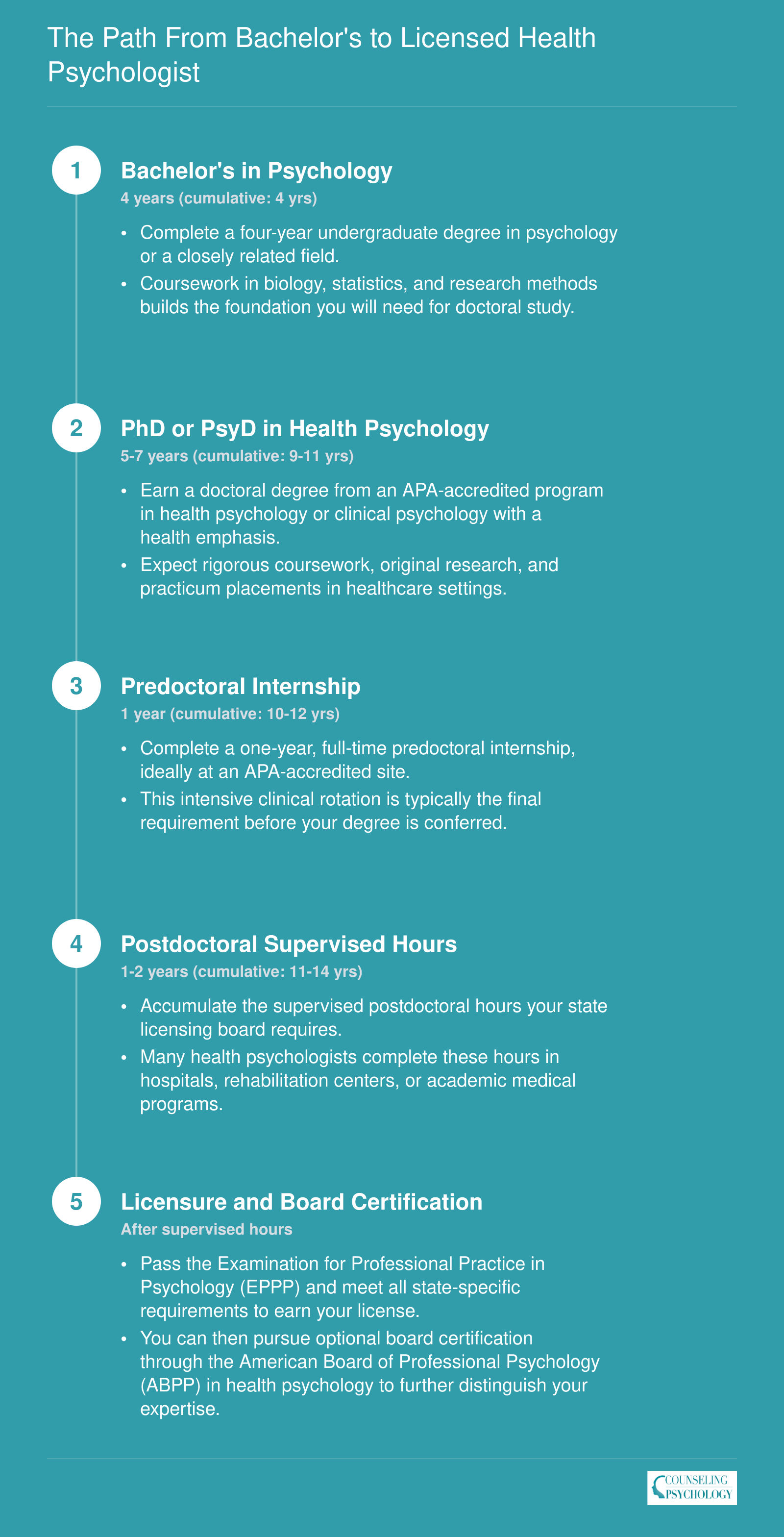
The Path From Bachelor's to Licensed Health Psychologist
Becoming a licensed health psychologist is a significant commitment, typically spanning 11 to 14 years of education, training, and supervised practice. Here is the credentialing ladder at a glance, with cumulative timelines so you can plan accordingly.
How to Become a Health Psychologist After a Different Graduate Degree
Can you transition into health psychology if you already hold a master's or PhD in another discipline? The answer is yes, though the path requires careful planning and often additional coursework. Many professionals with degrees in fields like public health, social work, biology, or education successfully pivot into health psychology by completing prerequisite courses and gaining relevant research experience.
Understanding Prerequisite Requirements
If your graduate degree is outside psychology, most doctoral programs will require you to complete foundational psychology coursework before admission or during your first year. Core prerequisites typically include abnormal psychology, research methods, statistics, biological psychology, and developmental psychology. Research these requirements on the American Psychological Association (APA) website, which provides guidance on typical coursework expectations for health psychology programs. Cross-reference this information by checking individual doctoral program admissions pages, as requirements vary significantly by institution.
Post-Baccalaureate and Bridge Programs
Many universities offer post-baccalaureate programs or bridge programs specifically designed for career changers. These programs allow you to complete prerequisite psychology courses in a structured format, often within one to two years. Some institutions integrate these bridge courses directly into the doctoral program, granting advanced standing for psychology graduate admissions to students who already hold a graduate degree in a related field. Programs may accept relevant graduate coursework, potentially shortening your overall timeline to licensure.
Gaining Research Experience
Research experience is critical for doctoral program admission, especially for applicants without a psychology background. Seek volunteer or paid research assistant positions in university psychology labs, medical centers, or public health organizations. Contact the Society for Health Psychology (APA Division 38) for guidance on finding programs that value diverse academic backgrounds and offer pathways for career changers. Some doctoral programs may also credit clinical or research hours from previous graduate work, though this varies by state licensing board.
Evaluating Your Timeline
If you are also exploring adjacent options, roles in applied psychology may overlap with health psychology in clinical or research settings and can inform your program selection. If previous clinical hours or coursework can be partially accepted, your licensure timeline may be shorter than the standard five to seven years post-bachelor's degree. However, plan for at least three to five years of doctoral study plus a supervised internship and postdoctoral hours.
How to Get Licensed as a Health Psychologist
What steps do you need to complete after finishing your doctoral program to practice independently as a health psychologist? Licensure is the gateway to independent practice in psychology, and every state in the U.S. requires psychologists to hold a license before they can offer clinical services without supervision. The path follows a consistent national framework, though states add their own variations to the core requirements.
Standard Licensure Requirements
After completing an APA-accredited doctoral program and an accredited internship, you must accumulate supervised postdoctoral hours before you can sit for the licensing exam. Most states require between 1,500 and 2,000 hours of supervised experience, with specific distributions between direct client contact and supervision. Some states mandate that a certain percentage of these hours involve face-to-face clinical work rather than administrative tasks or research.
The postdoctoral fellowship year serves a dual purpose: it provides specialized training in health psychology settings such as hospitals, integrated care clinics, or rehabilitation centers, and it typically satisfies the supervised hours requirement for licensure. Choosing a fellowship strategically matters because the setting, supervisor credentials, and documentation practices determine whether your hours will count toward licensure in your target state. Those interested in related clinical pathways, such as how to become a clinical psychologist, will find the licensure framework largely parallel.
The EPPP Examination
Once you have completed your supervised hours, you become eligible to take the Examination for Professional Practice in Psychology (EPPP). This computer-based exam consists of 225 multiple-choice questions covering eight content areas: biological bases of behavior, cognitive-affective bases, social and cultural bases, growth and lifespan development, assessment and diagnosis, treatment and intervention, research and ethics, and professional issues. The exam fee runs approximately $600, and passing scores vary by state, typically ranging from 500 to 550 on a scale of 200 to 800.
Beyond the EPPP, many states require additional jurisprudence exams that test knowledge of state-specific laws, ethics codes, and scope-of-practice regulations. Check your state psychology board's website early in your doctoral program to understand the full sequence of requirements, including any additional supervised hour categories or oral examinations.
ABPP Board Certification in Clinical Health Psychology
Board certification through the American Board of Professional Psychology (ABPP) is an optional credential, but it signals specialist-level competence and can meaningfully enhance your career trajectory.1 To qualify for ABPP certification in clinical health psychology, you must hold an independent-practice license, have completed a doctoral program from an APA- or CPA-accredited institution (or one deemed equivalent), and have finished an accredited or APPIC-listed internship.2
Postdoctoral pathways to board certification include a one-year APA- or CPA-accredited postdoctoral fellowship, a two-year fellowship with a health psychology focus (even if not formally accredited), or three years of documented postdoctoral experience in health psychology practice.2 The certification process involves three components: a credential review, submission of a detailed practice sample demonstrating your clinical work in health psychology, and an oral examination.3 The oral exam occurs three to four times per year, with at least two offerings conducted virtually, and covers your practice sample, a standardized clinical case requiring assessment and integration, professional identification, and ethics.3
ABPP certification carries tangible benefits. Some employers, including the Mayo Clinic as of 2010, require board certification for psychologist positions.1 The Department of Veterans Affairs links ABPP status to rank advancement and pay increases.1 The Department of Defense and U.S. Public Health Service offer additional compensation for board-certified psychologists.3 Academic medical centers and research universities may require ABPP certification for promotion to full professor.3 The Society for Health Psychology partially reimburses certification fees for members, and ABPP offers an early-entry option for students and postdoctoral fellows who want to begin the process before obtaining licensure.4 After your credentials are approved, you gain access to a mentor who guides you through practice-sample preparation and oral-exam readiness.5
Health Psychologist Salary: National Overview
Because the Bureau of Labor Statistics does not track health psychologists as a standalone category, the closest proxies are the "Psychologists, All Other" classification (which captures many health psychology practitioners) and the broader "Clinical and Counseling Psychologists" group. Professionals who move into managerial or program director roles may see compensation that aligns more closely with the general managers category. The figures below reflect national BLS data and should not be read as specific to any single state.
| Occupation | Total Employment | 25th Percentile | Median Salary | Mean Salary | 75th Percentile |
|---|---|---|---|---|---|
| Psychologists, All Other | 17,790 | $73,820 | $117,580 | $111,340 | $145,200 |
| Clinical and Counseling Psychologists | 72,190 | $67,470 | $95,830 | $106,850 | $131,510 |
| Psychology Teachers, Postsecondary | 41,610 | $62,290 | $80,330 | $93,530 | $106,640 |
Highest-Paying States for Health Psychologists
The BLS tracks health psychologists primarily under the "Psychologists, All Other" category (19-3039), which captures specialty psychologists outside clinical and counseling roles. Because health psychology is a subspecialty, these figures offer the closest available proxy for state-level compensation. The states below report the highest median annual wages for this category, though cost of living and workforce demand vary considerably across regions.
| State | Median Annual Wage | 25th Percentile | 75th Percentile | Mean Annual Wage | Estimated Employment |
|---|---|---|---|---|---|
| California | $147,650 | $78,310 | $169,330 | $130,940 | 1,780 |
| Oklahoma | $147,010 | $103,330 | $161,350 | $126,730 | Not disclosed |
| Nevada | $144,390 | $131,250 | $153,890 | $130,120 | 100 |
| Nebraska | $137,990 | $93,790 | $163,880 | $125,420 | 50 |
| North Carolina | $137,130 | $90,440 | $157,190 | $122,490 | 480 |
| South Carolina | $135,950 | $115,090 | $152,960 | $127,190 | 140 |
| Utah | $90,270 | $82,220 | $129,810 | $99,720 | Not disclosed |
| Oregon | $82,960 | $79,380 | $130,520 | $102,460 | 630 |
| Texas | $81,830 | $61,740 | $133,240 | $96,040 | 2,160 |
| Illinois | $81,270 | $51,700 | $137,820 | $92,810 | 960 |
Where Do Health Psychologists Work?
Health psychologists now practice across a wider range of settings than ever before, reflecting medicine's growing recognition that psychological factors shape nearly every health outcome. While traditional clinical environments remain the primary employers, emerging opportunities in telehealth, corporate wellness, and health technology have expanded career possibilities considerably.
Traditional Clinical and Academic Settings
Hospitals and academic medical centers employ the largest share of health psychologists. In these settings, you might work alongside oncologists helping patients cope with cancer treatment, collaborate with cardiologists on cardiac rehabilitation programs, or support transplant teams evaluating surgical candidates. Veterans Affairs medical centers represent another major employer, offering positions focused on chronic pain management, PTSD recovery, and smoking cessation programs for veteran populations.
University positions combine research with teaching responsibilities. Faculty health psychologists often lead federally funded studies examining behavioral interventions while training the next generation of practitioners. Rehabilitation centers hire health psychologists to help patients recovering from strokes, traumatic brain injuries, or spinal cord injuries adapt to life changes and maintain treatment adherence.
Private practice appeals to those seeking autonomy, though building a caseload takes time. Integrated behavioral health positions within primary care clinics have grown substantially as healthcare systems recognize the value of embedding psychologists in medical offices where patients already receive routine care.
Emerging and Non-Traditional Settings
Telehealth platforms have created new practice models, allowing health psychologists to serve patients in rural areas or those managing chronic conditions from home. Corporate wellness programs increasingly employ health psychologists to design stress management initiatives, weight management programs, and workplace health interventions. Public health agencies and pharmaceutical companies also hire health psychologists for research roles focused on medication adherence, health behavior change, and clinical trial design.
Non-Clinical Career Paths
Health psychology training prepares you for roles beyond direct patient care. Opportunities exist in health policy analysis, program evaluation, medical education curriculum development, and health technology consulting. These positions leverage your behavioral science expertise without requiring clinical licensure.
How Setting Affects Your Career
Your work environment significantly influences compensation, schedule flexibility, and professional autonomy. Academic positions typically offer research freedom and intellectual stimulation but command lower salaries than hospital-based roles. Hospital positions often provide higher pay and comprehensive benefits but may involve rotating shifts, weekend coverage, or on-call responsibilities. Private practice offers maximum autonomy but requires business management skills and tolerance for income variability, especially during the early years of building your client base.
Related Articles
Career Outlook for Health Psychologists
Job Growth Projections
The Bureau of Labor Statistics has not yet published 2024-2034 projections for psychologists as of May 2026.1 The most recent decade-long forecast available (covering 2014-2024) projected 30,500 new positions for clinical, counseling, and school psychologists combined.2 Historically, psychology occupations have grown at rates comparable to or slightly above the average for all occupations, and health psychology as a specialized area within clinical psychology has participated in that steady demand.
What's Driving Demand
Several structural forces continue to expand opportunities for health psychologists. The aging U.S. population carries a rising burden of chronic conditions (diabetes, cardiovascular disease, cancer) that require sustained behavioral intervention alongside medical treatment. Primary care practices increasingly embed behavioral health clinicians to address pain management, medication adherence, and lifestyle change, creating new roles for psychologists trained in mind-body integration. Expanded insurance coverage under the Affordable Care Act and subsequent parity enforcement has reduced out-of-pocket barriers to psychological services, and the COVID-19 pandemic heightened public and institutional awareness of the bidirectional links between mental and physical health.
Competitive Realities
Doctoral programs in health psychology remain selective. Top PhD programs admit cohorts of three to eight students per year, with acceptance rates often in the single digits. Postdoctoral fellowships in medical centers, pain clinics, and rehabilitation hospitals can also be competitive, particularly those affiliated with research hospitals or the VA system. That said, the specialized training health psychologists receive gives them a meaningful edge over clinical psychologist degree holders when applying to integrated care settings, consultation-liaison roles, and interdisciplinary teams focused on chronic disease.
Geographic Access and Telehealth
Telehealth expansion has reshaped where health psychologists can practice. Licensure compacts and state-specific telehealth provisions now allow many psychologists to serve patients in rural and underserved areas without relocating, broadening both job access for new graduates and patient reach for employers. This shift has been especially valuable in chronic pain management and cardiac rehabilitation, where travel to specialty clinics once posed a barrier to care.
Health psychology demands a serious commitment, often 10 or more years of education, supervised training, and licensure steps. The return on that investment is a specialized, in-demand career that sits at the crossroads of medicine and behavioral science, offering strong salary potential and the flexibility to work in hospitals, research institutions, universities, private practice, and public health organizations.
Frequently Asked Questions About Health Psychology Careers
Health psychology sits at the intersection of behavioral science and medicine, so prospective students tend to have pointed questions about training timelines, degree options, and long-term career viability. Below are answers to the questions we hear most often.
Explore Careers
- Become a Behavior Interventionist
- BCaBA
- BCBA
- Biogerontologist
- Child Psychologist
- Clinical Psychologist
- Cognitive Neuroscientist
- Cognitive Psychologist
- Comparative Psychologist
- Consumer Psychologist
- Counseling Psychologist
- Criminal Psychologist
- Cultural Psychologist
- Forensic Psychologist
- Air Force Psychologist
- Applied Psychologist
- Army Psychologist
- Educational Psychologist
- Engineering Psychologist
- Environmental Psychologist
- Experimental Psychologist
- Navy Psychologist
- Neurologist
- Neuropsychologist
- Personnel Psychologist
- Physiatrist
- Police Psychologist
- Positive Psychologist
- Psychiatrist
- Psychological Anthropologist
- Psychometrician
- Psychometrist
- Registered Behavior Technician (RBT)
- Rehabilitation Psychologist
- School Psychologist
- Social Psychologist
- Spiritual Psychologist
- Sports Psychologist